Person
Claude McKay
Claude McKay was a Jamaican-American writer and poet and a central figure in the Harlem Renaissance. He moved to New York City in 1914, and in 1919 wrote the sonnet If We Must Die in response to the wave of white-on-black race riots and lynchings that followed the First World War. His poetry collection Harlem Shadows (1922) was among the first books of the Harlem Renaissance, and his novel Home to Harlem (1928) was a best-seller that won the Harmon Gold Award for Literature. A member of the Industrial Workers of the World and co-editor of The Liberator, he visited the Soviet Union in 1922–1923 but left, critical of the regime's authoritarian bent.
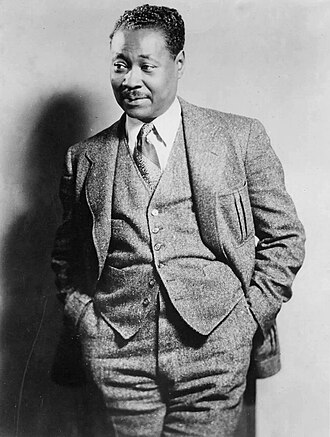
Mentioned in 2 profiles
See also




Cite this entry
- APA
- The Epoch Institute. (2026). Claude McKay. In The Epoch Institute Encyclopedia. https://the-epoch-institute.org/encyclopedia/claude-mckay
- MLA
- “Claude McKay.” The Epoch Institute Encyclopedia, The Epoch Institute, 2026, https://the-epoch-institute.org/encyclopedia/claude-mckay. Accessed .
- Chicago
- The Epoch Institute. “Claude McKay.” The Epoch Institute Encyclopedia. 2026. https://the-epoch-institute.org/encyclopedia/claude-mckay.
- Harvard
- The Epoch Institute (2026) ‘Claude McKay’, The Epoch Institute Encyclopedia. Available at: https://the-epoch-institute.org/encyclopedia/claude-mckay (Accessed: ).
Last reviewed October 2026Random entry ↻