
Movement · Sub-Saharan Africa
Négritude
At a glance
- Négritude took nègre, a derogatory French word, and made it a name of empowerment; Aimé Césaire first used the word in its present sense in L’Étudiant noir in 1935.
- Its founders, Césaire, Senghor and Damas, rejected colonialism, racism and assimilation, drew on Marxism and Surrealism, and celebrated African history, traditions and beliefs.
- Paulette and Jane Nardal, who introduced the founders to the Harlem Renaissance in their Paris salon, were long minimised in its history by the masculinist domination of the movement.
Timeline
- 1885Anténor Firmin publishes On the Equality of Human Races, a rebuttal of Arthur de Gobineau
- 1929Jane Nardal’s article “Internationalisme noir”, on race consciousness in the African diaspora, lays a philosophical foundation
- 1931Paulette Nardal and Leo Sajou start La Revue du Monde Noir, a journal in English and French
- 1935Aimé Césaire first uses the word négritude in its present sense, in the third issue of L’Étudiant noir
- 1946Léon Damas publishes the anthology Poètes d’expression française 1900–1945
- 1948Senghor’s Anthologie de la nouvelle poésie nègre et malgache appears with Jean-Paul Sartre’s preface “Black Orpheus”
- 1960Wole Soyinka mocks Négritude’s “duikeritude”, and Paulette Nardal complains of the neglect of her and her sister’s part
- 1960–1974The Dakar School of art, shaped by Négritude under President Senghor, is active in Senegal
Background
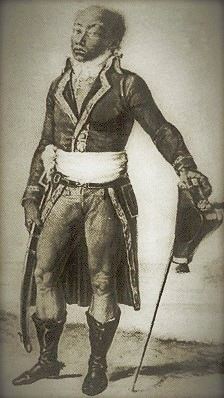
Négritude drew on a long line of Black thought. In 1885 the Haitian anthropologist Anténor Firmin published De l’égalité des races humaines (On the Equality of Human Races) as a rebuttal of Count Arthur de Gobineau’s Essay on the Inequality of the Human Races; Firmin influenced Jean Price-Mars, the initiator of Haitian ethnology and developer of Indigenism. Black intellectuals took pride in Haiti for its slave revolution under Toussaint Louverture in the 1790s, and Césaire spoke of Haiti as the place “where négritude stood up for the first time”. The Harlem Renaissance of the 1920s and 1930s, whose writers, among them Langston Hughes, Claude McKay, Alain Locke and W.E.B. Du Bois, addressed race relations and double consciousness, was a further influence.
In the 1920s and 1930s young Black students and scholars, mainly from France’s colonies and territories, gathered in Paris. There Paulette Nardal and her sister Jane introduced them to the writers of the Harlem Renaissance, and their Clamart Salon, a tea room patronised by Afro-French intellectuals, became a place where Négritude was debated. Paulette Nardal and the Haitian Dr. Leo Sajou founded La Revue du Monde Noir (1931–32), a literary journal in English and French for African and Caribbean intellectuals in Paris, and Jane Nardal’s 1929 article “Internationalisme noir”, on race consciousness and cultural mixing in the diaspora, is seen as the movement’s philosophical foundation.
Aims
Négritude aimed to raise and cultivate “black consciousness” across Africa and its diaspora. Its intellectuals disavowed colonialism, racism and Eurocentrism, denounced Europe’s alleged inhumanity and rejected Western domination and ideas, while promoting African culture within a framework of persistent Franco-African ties. They insisted that Black people possessed a history and a worthy culture equal to those of others, and they took pride in being Black and celebrated African history, traditions and beliefs; the movement showed a Heideggerian interest in Black people’s “being-in-the-world”. They drew on Marxist political philosophy in the Black radical tradition and wrote in a style borrowed heavily from Surrealism.
Assimilation was rejected: to assimilate into a culture that considered African culture barbaric would have been to accept that view. The name itself made the point. Nègre, like its English counterpart, was a derogatory word, and Césaire deliberately built it into the name of his philosophy, re-imagining it as a form of empowerment, while the suffix -itude allowed him to trope the vocabulary of racist science. Senghor noted that “the term négritude has often been contested as a word before being contested as a concept”. Each of the founders had his own idea of its purpose, but all three shared a sense of revolt against the racism and colonial injustice of their world and their French education.
Course of Events
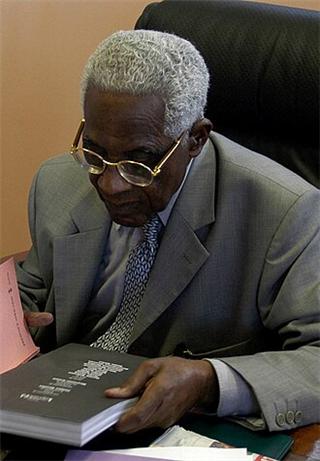
In Paris Aimé Césaire started the magazine L’Étudiant noir with his fellow students Léopold Senghor and Léon Damas, as well as Gilbert Gratiant, Leonard Sainville, Louis T. Achille, Aristide Maugée and Paulette Nardal. In its third issue, of May–June 1935, Césaire first used the word négritude in its present sense, in his first published work, “Conscience Raciale et Révolution Sociale”, which disavowed assimilation as a strategy of resistance and used nègre as a positive term. Senghor’s first critical theory piece, “What the Black Man Contributes”, followed in 1939.
Two anthologies became pivotal. Damas published Poètes d’expression française 1900–1945 in 1946, with an introduction meant as a manifesto; he saw his message as one for the colonised in general and included poets from Indochina and Madagascar. Senghor followed in 1948 with the Anthologie de la nouvelle poésie nègre et malgache de langue française, which took the manifesto’s role, and its preface by Jean-Paul Sartre, “Orphée Noir” (“Black Orpheus”), carried Négritude into the wider intellectual conversation. From 1960 to 1974 the Dakar School of art in Senegal, founded under the paternalism of President Senghor, gave the philosophy visual form, with a School of Fine Arts created to shape it. In the 1960s some Black writers began to criticise the movement as insufficiently militant.
People

Aimé Césaire, poet, playwright and politician from Martinique, discovered the Black community and “rediscovered Africa” as a student in Paris. For him Négritude was the fact of being Black, its acceptance and the appreciation of Black history and culture, the means to a “decolonization of the mind”; he held Western imperialism responsible for Black people’s inferiority complex. Back in Martinique he was elected mayor of Fort de France and a representative in France’s Parliament, and he called for Martinique’s political assimilation through the Departmentalization Law. Léopold Sédar Senghor, poet and later the first President of Senegal, used Négritude to work toward a universal valuation of African people and a modern celebration of African customs and ideas, the most common reading in later years.
Léon Damas, French Guianese poet and member of the National Assembly, forcefully defended “black qualities” and rejected reconciliation with white people. Abdoulaye Sadji was also among its progenitors. Paulette and Jane Nardal ran the salon where the movement took shape, and in 1960 Paulette complained bitterly that the two sisters were not acknowledged. Among the visual artists inspired by the philosophy were Papa Ibra Tall, Ben Enwonwu and Wifredo Lam, who brought their training from Western art schools to its themes.
Outcomes
Négritude gave francophone Black writers a shared language of identity and revolt, and its poets wrote of diasporic experience, self-assertion, home and belonging. Damas named the themes of this “indigenous poetry in French”: poverty, illiteracy, the “exploitation of man by man”, social and political racism, forced labour, and “crimes committed in the name of liberty, of equality, of fraternity”. Its visual artists sought to carry African culture and ideas into Western modernity and to break the biases against African art. Neither Césaire nor Senghor envisaged political independence from France: Senghor hoped for a “seat at the give and take of the [French] table as equals”, though France did in time grant Senegal and its other African colonies independence.
Its reception was divided. In “Black Orpheus” Sartre read Négritude as the opposite of colonial racism in a Hegelian dialectic, an “anti-racist racism” whose final goal was racial unity, and so introduced it to French intellectuals. In the 1960s some Black writers found it insufficiently militant: Keorapetse Kgositsile argued that it rested too much on Blackness as a European aesthetic saw it. The Nigerian writers Chinua Achebe and Wole Soyinka opposed it, believing that a declared pride in race put Black people on the defensive; Soyinka wrote that “a tiger doesn’t proclaim its tigerness; it jumps on its prey.”
Legacy
Négritude inspired many movements across the Afro-Diasporic world, among them Afro-Surrealism, Créolité and Antillanité in the Caribbean and black is beautiful in the United States, and Frantz Fanon often referred to it in his writing. Its history has also been revised. In a letter of February 1960 Senghor admitted that the founders had been in contact with Black Americans in 1929–34 through Paulette Nardal’s salon, and Jane Nardal’s “Internationalisme noir” of 1929 came a decade before Senghor’s first theoretical essay. The part of the two sisters was minimised by the masculinist domination of the movement, and their name belongs beside those of Césaire, Senghor and Damas.
After a long silence a renaissance of Négritude has come from scholars such as Souleymane Bachir Diagne of Columbia University, Donna Jones of the University of California, Berkeley, and Cheikh Thiam of Ohio State University, who continue the work of Abiola Irele (1936–2017). Diagne reads Négritude as a philosophy of art and Jones as a lebensphilosophie, and Thiam’s book is the only book-length study of it as philosophy. The word has lived on beyond the movement: Norman Mailer used it of the boxer George Foreman in The Fight, his account of the “Rumble in the Jungle” of 1974 in Kinshasa, and the rapper Youssoupha named an album Négritude.
Négritude was a framework of critique and literary theory developed in the 1930s by francophone Black intellectuals in Paris, above all Aimé Césaire, Léopold Senghor and Léon Damas, who turned the slur nègre into a name of pride. Rejecting colonialism, racism and assimilation, it celebrated African history and culture in poetry and art and inspired movements across the African diaspora, though critics such as Wole Soyinka found it defensive.
Test yourself
5 questions on this page, from its key events and facts.
The questions open here once the page has loaded.
References
- Rabaka, Reiland, The Negritude Movement: W.E.B. Du Bois, Leon Damas, Aime Cesaire, Leopold Senghor, Frantz Fanon, and the Evolution of an Insurgent Idea (Lexington Books, 2015)
- Sharpley-Whiting, T. Denean, Negritude Women (University of Minnesota Press, 2002)
- Wilder, Gary, The French Imperial Nation-State: Negritude & Colonial Humanism Between the Two World Wars (University of Chicago Press, 2005)
- Irele, Abiola, “Négritude or black cultural nationalism”, Journal of Modern African Studies 3.3 (1965)
- Thiam, Cheikh, Return to the Kingdom of Childhood: Re-envisioning the Legacy and Philosophical Relevance of Negritude (Ohio State University Press, 2014)