Movement · Central & East Asia
May Fourth Movement
At a glance
- On May 4, 1919, over 4,000 students marched to Tiananmen against the Treaty of Versailles’ award of Germany’s rights in Shandong to Japan and against the Beijing government’s weak response.
- When the government arrested nearly 1,000 students in June, workers and merchants struck in their support, the movement’s centre moved to Shanghai, and the government dismissed three officials accused of collaborating with Japan.
- A turning point of the New Culture Movement, which called for “Mr. Science” and “Mr. Democracy” in place of “Mr. Confucius”, it made written vernacular Chinese the language of modern literature and helped give rise to the Chinese Communist Party.
Timeline
- 1915Japan’s Twenty-One Demands become known to the Chinese public and provoke anti-Japanese feeling
- 1917China enters World War I on the side of the Triple Entente, and Hu Shih argues for the vernacular in “Preliminary discussion on literary reform”
- 1918The leak of the secret Sino-Japanese Joint Defence Agreement signed by Premier Duan Qirui sparks a student protest movement
- 1919On May 4 over 4,000 students gather in front of Tiananmen to protest the Shandong terms of the Treaty of Versailles
- June 1919After the June 3 arrests a general strike in Shanghai forces the dismissal of Cao Rulin, Zhang Zongxiang and Lu Zongyu, and China’s delegates refuse to sign the treaty
- 1921Chen Duxiu and Li Dazhao are among the founders of the Chinese Communist Party
- 1939Mao Zedong calls the May Fourth Movement a new stage in China’s bourgeois-democratic revolution
Background
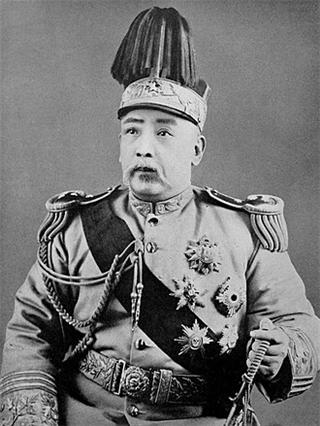
The Qing dynasty fell in 1911, ending imperial rule, but Confucianism kept a deep hold on social and political relations. After the death of President Yuan Shikai in 1916 China was dominated by warlords, and the government in Beijing could do little against foreign influence. In early 1915 the Twenty-One Demands, with which the Ōkuma Shigenobu government sought to extend Japanese power in southern Manchuria, eastern Mongolia and Shandong, became known to the Chinese public and stirred anti-Japanese feeling. In 1918 the leak of the secret Sino-Japanese Joint Defence Agreement signed by Premier Duan Qirui enraged the public and sparked a student protest movement that laid the groundwork for May Fourth. The Russian Revolution of 1917 and Korea’s March 1st Movement of 1919, an example of mass resistance to imperialism, further inflamed Chinese nationalism.
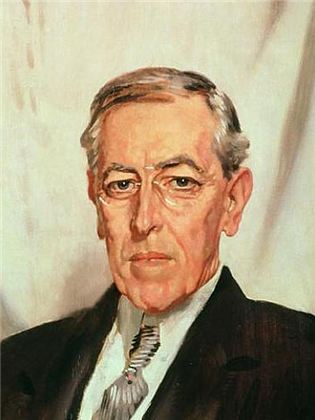
China had entered World War I on the side of the Triple Entente in 1917 and sent 140,000 labourers to the Western Front, yet the Treaty of Versailles awarded the rights to the German territories in Shandong, surrendered by Germany after the Siege of Tsingtao in 1914, to Japan. China’s representatives asked for an end to foreign privileges, the cancelling of the Twenty-One Demands and the return of Shandong, but the Western allies paid them little heed. The American failure to follow through on Woodrow Wilson’s ideals of self-determination was seen as a betrayal, and the outcome became known as the Shandong Problem.
Aims

On the morning of May 4, 1919, student representatives from thirteen universities in Beijing drafted five resolutions: to oppose the granting of Shandong to Japan, to make the people of China aware of the country’s precarious position, to call a large gathering in Beijing, to form a Beijing student union and to demonstrate that afternoon against the terms of the Treaty of Versailles. Their slogans included “struggle for the sovereignty externally, get rid of the national traitors at home”, “Give Qingdao back to us!” and “don’t sign the Versailles Treaty”, and they called for a boycott of Japanese goods, which many hoped would help China’s own industry.
Behind the protests stood the aims of the New Culture Movement (1915–1921), whose leaders blamed Confucian values for the nation’s political weakness and called for “Mr. Science” and “Mr. Democracy” in place of “Mr. Confucius”. Writers were urged to write as they spoke, under the slogan “my hand writes what my mouth speaks”. The “new woman”, secular and urban, opposed arranged marriage and patriarchy, and male intellectuals argued that women’s liberation was needed to save China from disarray and humiliation. Benjamin I. Schwartz saw the nationalism that drove the movement less as a separate ideology than as “a common disposition”.
Course of Events
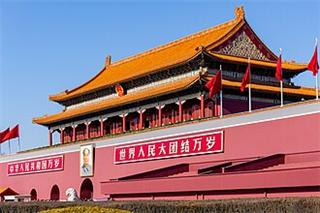
On the afternoon of May 4 over 4,000 students of Yenching University, Peking University and other schools gathered in front of Tiananmen. They denounced the government’s inability to protect Chinese interests and demanded the resignation of three officials they accused of collaborating with Japan; after they burned the officials’ residences and beat some of their servants, students were arrested, jailed and severely beaten. On May 5 the students of Beijing went on strike, and in the larger cities students, merchants and workers joined the protests. On May 6 Shanghai students met at Fudan University, and at the end of the month they too began to strike.
On June 3 the Beijing police began the arrests in which nearly 1,000 students were held. Far from ending the movement, this angered the public: businessmen and workers in Shanghai struck, the centre of the movement moved there, and the working class entered the political arena. Cai Yuanpei resigned as principal of Peking University in protest. With merchants threatening to withhold taxes and a general strike nearly devastating the economy, the Beijing government dismissed Cao Rulin, Zhang Zongxiang and Lu Zongyu, and the strike ended on June 12. The students went on rallying and organised the National Student Union, and China’s representatives in Paris refused to sign the Treaty of Versailles.
People
The first protesters were students in Beijing and Paris, joined by students in Shanghai and Guangzhou and then by workers and businessmen. Cai Yuanpei, principal of Peking University, resigned in protest at the arrests. Chen Duxiu and Li Dazhao, leaders of the movement, were the most influential promoters of Marxism in China in these years and became founders of the Chinese Communist Party in 1921; others drawn to communist ideas included Chen Tanqiu and Zhou Enlai. Kuomintang members such as Luo Jialun, Shao Lizi and Duan Xipeng also took part, though the party’s influence on the movement was minimal.
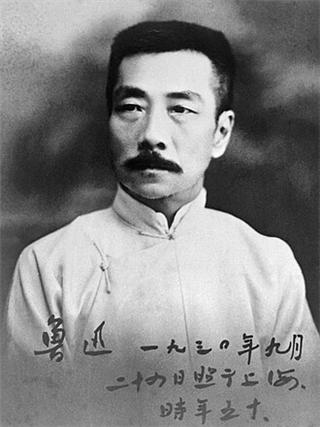
In literature Hu Shih, who called the era the “Chinese Renaissance”, had argued for the modern vernacular in his 1917 essay “Preliminary discussion on literary reform”, and Chen Hengzhe published the short story One Day in 1917, a year before Lu Xun’s Diary of a Madman. Women were often confined to indoor speeches and debates, without the freedom of movement of the men, and pledges of celibacy were one way participants resisted traditional marriage. The movement also had its critics among intellectuals who wanted new systems built on Chinese values rather than imported ones, among them Liang Shuming, Liu Shipei, Tao Xisheng, Xiong Shili, Zhang Binglin and Lu Xun’s brother, Zhou Zuoren.
Outcomes
The movement’s first victory was largely symbolic. Under public pressure the government dismissed the three officials and China’s delegation refused to sign the treaty, but Japan for the moment kept control of the Shandong Peninsula and the islands in the Pacific. Even this partial success showed that China’s social classes could act together given motivation and leadership. The boycott of Japanese goods was meant to help national industry, but the Shanghai strike of June damaged the economy, as shop owners would not open during it.
Its deeper effects came in ideas and politics. After Versailles, Western liberal democracy lost much of its appeal among Chinese intellectuals, who saw Wilson’s Fourteen Points as hypocritical and noted that the United States had declined to join the League of Nations; with the October Revolution, Marxism took hold. Chen Duxiu and Li Dazhao moved left and founded the Chinese Communist Party in 1921, and Paul French argues that the only victor of the treaty in China was communism. In literature the movement is the watershed after which modern Chinese literature began and written vernacular Chinese gained currency over Literary Chinese, in time replacing it in formal works. Criticism of Christianity as tied to Western imperialism led some Protestant leaders to found independent churches, such as Watchman Nee’s Local Church movement.
Legacy

Scholars rank the New Culture and May Fourth movements as turning points: for David Der-wei Wang it was “the turning point in China’s search for literary modernity”, and Rana Mitter places the ideas of 1919 at the centre of China’s twentieth century. Many political and social leaders of the next five decades emerged at this time. In 1939 Mao Zedong called it a new stage in China’s bourgeois-democratic revolution against imperialism and feudalism, a step beyond the Revolution of 1911, and the historian Wang Gungwu notes that it came to be seen as the predecessor of the Cultural Revolution. May 4 is celebrated as Youth Day in China and as Literary Day in Taiwan.
Its legacy is embraced both by the Chinese Communist Party and by its critics, who read it differently. Chiang Kai-shek, a Confucian and nationalist, condemned its iconoclasm, and under him the Kuomintang’s New Life Movement promoted Confucianism and brought it into the schools. Neotraditional schools of national essence, national character and the modern relevance of Confucianism held that China’s own traditions must remain its foundation, and later critics such as Lin Yutang, Ch’ien Mu, Xu Fuguan and Yu Ying-shih questioned whether traditional culture had to be destroyed rather than developed. In British Malaya, riots in Penang and Singapore inspired by the movement led the British to pass the Registration of Schools Ordinance.
The May Fourth Movement grew out of student protests in Beijing on May 4, 1919, against the Treaty of Versailles’ award of German rights in Shandong to Japan. Joined by workers and merchants, it forced the dismissal of three officials and China’s refusal to sign the treaty, and as a turning point of the New Culture Movement it made the vernacular the language of modern Chinese literature and helped give rise to the Chinese Communist Party.
Test yourself
5 questions on this page, from its key events and facts.
The questions open here once the page has loaded.