
Movement · Europe
Bauhaus
At a glance
- Walter Gropius founded the Bauhaus in Weimar in 1919 to bring all the arts together and to train artists to work with industry.
- Driven out of Weimar in 1925 and Dessau in 1932, the school was closed by its own leadership in Berlin in 1933 under pressure from the Nazis, whose writers had labelled it “un-German”.
- Its émigré teachers carried its ideas to Britain, the United States and Tel Aviv, and its preliminary course became a common feature of design schools in many countries.
Timeline
- 1919Walter Gropius founds the Bauhaus in Weimar, merging the Grand Ducal Saxon Academy of Fine Art and the Grand Ducal Saxon School of Arts and Crafts
- 1923The Bauhaus exhibits the experimental Haus am Horn, and László Moholy-Nagy takes over the preliminary course from Johannes Itten
- 1925After the Thuringian government halves its funding, the school moves to Dessau, where Gropius’s new building opens in late 1926
- 1928Gropius resigns and Hannes Meyer becomes director
- 1929The school turns its first profit under Meyer’s leadership
- 1930The mayor of Dessau, Fritz Hesse, dismisses Meyer, and Ludwig Mies van der Rohe takes over
- 1932The Nazi-led city council closes the Dessau school, and Mies moves it to a derelict factory in Berlin
- 1933After the Gestapo shuts the Berlin school, Mies and the faculty agree to close it themselves
Background
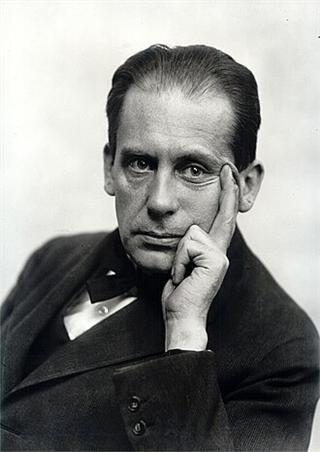
The Bauhaus grew out of a long German debate about art and industry. The Deutscher Werkbund, founded in 1907 by Hermann Muthesius to harness mass production and keep Germany competitive with England, became the authority on design in Germany; its 1,870 members (by 1914) argued over craft against mass production and usefulness against beauty. From June 1907 Peter Behrens’ work for the electrical company AEG showed that art and mass production could be joined on a large scale, and both Walter Gropius and Adolf Meyer worked for him. Modernism, with origins as early as the 1880s, had already made itself felt in Germany before the First World War.
The school’s own roots lay in the arts and crafts school founded in Weimar in 1906 by the Grand Duke of Saxe-Weimar-Eisenach and directed by the Belgian Art Nouveau architect Henry van de Velde. Forced to resign in 1915 because he was Belgian, van de Velde suggested Gropius as one of his possible successors.
Defeat in the war and the founding of the Weimar Republic brought a liberal spirit and an upsurge of radical experiment in the arts. Some on the left were drawn to the experiments that followed the Russian Revolution, such as constructivism, though Gropius did not share their views. Just as important was the English designer William Morris, who had argued that art should meet the needs of society. The German mood was turning from Expressionism to the matter-of-fact New Objectivity.
Aims
Gropius set out the school’s aim in the pamphlet for an exhibition of April 1919: “to create a new guild of craftsmen, without the class distinctions which raise an arrogant barrier between craftsman and artist.” His word Bauhaus recalled both building and the Bauhütte, a premodern guild of stonemasons. The school was to be at once an architecture school, a crafts school and an academy of the arts, working towards a Gesamtkunstwerk, a comprehensive artwork in which all the arts would be brought together.
The tone soon changed. In 1919 Gropius had written of “painting and sculpture rising to heaven out of the hands of a million craftsmen”; by 1923 he declared, “we want an architecture adapted to our world of machines, radios and fast cars.” A new era, he argued, needed a new style, functional, cheap and suited to mass production, and a new kind of art education: lacking raw materials, the Weimar Republic depended on skilled labour and the export of high-quality goods, so the artist had to be trained to work with industry.
The resulting style was marked by the absence of ornament and by harmony between an object’s function and its design: simple geometric shapes, rounded corners, curved chrome pipes and long banks of windows. Gropius believed it possible to design exemplary products of universal validity that should be standardised, and he said that the Bauhaus was entirely apolitical.
Course of Events
Gropius opened the Bauhaus in Weimar on 1 April 1919. Its first teachers were Johannes Itten, Lyonel Feininger and Gerhard Marcks, soon joined by Oskar Schlemmer, Paul Klee and, in 1922, Wassily Kandinsky. Itten’s preliminary course shaped the school until he resigned in late 1923 and László Moholy-Nagy rewrote it. The Social Democrat-controlled Thuringian government supported the school, but conservative pressure grew, and the 1923 exhibition of the Haus am Horn was a condition of that support. After the Social Democrats lost the 1924 election, the new ministry cut the funding in half, and the Bauhaus announced its closure for the end of March 1925.
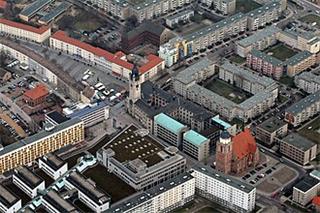
It moved to Dessau, where Gropius’s new building opened in late 1926. Hannes Meyer succeeded Gropius in February 1928 and won commissions for five apartment buildings in Dessau and the ADGB Trade Union School in Bernau, and in 1929 the school turned its first profit. In 1930 the mayor, Fritz Hesse, dismissed him after a scandal over the alleged use of school funds for communist causes, and Ludwig Mies van der Rohe took over. By 1931 the Nazi Party had a majority on the Dessau city council, and the next year it moved to close the school.
In late 1932 Mies rented a derelict factory in Berlin with his own money. In 1933 the Gestapo shut it; Mies won permission to reopen, but he and the faculty then agreed to close the school themselves.
People
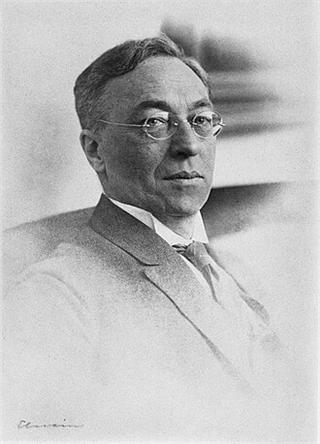
The Bauhaus had three architect-directors. Walter Gropius, its founder, led it from 1919 to 1928. Hannes Meyer, a radical functionalist, favoured measurements, calculations and off-the-shelf parts, forced out long-serving teachers such as Herbert Bayer and Marcel Breuer, and set aside one day a week for sport; yet he kept the school from becoming a tool of party politics and blocked a student communist cell. Ludwig Mies van der Rohe, director from 1930 to 1933, repudiated Meyer’s politics and approach, interviewed every student, halted the school’s production to focus on teaching and appointed only his confidant Lilly Reich.
Its teachers included some of the best-known artists of the age: the painters Paul Klee, Wassily Kandinsky and Lyonel Feininger, the sculptor Gerhard Marcks, Oskar Schlemmer, head of the theatre workshop, Gunta Stölzl and László Moholy-Nagy. Johannes Itten, influenced by Franz Cižek, Friedrich Wilhelm August Fröbel and Der Blaue Reiter, brought an Expressionist spirit. In the tumultuous year 1922 Theo van Doesburg moved to Weimar to promote De Stijl, and El Lissitzky visited.
Its members met different fates under Nazi rule. About twenty Bauhauslers are known to have been killed in prisons or concentration camps. Of 119 teaching staff, about 15 emigrated between 1933 and 1938; of about 1,250 students enrolled in 1933, some 900 are thought to have stayed in Germany, and of those 188 joined the Nazi Party and 12 the SS.
Outcomes
The Bauhaus did not build what its manifesto promised. Although it proclaimed building the aim of all creative activity, it offered no classes in architecture until 1927, and under Gropius its built work was in effect that of his own office: the Sommerfeld House, the Otte and Auerbach houses, the competition design for the Chicago Tribune Tower and the Bauhaus building in Dessau of 1926. Under Meyer came its two largest commissions, the balcony-access apartment buildings in Dessau, still in use, and the ADGB Trade Union School; neither Mies nor his students saw anything built in the 1930s. It did little worker housing: the thousands of progressive homes of Weimar Germany are credited to Bruno Taut, Hans Poelzig and above all Ernst May.
Its lasting gains lay in design and teaching. Marcel Breuer’s Wassily Chair and cantilever chair became classics of modern furniture, though Breuer lost a patent dispute over the cantilever chair to the Dutch architect Mart Stam. Its preliminary course, in which first-year students learnt the elements of design and colour theory and experimented with materials, became a common feature of design schools.
Politics cut its life short. Nazi writers such as Wilhelm Frick and Alfred Rosenberg labelled it “un-German”, stirred controversy over flat roofs and painted it as a front for communists, and each move and change of leadership followed political pressure.
Legacy
Emigrants spread the Bauhaus abroad. Gropius, Breuer and Moholy-Nagy met again in London in the mid-1930s; Gropius and Breuer then taught at the Harvard Graduate School of Design, whose students included Philip Johnson, I. M. Pei and Paul Rudolph. Mies became one of the world’s pre-eminent architects in Chicago, where Moholy-Nagy founded the New Bauhaus, later the Institute of Design. Former key figures became known in the United States as the avant-garde of the International Style. In Tel Aviv, German Jewish architects who had fled the Nazis built the White City, over 4,000 buildings in the Bauhaus or International Style, which UNESCO proclaimed a World Heritage site in 2003.
Schools followed its model: Black Mountain College, the Ulm School of Design, founded in 1953 by Max Bill, Inge Aicher-Scholl and Otl Aicher, the Basic Design course of British art schools and the Shillito Design School in Sydney. Four Bauhaus sites in Germany were inscribed on the UNESCO World Heritage List in 1996 and two more in 2017. Later critics found its credo mechanistic about human nature: “Home hygiene without home atmosphere.”
The centenary in 2019 brought festivals and exhibitions around the world and a new Bauhaus Museum in Dessau. In 2020 Ursula von der Leyen launched the New European Bauhaus, linking the European Green Deal to everyday life, while in 2024 the far-right Alternative for Germany attacked the celebrations of the school.
The Bauhaus was a German art school, founded by Walter Gropius in Weimar in 1919 and moved to Dessau and then Berlin, that sought to unite art, craft and industry. Under Nazi pressure it closed in 1933, but its teachers and students carried its functional, unornamented style and its teaching across the world, making it one of the most influential currents in modern design and architecture.
Test yourself
3 questions on this page, from its key events and facts.
The questions open here once the page has loaded.
References
- Droste, Magdalena, and Peter Gössel (eds.), Bauhaus (Taschen, 2005)
- Baumhoff, Anja, The Gendered World of the Bauhaus: The Politics of Power at the Weimar Republic's Premier Art Institute, 1919–1931 (Peter Lang, 2001)
- Friedewald, Boris, Bauhaus (Prestel, 2009)
- Anker, Peder, From Bauhaus to Ecohouse: A History of Ecological Design (LSU Press, 2010)
- Schlemmer, Tut (ed.), The Letters and Diaries of Oskar Schlemmer, trans. Krishna Winston (Wesleyan University Press, 1972)
- Baumann, Kirsten, Bauhaus Dessau: Architecture Design Concept (Jovis, 2007)