Inventions & Discoveries · Energy and power
Diesel engine
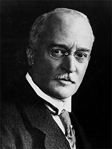
A diesel engine is an internal combustion engine in which the fuel is ignited by the heat of air compressed in the cylinder, without a spark plug. The German engineer Rudolf Diesel published his idea in 1893 in Theory and Construction of a Rational Heat Motor, and his first prototype was built that summer at the Maschinenfabrik Augsburg, with the first ignition on 10 August 1893. A redesigned engine ran for 88 revolutions in February 1894, and the third prototype, tested on 17 February 1897, reached an effective efficiency of 26.2%, against the 6–10% of steam engines that Diesel had learned of as a student.
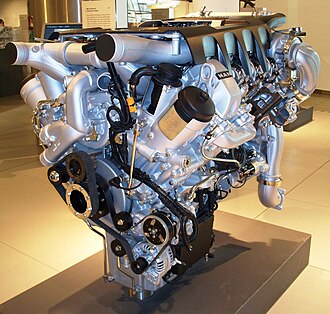
On the inventions tree
- First known
- 1893
- Where
- Augsburg
- Credited to
- Rudolf Diesel
NoteCritics, among them Otto Köhler and Emil Capitaine, claimed that Diesel had invented nothing new; Capitaine lost a patent lawsuit against him. Diesel may have taken the idea of air-blast injection from George B. Brayton.
See also

Cite this entry
- APA
- The Epoch Institute. (2026). Diesel engine. In The Epoch Institute Encyclopedia. https://the-epoch-institute.org/encyclopedia/diesel-engine
- MLA
- “Diesel engine.” The Epoch Institute Encyclopedia, The Epoch Institute, 2026, https://the-epoch-institute.org/encyclopedia/diesel-engine. Accessed .
- Chicago
- The Epoch Institute. “Diesel engine.” The Epoch Institute Encyclopedia. 2026. https://the-epoch-institute.org/encyclopedia/diesel-engine.
- Harvard
- The Epoch Institute (2026) ‘Diesel engine’, The Epoch Institute Encyclopedia. Available at: https://the-epoch-institute.org/encyclopedia/diesel-engine (Accessed: ).
Last reviewed October 2026Random entry ↻