Inventions & Discoveries · Science and discovery
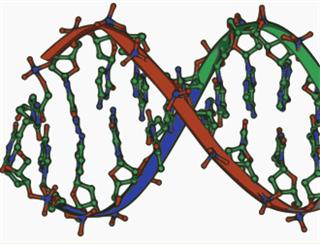
DNA double helix
The DNA double helix is the structure of double-stranded DNA, two strands wound around each other and held together by paired bases; James Watson and Francis Crick first published the model in the journal Nature in 1953. Their model drew on the work of Rosalind Franklin and Raymond Gosling, whose X-ray diffraction image "Photo 51" was crucial, of Maurice Wilkins and others, and on Erwin Chargaff's base-pairing data. It explained how genetic information is stored and copied, and Crick, Watson and Wilkins shared the 1962 Nobel Prize in Physiology or Medicine.
On the inventions tree
- First known
- 1953
- Credited to
- James Watson · Francis Crick · Rosalind Franklin · Maurice Wilkins
See also


Cite this entry
- APA
- The Epoch Institute. (2026). DNA double helix. In The Epoch Institute Encyclopedia. https://the-epoch-institute.org/encyclopedia/dna-double-helix
- MLA
- “DNA double helix.” The Epoch Institute Encyclopedia, The Epoch Institute, 2026, https://the-epoch-institute.org/encyclopedia/dna-double-helix. Accessed .
- Chicago
- The Epoch Institute. “DNA double helix.” The Epoch Institute Encyclopedia. 2026. https://the-epoch-institute.org/encyclopedia/dna-double-helix.
- Harvard
- The Epoch Institute (2026) ‘DNA double helix’, The Epoch Institute Encyclopedia. Available at: https://the-epoch-institute.org/encyclopedia/dna-double-helix (Accessed: ).
Last reviewed October 2026Random entry ↻