Inventions & Discoveries · Science and discovery
Mendelian inheritance
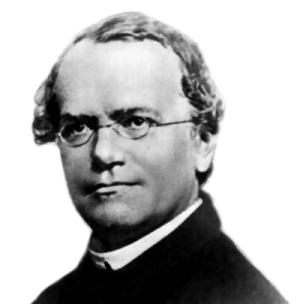
Mendelian inheritance is a type of biological inheritance following the principles first derived by Gregor Johann Mendel, a Moravian monk, from experiments with some 28,000 pea plants grown between 1856 and 1863 in his monastery garden; he presented them to the Natural History Society of Brno (Brünn) in 1865 and published them in 1866. Largely ignored at first, his work was rediscovered in 1900 by Hugo de Vries, Carl Correns and Erich von Tschermak. Combined with the chromosome theory of inheritance by Thomas Hunt Morgan in 1915, it became the core of classical genetics.
On the inventions tree
- First known
- 1865
- Where
- Brno, Moravia
- Credited to
- Gregor Mendel · Austrian Empire
NoteHis work was rediscovered in 1900 by Hugo de Vries, Carl Correns and Erich von Tschermak.
See also

Cite this entry
- APA
- The Epoch Institute. (2026). Mendelian inheritance. In The Epoch Institute Encyclopedia. https://the-epoch-institute.org/encyclopedia/mendelian-inheritance
- MLA
- “Mendelian inheritance.” The Epoch Institute Encyclopedia, The Epoch Institute, 2026, https://the-epoch-institute.org/encyclopedia/mendelian-inheritance. Accessed .
- Chicago
- The Epoch Institute. “Mendelian inheritance.” The Epoch Institute Encyclopedia. 2026. https://the-epoch-institute.org/encyclopedia/mendelian-inheritance.
- Harvard
- The Epoch Institute (2026) ‘Mendelian inheritance’, The Epoch Institute Encyclopedia. Available at: https://the-epoch-institute.org/encyclopedia/mendelian-inheritance (Accessed: ).
Last reviewed October 2026Random entry ↻