Glossary · Term
Gilchrist–Thomas process
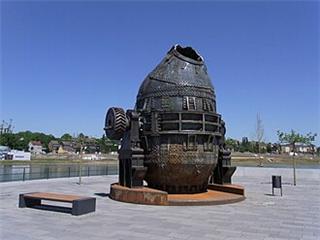
The Gilchrist–Thomas process is a method of making steel from phosphorus-rich iron ore, developed by the British cousins Sidney Gilchrist Thomas and Percy Gilchrist and made public in 1879. By lining the Bessemer converter with a basic material such as dolomite, it removed phosphorus from the molten iron. It made the phosphoric minette ores of Lorraine and Luxembourg usable and drove the rise of heavy industry there.
Cite this entry
- APA
- The Epoch Institute. (2026). Gilchrist–Thomas process. In The Epoch Institute Encyclopedia. https://the-epoch-institute.org/encyclopedia/gilchrist-thomas-process
- MLA
- “Gilchrist–Thomas process.” The Epoch Institute Encyclopedia, The Epoch Institute, 2026, https://the-epoch-institute.org/encyclopedia/gilchrist-thomas-process. Accessed .
- Chicago
- The Epoch Institute. “Gilchrist–Thomas process.” The Epoch Institute Encyclopedia. 2026. https://the-epoch-institute.org/encyclopedia/gilchrist-thomas-process.
- Harvard
- The Epoch Institute (2026) ‘Gilchrist–Thomas process’, The Epoch Institute Encyclopedia. Available at: https://the-epoch-institute.org/encyclopedia/gilchrist-thomas-process (Accessed: ).
Last reviewed October 2026Random entry ↻