Encyclopedia: G
1,429 entries under G · page 6 of 15: Gesu Daraz – Gilchrist–Thomas process
- Gesu DarazPersonGesu Daraz, Sayyid Muhammad Husayni, was a Sufi saint of the Chishti order, a disciple of Nasir ud-Din Chiragh of Delhi.
 Getúlio VargasPersonGetúlio Vargas was a Brazilian politician from Rio Grande do Sul who took power in the Revolution of 1930.
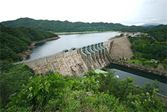 Geum RiverPlaceThe Geum River is one of the major rivers of South Korea, flowing about 400 kilometres from North Jeolla through Daejeon and South Chungcheong to the Yellow Sea near…
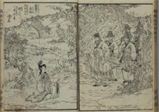 GeumwaPersonGeumwa is a king of Eastern Buyeo in Korean tradition, recorded in the Samguk sagi as the successor of Haeburu.
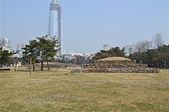 Geunchogo of BaekjePersonGeunchogo was king of Baekje from 346 to 375, the period of its greatest early power.
 GévaudanPlaceGévaudan is a historic region of southern France in the Massif Central, roughly the present department of Lozère.
- Gey van PittiusPersonNicolaas Claudius Gey van Pittius was a Boer administrator of the Land Goshen, a small republic proclaimed in 1882 at Rooigrond near Mafikeng by Boer freebooters who…
 Géza I of HungaryPersonGéza I was King of Hungary from 1074 to 1077, a son of King Béla I.
 Géza II of HungaryPersonGéza II was king of Hungary from 1141 to 1162.
 Géza, Grand Prince of the HungariansPersonGéza was Grand Prince of the Hungarians from about 972 until his death in 997, a member of the Árpád dynasty.
- GeziraPlaceThe Gezira ('island') is the fertile plain between the Blue Nile and the White Nile south of Khartoum in Sudan.
 Gezira SchemeWork / monumentThe Gezira Scheme is a large irrigation project on the Gezira plain between the Blue and White Niles in Sudan, opened in 1925 when the Sennar Dam was completed.
- El-GhabaPlaceEl-Ghaba was the royal town of Koumbi Saleh, the capital of the Ghana Empire.
 GhadamesPlaceGhadames is an oasis town in western Libya near the borders of Tunisia and Algeria.
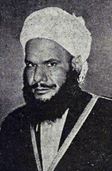 Ghalib AlhinaiPersonGhalib ibn Ali al-Hinai was the last Imam of Oman, elected in 1954 after the death of Muhammad al-Khalili.
 Ghalib ibn Awad al-Qu'aitiPersonGhalib ibn Awad al-Qu'aiti was the last sultan of the Qu'aiti Sultanate of Hadhramaut, succeeding his father in 1966.
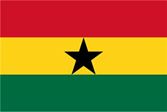 GhanaPlaceGhana is a country in West Africa, independent from Britain in 1957 and the first sub-Saharan colony to gain independence.
- Ghana (title)InstitutionGhana was the title of the king of Wagadou, the state known to outsiders as the Ghana Empire.
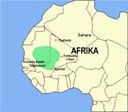 Ghana EmpireStateThe Ghana Empire, known internally as Wagadou, was a Soninke state in the western Sahel that flourished from around the eighth to the eleventh century.
 GhardaïaPlaceGhardaïa is a city in the Algerian Sahara, the largest of the five Ibadi towns of the Mzab valley and the capital of Ghardaïa Province.
- GharmPlaceGharm is a town in the Rasht valley of central Tajikistan, on the Surkhob river, and the traditional name of the surrounding mountain region.
- Ghartey IVPersonGhartey IV, born Robert Johnson Ghartey, was a Fante merchant from the Gold Coast who became king of Winneba.
 GhatPlaceGhat is an oasis town in south-western Libya, near the Algerian border.
- Ghayur KhanPersonGhayur Khan was the ruler of Simsir, a Muslim principality in Chechnya, mentioned by Sharaf al-Din Yazdi and other chroniclers of Timur.
 Ghazan KhanPersonGhazan Khan, also known as Mahmud Ghazan, was ruler of the Ilkhanate who died in 1304.
- GhaziInstitutionGhazi is a title for a Muslim warrior fighting against non-Muslims, carrying religious prestige.
- Ghazi ChelebiPersonGhazi Chelebi was the last ruler of the Pervaneid principality of Sinop on the Black Sea coast of Anatolia, a descendant of the Seljuk minister Mu'in al-Din Pervane.
- Ghazi MuhammadPersonGhazi Muhammad was an Avar scholar of the Naqshbandi order who became the first imam of Dagestan around 1828–1829.
- Ghazi Shah ChakPersonGhazi Shah Chak was a Kashmiri noble who deposed the last Shah Mir sultan in 1561 and took the throne at Srinagar, founding the Chak dynasty, the first Shia dynasty of…
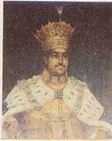 Ghazi-ud-Din Haidar ShahPersonGhazi-ud-Din Haidar was the ruler of Awadh from 1814 and its first king, from 1819 until his death in 1827.
- Ghazi-ud-din Khan Imad-ul-MulkPersonGhazi-ud-din Khan Imad-ul-Mulk was a Mughal noble, a grandson of Asaf Jah I, who became vizier in 1753 and dominated the court at Delhi.
 Ghaznavid EmpireStateThe Ghaznavid Empire was a Turkic Muslim dynasty based at Ghazni in present-day Afghanistan, which ruled Khorasan and raided deep into northern India in the late tenth…
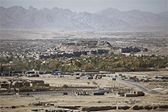 GhazniPlaceGhazni is a city in eastern Afghanistan on the road between Kabul and Kandahar.
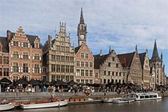 GhentPlaceGhent is a city in Flanders, Belgium, at the meeting of the Scheldt and Lys rivers.
 Ghent AltarpieceWork / monumentThe Ghent Altarpiece, or Adoration of the Mystic Lamb, is a large folding polyptych in St Bavo's Cathedral, Ghent, completed in 1432.
- Gheorghe CantacuzinoPersonGheorghe Cantacuzino was a Wallachian boyar, son of Prince Șerban Cantacuzino, who served as the first ban of Craiova under Habsburg rule after Oltenia passed to…
- Gheorghe Gheorghiu-DejPersonGheorghe Gheorghiu-Dej was the Communist leader of Romania from 1947 until his death in 1965.
- Gherardo AppianiPersonGherardo Appiani was lord of Pisa who in 1399 sold the city to Gian Galeazzo Visconti of Milan while keeping Piombino, Elba and nearby islands for himself.
- Gherardo da CaminoPersonGherardo da Camino was lord of Treviso from 1283 to 1306, captain-general of the city after the fall of the da Romano family.
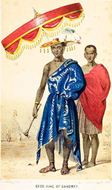 GhezoPersonGhezo was king of Dahomey, in present-day Benin, from 1818 to 1858.
- GhilmanInstitutionGhilman (singular ghulam) were slave soldiers, usually of Turkic origin, purchased and trained to serve Islamic rulers.
- GhilzaiPeople / groupThe Ghilzai are a large Pashtun tribal confederation of Afghanistan.
 GhirlandinaWork / monumentThe Ghirlandina is the bell tower of Modena Cathedral, about 87 metres tall, begun at the end of the 11th century and completed in its Gothic upper stages in the early…
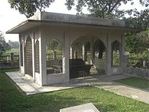 Ghiyasuddin Azam ShahPersonGhiyasuddin Azam Shah was sultan of Bengal from about 1390 to 1411, the third ruler of the Ilyas Shahi dynasty.
- Ghiyasuddin Mahmud ShahPersonGhiyasuddin Mahmud Shah was the last sultan of the Husain Shahi dynasty of Bengal, reigning from 1533 to 1538.
 Ghiyath al-Din MuhammadPersonGhiyath al-Din Muhammad was sultan of the Ghurid dynasty from 1163 to 1203, ruling from Firozkoh in the mountains of Ghor and later Herat.
- Ghiyath al-Din Muhammad DamghaniPersonGhiyath al-Din Muhammad Damghani was sultan of Madurai, in southern India, from about 1340 to 1345.
- Ghiyath al-Din Pir AliPersonGhiyath al-Din Pir Ali was the last ruler of the Kart dynasty of Herat, reigning from 1370.
 Ghiyath al-Din TughluqPersonGhiyath al-Din Tughluq, earlier known as Ghazi Malik, was sultan of Delhi from 1320 to 1325 and founder of the Tughluq dynasty.
 GhorPlaceGhor is a mountainous province of central Afghanistan, in the upper valleys of the Hari Rud and Farah rivers.
- GhorpadePeople / groupThe Ghorpade are a Maratha clan of the Deccan whose members served the sultans of Bijapur and later the Maratha state as military commanders.
- GhositaramaPlaceThe Ghositarama was a Buddhist monastery at Kaushambi, the capital of Vatsa in northern India, said to have been given to the Buddha's community by the banker Ghosita.
- GhulamInstitutionA ghulam was a slave soldier or servant in Islamic states, trained for military or administrative service and loyal to the ruler.
 Ghulam Moinuddin KhanjiPersonGhulam Moinuddin Khanji was the last Khan of Manavadar, a small princely state in Kathiawar.
- Ghuma al-MahmudiPersonGhuma al-Mahmudi was a tribal leader of the Jabal Nafusa in western Libya who led a long revolt against the Ottomans after they restored direct rule over Tripolitania…
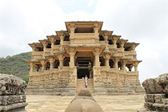 GhumliPlaceGhumli is a ruined town in the Barda hills of Saurashtra, Gujarat, near Porbandar.
- GhurakPersonGhurak was the ikhshid, or king, of Samarkand in the early 8th century.
- Ghurid EmpireStateThe Ghurid Empire was a dynasty from Ghur in central Afghanistan that rose in the twelfth century, displacing the Ghaznavids and overrunning Seljuk-era Khorasan.
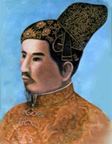 Gia LongPersonGia Long, born Nguyen Phuc Anh, was a survivor of the Nguyen lords who fought the Tay Son for over two decades from bases in the Mekong delta, with help from Siam and…
- Gia Long CodeWork / monumentThe Gia Long Code, officially Hoàng Việt luật lệ, was the legal code of the Nguyen dynasty, promulgated by Emperor Gia Long in 1815.
 Gia ĐịnhPlaceGia Định was the name of the Vietnamese settlement and citadel on the site of present-day Ho Chi Minh City, and of the surrounding province of southern Vietnam.
 Giacomo da LentiniPersonGiacomo da Lentini was a notary at the court of the emperor Frederick II and the leading poet of the Sicilian School, which wrote love lyrics in a refined Sicilian…
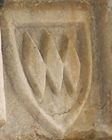 Giacomo IV CrispoPersonGiacomo IV Crispo was the last Duke of Naxos, ruler of the Duchy of the Archipelago in the Cyclades from 1564.
 Giacomo MatteottiPersonGiacomo Matteotti was an Italian socialist politician, secretary of the Unitary Socialist Party.
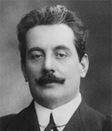 Giacomo PucciniPersonGiacomo Puccini was an Italian composer, the leading figure of Italian opera after Giuseppe Verdi.
 Giambattista BodoniPersonGiambattista Bodoni was an Italian printer and type designer from Saluzzo who directed the ducal printing house in Parma from 1768.
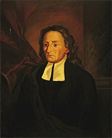 Giambattista VicoPersonGiambattista Vico (1668–1744) was a Neapolitan philosopher and professor of rhetoric at the University of Naples.
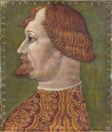 Gian Galeazzo ViscontiPersonGian Galeazzo Visconti ruled part of the Milanese lands from 1378, seized sole power from his uncle Bernabò in 1385 and in 1395 bought from King Wenceslaus the title of…
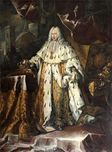 Gian Gastone de' MediciPersonGian Gastone de' Medici was the last Medici Grand Duke of Tuscany, reigning from 1723 to 1737.
 Gian Lorenzo BerniniPersonGian Lorenzo Bernini was an Italian sculptor and architect, the leading artist of Baroque Rome.
 Gian Singh RarewalaPersonGian Singh Rarewala was a Sikh politician and former official of Patiala State who served as chief minister of the Patiala and East Punjab States Union in 1951–1952 and…
- Giản Định ĐếPersonGiản Định Đế, born Trần Ngỗi, was a son of the Trần emperor Trần Nghệ Tông.
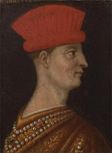 Gianfrancesco I GonzagaPersonGianfrancesco I Gonzaga (1395–1444) was ruler of Mantua from 1407.
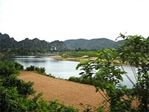 Gianh RiverPlaceThe Gianh River is a river of Quảng Bình Province in central Vietnam.
 Giano della BellaPersonGiano della Bella (died c. 1306) was a Florentine nobleman who became a leader of the popular party against the magnates.
 Giardini NaxosPlaceGiardini Naxos is a seaside town in the province of Messina on the east coast of Sicily, Italy, below Taormina.
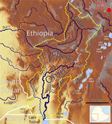 Gibe RiverPlaceThe Gibe is a river of south-western Ethiopia that rises in the highlands west of Addis Ababa and flows south to become the Omo.
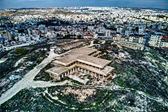 GibeahPlaceGibeah was a town of the tribe of Benjamin, a few kilometres north of Jerusalem, described in the Hebrew Bible as the home and royal seat of Saul, the first king of…
- Gibeon, NamibiaPlaceGibeon is a village in the Hardap Region of southern Namibia, founded around 1863 when the Witbooi Nama under Kido Witbooi settled there and a Rhenish Mission station…
- Giberto da CorreggioPersonGiberto da Correggio was a noble of Parma who made himself lord of the city in 1303.
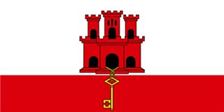 GibraltarPlaceGibraltar is a rocky promontory at the southern tip of Iberia, commanding the strait between the Mediterranean and the Atlantic.
 Gidan RumfaWork / monumentGidan Rumfa is the palace of the emir of Kano in northern Nigeria, built by Sarki Muhammad Rumfa in the late 15th century.
 Giengen an der BrenzPlaceGiengen an der Brenz is a town in eastern Baden-Württemberg that grew as a Hohenstaufen royal town and was a free imperial city from the late Middle Ages until 1802…
 GiessenPlaceGiessen is a university town on the Lahn river in Hesse, Germany.
 GifuPlaceGifu is a city in central Japan, capital of Gifu Prefecture, on the Nagara river.
 Gifu CastlePlaceGifu Castle stands on the summit of Mount Kinka, formerly Mount Inaba, above the city of Gifu in central Japan.
 Gihon SpringPlaceThe Gihon Spring is the main natural spring of ancient Jerusalem, in the Kidron valley below the City of David.
 GijónPlaceGijón is the largest city of Asturias in northern Spain, a port on the Bay of Biscay with Roman origins.
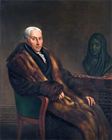 Gijsbert Karel van HogendorpPersonGijsbert Karel van Hogendorp was a Dutch statesman who led the provisional government of November 1813 that ended French rule and invited William Frederick of Orange to…
 Gil Álvarez Carrillo de AlbornozPersonGil Álvarez Carrillo de Albornoz was a Castilian archbishop of Toledo and cardinal who served the Avignon popes as legate in Italy.
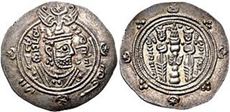 Gil GavbaraPersonGil Gavbara was a prince from Gilan who, according to later tradition, took control of Tabaristan around 642 as the Sasanian Empire collapsed.
 Gil González DávilaPersonGil González Dávila was a Spanish conquistador who led the first Spanish expedition into what is now Costa Rica and Nicaragua in 1522–1523.
 GilaksPeople / groupThe Gilaks are an Iranian people of Gilan, the humid lowland on the south-western shore of the Caspian Sea, who speak the Gilaki language.
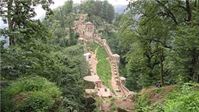 GilanPlaceGilan is a province of northern Iran on the Caspian coast.
- GilãoPlaceThe Gilão is a short river of the eastern Algarve in southern Portugal that flows through the town of Tavira to the Ria Formosa lagoon and the Atlantic; its upper…
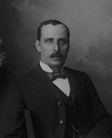 Gilbert CarterPersonGilbert Carter was a British colonial administrator who served as governor of the Lagos Colony from 1891 to 1897.
 Gilbert de Clare, 1st Earl of PembrokePersonGilbert de Clare, 1st Earl of Pembroke, was an Anglo-Norman baron created Earl of Pembroke by King Stephen in 1138, giving the lordship palatine powers.
 Gilbert Elliot, 1st Earl of MintoPersonGilbert Elliot, 1st Earl of Minto, was a Scottish politician and diplomat.
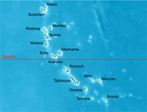 Gilbert IslandsPlaceThe Gilbert Islands are a chain of sixteen coral atolls in the central Pacific, inhabited by Micronesian I-Kiribati.
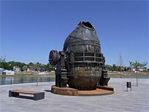 Gilchrist–Thomas processTermThe Gilchrist–Thomas process is a method of making steel from phosphorus-rich iron ore, developed by the British cousins Sidney Gilchrist Thomas and Percy Gilchrist and…