Encyclopedia: G
1,429 entries under G · page 5 of 15: George van Lalaing, Count of Rennenberg – Gestapo
- George van Lalaing, Count of RennenbergPersonGeorge van Lalaing, Count of Rennenberg, was a nobleman from the southern Netherlands who served as stadtholder of Friesland, Groningen, Drenthe and Overijssel during…
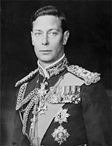 George VIPersonGeorge VI was king of the United Kingdom and the Dominions from 1936 to 1952, succeeding his brother Edward VIII after the abdication crisis.
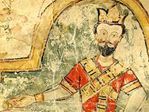 George VIII of GeorgiaPersonGeorge VIII was the last king of a united Georgia, reigning from 1446.
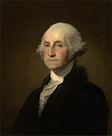 George WashingtonPersonGeorge Washington was a Virginia planter and soldier who commanded the Continental Army in the American Revolutionary War and forced the British surrender at Yorktown…
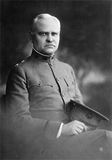 George Washington GoethalsPersonGeorge Washington Goethals was a US Army engineer who directed the construction of the Panama Canal from 1907 until its opening in August 1914.
 George Washington WilliamsPersonGeorge Washington Williams was an African American Civil War veteran, minister, lawyer and historian, author of a pioneering History of the Negro Race in America.
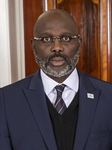 George WeahPersonGeorge Weah is a Liberian footballer and politician.
- George WestbeechPersonGeorge Westbeech was an English hunter and trader who from the early 1870s traded across the Zambezi from Pandamatenga, in what is now Botswana.
- George William JohnsonPersonGeorge William Johnson was a Sierra Leone-born tailor, one of the Saro returnees who settled in Yoruba country in the mid-19th century.
 George William, Duke of Brunswick-LüneburgPersonGeorge William, Duke of Brunswick-Lüneburg, ruled the Principality of Lüneburg from Celle from 1665.
 George William, Duke of LegnicaPersonGeorge William, Duke of Legnica, Brzeg and Wołów, was the last male member of the Silesian Piasts, the branch of Poland's first royal dynasty that had ruled Silesian…
 George William, Elector of BrandenburgPersonGeorge William was Elector of Brandenburg and Duke of Prussia from 1619 to 1640.
 George XI of KartliPersonGeorge XI was king of Kartli in eastern Georgia, reigning in 1676-1688 and 1703-1709 under Safavid overlordship.
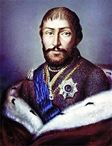 George XII of GeorgiaPersonGeorge XII was the last king of Kartli-Kakheti, reigning from 1798 to 1800 after his father Erekle II.
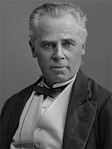 George-Étienne CartierPersonGeorge-Étienne Cartier was a French Canadian lawyer and politician who led the Bleus of Canada East and shared power with John A.
 Georgenberg PactEventThe Georgenberg Pact was an inheritance treaty concluded on 17 August 1186 at the Georgenberg near Enns between Duke Ottokar IV of Styria, who was childless and ill…
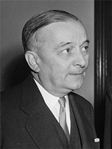 Georges BidaultPersonGeorges Bidault was a French Christian Democrat and Resistance leader who chaired the National Council of the Resistance from 1943.
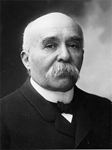 Georges ClemenceauPersonGeorges Clemenceau was a French Radical politician and journalist, known as the Tiger, who defended Dreyfus and served as prime minister in 1906–1909 and 1917–1920.
- Georges DantonPersonGeorges Danton was a lawyer and orator who became one of the leading figures of the French Revolution.
 Georges de La TourPersonGeorges de La Tour was a painter from the Duchy of Lorraine who worked mainly at Lunéville.
 Georges LemaîtrePersonGeorges Lemaître was a Belgian Catholic priest, physicist and astronomer at the University of Leuven.
 Georges Thierry d'ArgenlieuPersonGeorges Thierry d'Argenlieu was a French naval officer and Carmelite friar who joined de Gaulle's Free French in 1940 and rose to admiral.
 Georges-Eugène HaussmannPersonGeorges-Eugène Haussmann was a French administrator who, as prefect of the Seine from 1853 to 1870 under Napoleon III, directed the rebuilding of Paris.
 Georgetown, GuyanaPlaceGeorgetown is the capital and largest city of Guyana, at the mouth of the Demerara river on the Atlantic coast.
 Georgi DimitrovPersonGeorgi Dimitrov was a Bulgarian Communist leader who won fame in 1933 by defending himself at the Reichstag fire trial in Leipzig, then headed the Comintern from 1935…
- GeorgiaPlaceGeorgia is a country in the South Caucasus with a long Christian tradition.
- Georgia SalzburgersPeople / groupThe Georgia Salzburgers were Lutheran refugees from the Archbishopric of Salzburg, expelled by Archbishop Leopold Anton von Firmian in 1731–1732, who settled in the…
 Georgian Orthodox ChurchInstitutionThe Georgian Orthodox Church is the Eastern Orthodox church of Georgia, dating from the conversion of Kartli in the 4th century.
 GeorgiansPeople / groupThe Georgians are a Kartvelian-speaking people of the southern Caucasus who form the majority of the population of Georgia.
 Georgios Christakis-ZografosPersonGeorgios Christakis-Zografos was a Greek politician from Epirus who headed the Autonomous Republic of Northern Epirus, proclaimed at Gjirokaster in 1914.
- Georgios I of MakuriaPersonGeorgios I was king of Makuria, the medieval Christian kingdom of Nubia, in the 9th century.
 Georgios KondylisPersonGeorgios Kondylis was a Greek army officer and politician, at first a supporter of Eleftherios Venizelos.
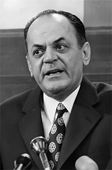 Georgios PapadopoulosPersonGeorgios Papadopoulos was a Greek army colonel who led the military coup of 21 April 1967 and headed the junta that ruled Greece until 1974.
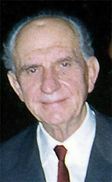 Georgios PapandreouPersonGeorge Papandreou was a Greek liberal politician who led the government in exile and returned to liberated Athens in 1944.
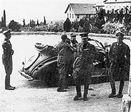 Georgios TsolakoglouPersonGeorgios Tsolakoglou was a Greek army officer who surrendered the Army of Epirus to the Germans in April 1941 without authority and became the first prime minister of…
 Georgius AgricolaPersonGeorgius Agricola was a German physician and scholar, often called the father of mineralogy.
- Georgius CandidiusPersonGeorgius Candidius was a Dutch Reformed missionary, the first Protestant missionary in Taiwan, who arrived in 1627 and worked among the Siraya people around the village…
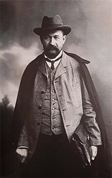 Georgy LvovPersonPrince Georgy Lvov was a Russian liberal politician who headed the Provisional Government from March to July 1917, after the February Revolution.
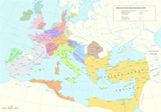 GepidsPeople / groupThe Gepids were an East Germanic people closely related to the Goths, settled north of the lower Danube by the 3rd century.
- Geraint of DumnoniaPersonGeraint was a king of Dumnonia in south-western Britain around 700.
 Gerald DurrellPersonGerald Durrell was a British naturalist, writer and conservationist.
- Gerald FitzGerald, 14th Earl of DesmondPersonGerald FitzGerald, Earl of Desmond, numbered the 14th or 15th earl, was the last of the great FitzGerald lords of Desmond in Munster.
- Gerald FitzGerald, 3rd Earl of DesmondPersonGerald FitzGerald, 3rd Earl of Desmond, known in Irish as Gearóid Iarla, was a Hiberno-Norman lord who served as Justiciar of Ireland from 1367.
 Gerald FitzGerald, 8th Earl of KildarePersonGerald FitzGerald, 8th Earl of Kildare, known as Garret Mór or the Great Earl, was the leading Anglo-Irish magnate of his age and Lord Deputy of Ireland for most of the…
 Gerald TemplerPersonGerald Templer was a British army officer who served as High Commissioner in Malaya from 1952 to 1954 during the Malayan Emergency.
 Gerald the FearlessPersonGerald the Fearless (Geraldo Sem Pavor) was a Portuguese warrior who seized several Muslim towns for Afonso I of Portugal through night-time surprise attacks.
 Geraldine of AlbaniaPersonGeraldine of Albania, born Countess Géraldine Apponyi de Nagy-Appony, was a Hungarian-American noblewoman who married King Zog in 1938.
- Gerard I of GueldersPersonGerard I, of the house of Wassenberg, was the first count of Guelders, styled so from around 1096 after a castle near Geldern.
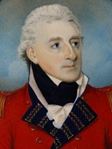 Gerard Lake, 1st Viscount LakePersonGerard Lake, 1st Viscount Lake, was a British general who became commander-in-chief in India in 1801.
- Gerard of AlsacePersonGerard of Alsace was Duke of Upper Lorraine from 1048 to 1070, appointed by Emperor Henry III.
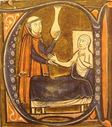 Gerard of CremonaPersonGerard of Cremona was an Italian scholar who worked in Toledo and translated scores of Arabic scientific and philosophical works into Latin.
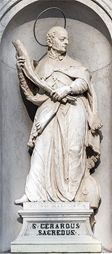 Gerard of CsanádPersonGerard of Csanád was a Venetian-born Benedictine monk who became tutor to Stephen I's son Emeric and, around 1030, the first bishop of Csanád (Cenad) in southern Hungary.
 Gerard of RoussillonPersonGerard of Roussillon was a Frankish count, a supporter of the emperor Lothar I, who governed the kingdom of Provence for the young king Charles of Provence from 855.
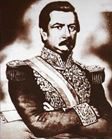 Gerardo BarriosPersonGerardo Barrios was a Salvadoran general and liberal president from 1859 to 1863, a follower of Francisco Morazán's dream of Central American union.
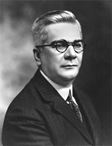 Gerardo MachadoPersonGerardo Machado was a Cuban general of the independence war who was elected president in 1924 and took office in 1925.
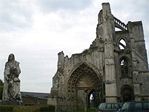 Gerbod the FlemingPersonGerbod the Fleming was a Flemish nobleman who received the earldom of Chester from William the Conqueror around 1070, after the suppression of English resistance in the…
- Geremia GhisiPersonGeremia Ghisi was a Venetian noble who, with his brother Andrea, conquered Tinos and Mykonos around 1207 in the private Venetian ventures that followed the Fourth…
- GeresenjePersonGeresenje was the youngest son of Dayan Khan, the ruler who reunited the eastern Mongols around 1500.
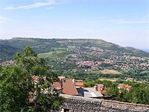 GergoviaPlaceGergovia was a fortified hilltop town of the Arverni in Gaul, on a plateau south of modern Clermont-Ferrand.
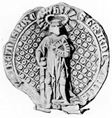 Gerhard III, Count of Holstein-RendsburgPersonGerhard III (c. 1292–1340), called the Great or the Bald, was Count of Holstein-Rendsburg and the dominant power in Denmark during the interregnum of 1332–1340.
 Gerhard von ScharnhorstPersonGerhard von Scharnhorst was a Hanoverian-born Prussian general and military reformer, trained at Count William of Schaumburg-Lippe's military school on the Wilhelmstein.
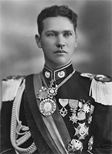 Germán BuschPersonGermán Busch was a Bolivian army officer, a hero of the Chaco War, who became president in 1937 after overthrowing David Toro.
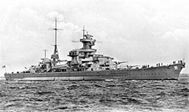 German cruiser BlücherWork / monumentBlücher was an Admiral Hipper-class heavy cruiser of the German navy, commissioned in 1939.
 German East AfricaPlaceGerman East Africa was a colony of the German Empire covering present-day mainland Tanzania, Rwanda and Burundi.
 German East Africa CompanyInstitutionThe German East Africa Company was a chartered company founded by Carl Peters in 1885 to administer and exploit the lands claimed through his treaties on the East…
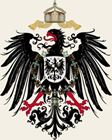 German EmperorTermGerman Emperor was the title of the head of the German Empire from 1871 to 1918, always held by the King of Prussia.
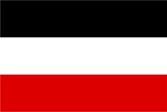 German EmpireStateThe German Empire was the unified German state proclaimed in 1871 under Prussian leadership after the Franco-Prussian War.
- German Federal ActTreaty · 1815The German Federal Act of 8 June 1815 was the founding treaty of the German Confederation, agreed at the Congress of Vienna and incorporated into its Final Act.
 German General StaffInstitutionThe German General Staff was the planning body of the Prussian and German army.
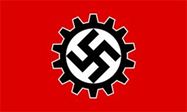 German Labour FrontInstitutionThe German Labour Front was the Nazi organisation that replaced the trade unions after they were dissolved in May 1933.
- German Naval LawsEventThe German Naval Laws were acts passed in 1898 and 1900, sponsored by Admiral Tirpitz, which provided for a large battle fleet.
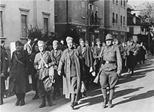 German occupation of ItalyEventThe German occupation of Italy began in 1943, after Italy signed an armistice with the Allies and German forces took control of much of the country.
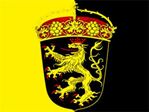 German PalatinesPeople / groupThe Palatines were German emigrants from the Electoral Palatinate and neighbouring Rhineland territories who left in large numbers in the eighteenth century, driven by…
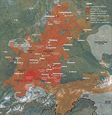 German Peasants' WarRevolt · 1524–1525The German Peasants' War was a widespread rising of peasants and townspeople in southern and central Germany, Austria and Switzerland in 1524–1525.
- German reunificationEventGerman reunification was the process by which the German Democratic Republic (East Germany) joined the Federal Republic of Germany (West Germany) on 3 October 1990…
 German Revolution of 1918–1919Revolution · 1918The German Revolution of 1918–1919 began with sailors' mutinies in late 1918 and spread across Germany.
 German South West AfricaPlaceGerman South West Africa was a colony of the German Empire in present-day Namibia.
- Germani CisrhenaniPeople / groupThe Germani Cisrhenani were a group of peoples living west of the Rhine in the Ardennes and Meuse region whom Julius Caesar called Germani.
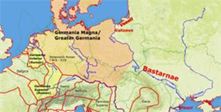 GermaniaPlaceGermania was the Roman name for the lands east of the Rhine and north of the Danube inhabited by Germanic peoples, which Rome never permanently conquered after its…
 Germania InferiorPlaceGermania Inferior was a Roman province on the lower Rhine, covering parts of the present-day Netherlands, Belgium and western Germany, with its capital at Cologne…
- Germanic peoplesPeople / groupThe Germanic peoples were speakers of Germanic languages in northern and central Europe.
 GermanicusPersonGermanicus Julius Caesar (15 BCE–19 CE) was a Roman general, nephew and adopted son of the emperor Tiberius.
 GermanisationTermGermanisation is the spread of the German language, people and culture into other lands, through settlement or state policy.
 Germantown, PhiladelphiaPlaceGermantown is a district of north-western Philadelphia, founded in 1683 by German and Dutch Quaker and Mennonite families led by Francis Daniel Pastorius.
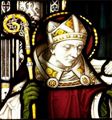 Germanus of AuxerrePersonGermanus of Auxerre was a Gallo-Roman bishop of Auxerre who visited Britain in 429, and perhaps again later, to oppose the Pelagian heresy.
 GermanyPlaceGermany is a country in central Europe.
 German–Polish War (1002–1018)War · 1002–1018The German–Polish War of 1002–1018 was a series of conflicts between the Polish duke Bolesław I the Brave and the German king and emperor Henry II over Lusatia, Meissen…
- GermiInstitutionThe germi were the nobility in the Wolof society of the Jolof Empire.
 Gernrode AbbeyWork / monumentGernrode Abbey was a convent for noblewomen in the Harz foothills of Saxony-Anhalt, Germany, founded in 959 by Margrave Gero, who was buried there.
 Gero the GreatPersonGero the Great was a Saxon noble whom Otto I appointed in 937 to command the eastern frontier of Saxony against the Slavs.
- Gerontius (general)PersonGerontius was a Roman general who served the usurper Constantine III, proclaimed emperor in Britain in 407.
- Gerrit Jacobus van NiekerkPersonGerrit Jacobus van Niekerk was a Boer leader who served as administrator of the Republic of Stellaland, founded in 1882 with its capital at Vryburg.
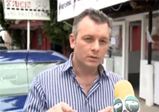 Gerrit SchottePersonGerrit Schotte is a Curaçao politician who became the first prime minister of Curaçao when it became an autonomous country within the Kingdom of the Netherlands on 10…
- Gerrit van WuysthoffPersonGerrit van Wuysthoff was a merchant of the Dutch East India Company who led a trading mission up the Mekong from Cambodia to Vientiane, the capital of Lan Xang, in 1641…
 GersPlaceThe Gers is a department of Gascony in south-western France, named after the river Gers, a tributary of the Garonne, with its capital at Auch.
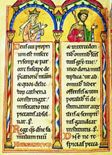 Gertrude of MeraniaPersonGertrude of Merania (c. 1185–1213) was queen of Hungary as the first wife of Andrew II, and a daughter of Berthold IV, Duke of Merania.
- Geshem the ArabPersonGeshem the Arab was a 5th-century BCE Arab ruler named in the Book of Nehemiah as one of the opponents of Nehemiah's rebuilding of the walls of Jerusalem.
- Gessius FlorusPersonGessius Florus was the Roman procurator of Judaea from 64 to 66 CE, appointed under Nero.
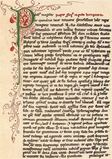 Gesta HungarorumWork / monumentThe Gesta Hungarorum is a Latin chronicle of the Hungarian conquest of the Carpathian Basin, written around 1200 by an anonymous notary of a King Béla.
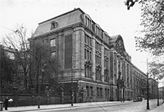 GestapoInstitutionThe Gestapo was the secret state police of Nazi Germany, created in Prussia by Hermann Göring in 1933 and taken over by Heinrich Himmler, under whose SS it extended…