Inventions & Discoveries · Writing and counting
Library of Ashurbanipal
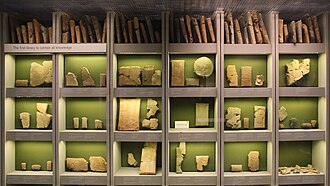
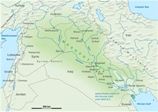
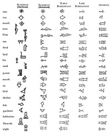
The Library of Ashurbanipal is a collection of more than 30,000 clay tablets and fragments of the 7th century BCE, gathered at Nineveh, the capital of Assyria, by Ashurbanipal, king of the Neo-Assyrian Empire from 668 to 627 BCE. He had cities and centres of learning across Mesopotamia send him copies of their texts, sent scribes to collect them and took tablets as war loot; the texts, mostly Akkadian in cuneiform, were placed in rooms by subject and marked with coloured signs or their first words. The fire that destroyed Nineveh in 612 BCE baked the tablets, among them the Epic of Gilgamesh. Most are now in the British Museum.
On the inventions tree
- First known
- 668–627 BCE
- Where
- Nineveh, Mesopotamia
- Credited to
- Ashurbanipal · Assyrian Empire
NoteA similar library was found in 1849 in the palace of Sennacherib (705–681 BCE), and because the tablets of the two were mixed after reaching Europe, the contents of each can hardly be reconstructed.
Songs in history
See also


Cite this entry
- APA
- The Epoch Institute. (2026). Library of Ashurbanipal. In The Epoch Institute Encyclopedia. https://the-epoch-institute.org/encyclopedia/library-of-ashurbanipal
- MLA
- “Library of Ashurbanipal.” The Epoch Institute Encyclopedia, The Epoch Institute, 2026, https://the-epoch-institute.org/encyclopedia/library-of-ashurbanipal. Accessed .
- Chicago
- The Epoch Institute. “Library of Ashurbanipal.” The Epoch Institute Encyclopedia. 2026. https://the-epoch-institute.org/encyclopedia/library-of-ashurbanipal.
- Harvard
- The Epoch Institute (2026) ‘Library of Ashurbanipal’, The Epoch Institute Encyclopedia. Available at: https://the-epoch-institute.org/encyclopedia/library-of-ashurbanipal (Accessed: ).
Last reviewed October 2026Random entry ↻