Inventions & Discoveries · Chemistry
Soap
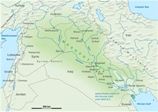
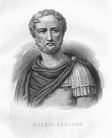
Soap is a salt of a fatty acid, often made by mixing fats or oils with an alkali, used for washing and cleaning; the earliest recorded evidence of soap-like materials comes from Mesopotamia, c. 2800 BCE. A Sumerian clay tablet of c. 2500 BCE gives a formula of oil and wood ash for washing woollen clothing. These proto-soaps differed from true soap, which foams; who first made true soap is uncertain, and Pliny the Elder called it "an invention of the Gauls". In the Islamic Golden Age soap-making became an established industry.

On the inventions tree
- First known
- c. 2800 BCE
- Where
- Mesopotamia
NoteWho first made true soap, as distinct from earlier soap-like mixtures, is uncertain; Pliny the Elder called it an invention of the Gauls.
See also

Cite this entry
- APA
- The Epoch Institute. (2026). Soap. In The Epoch Institute Encyclopedia. https://the-epoch-institute.org/encyclopedia/soap
- MLA
- “Soap.” The Epoch Institute Encyclopedia, The Epoch Institute, 2026, https://the-epoch-institute.org/encyclopedia/soap. Accessed .
- Chicago
- The Epoch Institute. “Soap.” The Epoch Institute Encyclopedia. 2026. https://the-epoch-institute.org/encyclopedia/soap.
- Harvard
- The Epoch Institute (2026) ‘Soap’, The Epoch Institute Encyclopedia. Available at: https://the-epoch-institute.org/encyclopedia/soap (Accessed: ).
Last reviewed October 2026Random entry ↻