Inventions & Discoveries · Science and discovery
Voltaic pile
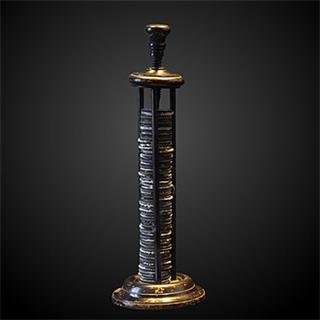
The voltaic pile is a stack of paired metal discs separated by brine-soaked cloth or cardboard, the first electrical battery that could continuously provide an electric current; it was invented by the Italian chemist Alessandro Volta, who published his experiments in 1799 and described the device to the Royal Society in London on 20 March 1800. It soon enabled the electrolysis of water, in 1800, and Humphry Davy's isolation of sodium and potassium in 1807. Batteries related to Volta's powered the 19th-century electrical industry until the dynamo arrived in the 1870s.
On the inventions tree
- First known
- 1800
- Where
- Italy
- Credited to
- Alessandro Volta
See also



Cite this entry
- APA
- The Epoch Institute. (2026). Voltaic pile. In The Epoch Institute Encyclopedia. https://the-epoch-institute.org/encyclopedia/voltaic-pile
- MLA
- “Voltaic pile.” The Epoch Institute Encyclopedia, The Epoch Institute, 2026, https://the-epoch-institute.org/encyclopedia/voltaic-pile. Accessed .
- Chicago
- The Epoch Institute. “Voltaic pile.” The Epoch Institute Encyclopedia. 2026. https://the-epoch-institute.org/encyclopedia/voltaic-pile.
- Harvard
- The Epoch Institute (2026) ‘Voltaic pile’, The Epoch Institute Encyclopedia. Available at: https://the-epoch-institute.org/encyclopedia/voltaic-pile (Accessed: ).
Last reviewed October 2026Random entry ↻