26 September in history
8 events that happened on 26 September, from 46 BCE to 1983.
✦ Anniversary of the day
46 BCE 2,071 years ago
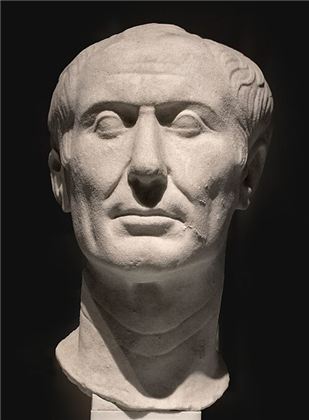
Julius Caesar dedicates the Temple of Venus Genetrix
Amid the celebrations of his triumphs, Caesar dedicated a temple to Venus Genetrix, the mythical ancestress of his family, in his new forum. It proclaimed his divine lineage and unrivalled power.
1087 CE 939 years ago
William II of England is crowned king
William II, called Rufus, the third son of William the Conqueror, was crowned king of England. He put down rebellions by barons who favoured his elder brother Robert Curthose, and in 1096 took Normandy in pledge from Robert.
1371 CE 655 years ago
The Ottomans destroy a Serbian army at the Battle of Maritsa
At Chernomen on the Maritsa river, an Ottoman force under Lala Şahin Pasha destroyed the army of the Serbian king Vukašin and the despot Jovan Uglješa, both of whom were killed. The defeat opened Macedonia to the Ottomans.
1423 CE 603 years ago
A French army defeats the English at La Brossinière
In the Hundred Years' War, a French army defeated English forces at La Brossinière, in a battle also known as the Battle of la Gravelle.
1580 CE 446 years ago
Francis Drake returns from his voyage around the world
The Golden Hind sailed into Plymouth after nearly three years, laden with Spanish treasure. Drake was the first captain to complete a circumnavigation and was knighted aboard his ship the next April.
1905 CE 121 years ago
Einstein's paper on special relativity is published
Annalen der Physik published Einstein's 'On the Electrodynamics of Moving Bodies', which showed that measurements of time and space depend on the observer's motion. It transformed physics.
1983 CE 43 years ago
Stanislav Petrov judges a Soviet missile alert a false alarm
Duty officer Stanislav Petrov saw satellite warnings of US missile launches and reported them as a malfunction rather than an attack. He was right, and may have averted a nuclear war.
Born on 26 September 3


Died on 26 September 3

Dates as the sources give them: in the Julian calendar before 1582, and in some countries for longer (Britain until 1752, Russia until 1918). Only people whose day of birth or death the records agree on are listed.