Conflicts & Resolutions · Treaty
Convention of Kanagawa
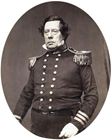
The Convention of Kanagawa was the treaty signed in 1854 between the Tokugawa shogunate and the United States, following Commodore Matthew Perry's expedition. It opened two ports to American vessels and ended Japan's policy of national seclusion. The treaty exposed the military weakness of the Tokugawa Shogunate and helped bring about its downfall.

Mentioned in 1 profile
See also



Cite this entry
- APA
- The Epoch Institute. (2026). Convention of Kanagawa. In The Epoch Institute Encyclopedia. https://the-epoch-institute.org/encyclopedia/convention-of-kanagawa
- MLA
- “Convention of Kanagawa.” The Epoch Institute Encyclopedia, The Epoch Institute, 2026, https://the-epoch-institute.org/encyclopedia/convention-of-kanagawa. Accessed .
- Chicago
- The Epoch Institute. “Convention of Kanagawa.” The Epoch Institute Encyclopedia. 2026. https://the-epoch-institute.org/encyclopedia/convention-of-kanagawa.
- Harvard
- The Epoch Institute (2026) ‘Convention of Kanagawa’, The Epoch Institute Encyclopedia. Available at: https://the-epoch-institute.org/encyclopedia/convention-of-kanagawa (Accessed: ).
Last reviewed October 2026Random entry ↻