Encyclopedia: C
2,001 entries under C · page 17 of 21: Constitution of Japan – Corruption
 Constitution of JapanWork / monumentThe Constitution of Japan was adopted in 1947 under the Allied occupation after the Second World War, replacing the Meiji Constitution of 1889.
 Constitution of LatviaWork / monumentThe Constitution of Latvia, the Satversme, was adopted by the Constituent Assembly on 15 February 1922 and came into force in November 1922.
- Constitution of MedinaWork / monumentThe Constitution of Medina is a document attributed to Muhammad, drawn up soon after his emigration to Medina in 622.
- Constitution of the LacedaemoniansWork / monumentThe Constitution of the Lacedaemonians is a short treatise on the Spartan state and way of life written by the Athenian historian Xenophon, who lived for years under…
 Constitution of the United StatesWork / monumentThe Constitution of the United States was drafted by the Philadelphia Convention in 1787, ratified in 1788 and in force from 1789.
- Constitutional Act 1791EventThe Constitutional Act of 1791 was a British law that divided the Province of Quebec into Upper Canada, mainly English-speaking, and Lower Canada, mainly French-speaking.
 Constitutional Convention (United States)EventThe Constitutional Convention met in Philadelphia from May to September 1787 to revise the Articles of Confederation, but instead drafted a new Constitution of the…
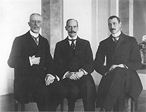 Constitutional monarchyTermA constitutional monarchy is a form of government in which a monarch is head of state but exercises power within the limits of a constitution.
 Constitutionalist ArmyPeople / groupThe Constitutionalist Army was the force raised in 1913 by Venustiano Carranza, governor of Coahuila, to restore constitutional government after Victoriano Huerta's coup.
 Constitutionalist RevolutionRevolt · 1932The Constitutionalist Revolution was an armed uprising of the state of São Paulo against the provisional government of Getúlio Vargas, fought from July to October 1932.
- Constitutions of King JohnWork / monumentThe Constitutions of King John are the privileges of the Channel Islands traditionally said to have been granted by King John after the loss of Normandy in 1204.
 Constitutions of MelfiWork / monumentThe Constitutions of Melfi were a law code issued by the Emperor Frederick II for the Kingdom of Sicily at Melfi in 1231.
 Constructivism (art)Religion / ideaConstructivism was an avant-garde movement in art and architecture that took shape in Russia after the 1917 revolution, building on the work of Vladimir Tatlin.
- Consuetudines et IusticieWork / monumentThe Consuetudines et Iusticie is a record of the rights of the duke of Normandy, drawn up from an inquest held at Caen in July 1091 by Robert Curthose and William…
- ConsulInstitutionA consul was the highest elected magistrate of the Roman Republic, two being elected annually to command armies and preside over the government.
 Consulate of the SeaWork / monumentThe Consolat de Mar is a collection of maritime customs and laws compiled in Catalan, probably in Barcelona in the fourteenth century, and printed in 1484.
- Consulta of LyonEventThe Consulta of Lyon was an assembly of some 450 delegates of the Cisalpine Republic convened by Napoleon Bonaparte at Lyon from December 1801 to January 1802.
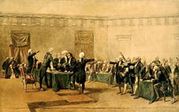 Continental CongressInstitutionThe Continental Congress was the assembly of delegates from the Thirteen Colonies that directed American resistance to Britain and then governed the United States.
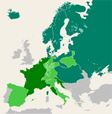 Continental SystemEventThe Continental System was Napoleon's embargo on British trade, decreed in Berlin in 1806 and Milan in 1807, which forbade France, its allies and dependent states from…
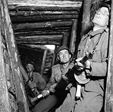 Continuation WarWar · 1941–1944The Continuation War was the conflict between Finland and the Soviet Union from June 1941 to September 1944, fought alongside Germany's invasion of the Soviet Union.
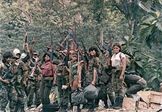 ContrasPeople / groupThe Contras were right-wing rebel groups that fought the Sandinista government of Nicaragua in the 1980s.
- Contrebia BelaiscaPlaceContrebia Belaisca was a Celtiberian town of the Belli at Cabezo de las Minas, near Botorrita south of Zaragoza in Spain.
- Contribution systemInstitutionThe contribution system was the Swedish practice of extracting revenue from occupied territories, especially in Germany and the Baltic, to fund the armies stationed…
- Control of trade routesHistorical factorControl of trade routes refers to the dominance of key commercial corridors, chokepoints and entrepôts, allowing a state to tax, protect or monopolise the flow of goods.
 Convention for a Democratic South AfricaEventThe Convention for a Democratic South Africa (CODESA) was the multi-party negotiation on ending apartheid that opened near Johannesburg in December 1991.
- Convention of Druim CettEventThe Convention of Druim Cett was an assembly held near Limavady in the north of Ireland, around 575 or perhaps later, at which the high king Áed mac Ainmuirech met…
 Convention of KanagawaTreaty · 1854The Convention of Kanagawa was the treaty signed in 1854 between the Tokugawa shogunate and the United States, following Commodore Matthew Perry's expedition.
- Convention of London (1786)Treaty · 1786The Convention of London was signed by Britain and Spain on 14 July 1786.
- Convention of MombelloEventThe Convention of Mombello was the agreement of 6 June 1797, made at Napoleon Bonaparte's headquarters in the villa of Mombello near Milan, under which the aristocratic…
 Convention of MossTreaty · Peace · 1814The Convention of Moss was the ceasefire agreement signed on 14 August 1814 at Moss, south of Christiania, that ended the brief Swedish–Norwegian War.
- Convention of OcañaEventThe Convention of Ocaña was a constitutional assembly of Gran Colombia that met at Ocaña in New Granada from April to June 1828 to reform the Constitution of 1821.
 Convention Parliament (1660)InstitutionThe Convention Parliament of 1660 was an English parliament elected without royal writ after General George Monck restored the members excluded from the Long Parliament.
 Convention People's PartyPeople / groupThe Convention People's Party is a Ghanaian political party founded by Kwame Nkrumah in June 1949 after he broke with the United Gold Coast Convention.
- Convertibility PlanEventThe Convertibility Plan was the Argentine monetary system introduced in 1991 by President Carlos Menem's economy minister Domingo Cavallo, which fixed the peso at par…
 Cooch Behar PalaceWork / monumentCooch Behar Palace, also called the Victor Jubilee Palace, is a royal residence in Cooch Behar, West Bengal, built in 1887 for Maharaja Nripendra Narayan in a style…
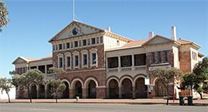 CoolgardiePlaceCoolgardie is a town in the Goldfields region of Western Australia.
 Cooperative Cyber Defence Centre of ExcellenceInstitutionThe NATO Cooperative Cyber Defence Centre of Excellence is a research and training centre on cyber defence in Tallinn, Estonia.
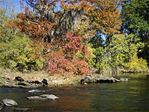 Coosa RiverPlaceThe Coosa River flows about 450 km from north-western Georgia through Alabama, where it joins the Tallapoosa to form the Alabama River.
 Coosawattee RiverPlaceThe Coosawattee River is a river in north-west Georgia, in the United States, which joins the Conasauga near Calhoun to form the Oostanaula.
 COP28EventCOP28, the 2023 United Nations Climate Change Conference, was held at Expo City Dubai in the United Arab Emirates from 30 November to 13 December 2023 under the…
 CopenhagenPlaceCopenhagen is the capital and largest city of Denmark, on the island of Zealand facing the Øresund.
 CopperTermCopper is a reddish metal used since ancient times for tools, ornaments and, alloyed with tin, bronze.
- Copper ingotTermCopper ingots are cast bars or shapes of copper used for trade and storage of value.
- Copper plate inscriptionsWork / monumentCopper plate inscriptions are legal records engraved on copper sheets, used in India to document royal land grants.
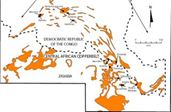 CopperbeltPlaceThe Copperbelt is a region of rich copper deposits straddling the border of present-day Zambia and the Democratic Republic of the Congo.
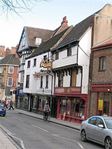 CoppergatePlaceCoppergate is a street in the centre of York, England, whose name comes from the Old Norse for street of the cup-makers.
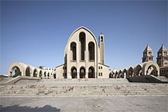 Coptic Orthodox ChurchInstitutionThe Coptic Orthodox Church is the main Christian church of Egypt, headed by the Pope of Alexandria.
 Coptic Pope of AlexandriaTermThe Coptic Pope of Alexandria is the patriarch and head of the Coptic Orthodox Church, the Miaphysite church of Egypt that separated from the Chalcedonian church after…
- CoptosPlaceCoptos, modern Qift, was an ancient Egyptian city on the east bank of the Nile north of Thebes.
- CoptsPeople / groupThe Copts are the native Christians of Egypt, whose church traces its origins to the early Christian community of Alexandria.
 Cora peoplePeople / groupThe Cora, who call themselves Náayeri, are an indigenous people of the Sierra del Nayar in the Mexican state of Nayarit, speaking a Uto-Aztecan language.
 Corazon AquinoPersonCorazon Aquino was president of the Philippines from 1986 to 1992, the first woman to hold the office.
 Corbie AbbeyInstitutionCorbie Abbey was a Benedictine monastery in Picardy, northern France, founded around 657 by Queen Balthild.
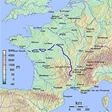 CorbiloPlaceCorbilo was an ancient trading settlement at or near the mouth of the Loire in western Gaul.
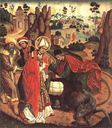 CorbinianPersonCorbinian was a Frankish missionary bishop who worked at Freising in Bavaria around 720 and is regarded as the founder of its diocese.
 Corcu DuibnePeople / groupThe Corcu Duibne were an early medieval Irish population group of west Munster, settled on the Dingle and Iveragh peninsulas of modern County Kerry.
- Corcyre (department)PlaceCorcyre was a French department created in 1797 from the former Venetian Ionian Islands after the Treaty of Campo Formio, named after the ancient Greek name of Corfu.
- CórdobaPlaceCórdoba is a city in Andalusia, southern Spain, on the Guadalquivir River.
 CorentPlaceCorent is a basalt plateau in the Auvergne, south of Clermont-Ferrand, and the site of a large oppidum of the Arverni in the 2nd and 1st centuries BCE.
 CorfiniumPlaceCorfinium was the chief town of the Paeligni in the Abruzzo mountains of central Italy, near modern Corfinio.
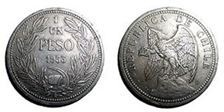 CORFOInstitutionCORFO, the Production Development Corporation, is a Chilean state agency founded in 1939 by the Popular Front government of Pedro Aguirre Cerda, after the Chillán…
 Corfu DeclarationWork / monumentThe Corfu Declaration was an agreement signed on 20 July 1917 on the Greek island of Corfu by the Serbian government in exile under Nikola Pašić and the Yugoslav…
 CoricanchaWork / monumentThe Coricancha was the most important temple of the Inca Empire, in Cusco, dedicated chiefly to the sun god Inti.
 Corinium DobunnorumPlaceCorinium Dobunnorum was the Roman town at Cirencester in Gloucestershire, England.
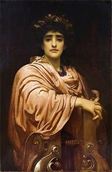 CorinnaPersonCorinna was a lyric poet from Tanagra in Boeotia who wrote narrative poems on local myths in the Boeotian dialect.
 Corinth CanalWork / monumentThe Corinth Canal is a canal across the Isthmus of Corinth in Greece, connecting the Gulf of Corinth with the Saronic Gulf and separating the Peloponnese from the…
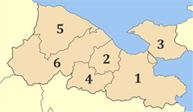 CorinthiaPlaceCorinthia is a region of southern Greece around the Isthmus of Corinth, linking the Peloponnese with the mainland.
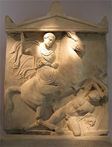 Corinthian WarWar · 395–387 BCEThe Corinthian War was fought from 395 to 387 BCE between Sparta and an alliance of Thebes, Athens, Corinth and Argos, supported at first by Persia.
- CorintoPlaceCorinto is a port city on the Pacific coast of north-western Nicaragua, on Aserradores Island in the department of Chinandega.
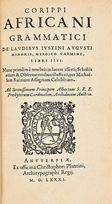 CorippusPersonFlavius Cresconius Corippus was a Latin poet from Roman North Africa in the 6th century.
- CorkPlaceCork is the second-largest city in Ireland, on the River Lee in the south of the country.
- Cormac Mac CarthaighPersonCormac Mac Carthaigh was king of Desmond, and at times of all Munster, from about 1123 until his murder in 1138.
- Cormac's ChapelWork / monumentCormac's Chapel is a Romanesque chapel on the Rock of Cashel in County Tipperary, Ireland, built by Cormac Mac Carthaigh, king of Desmond, and consecrated in 1134.
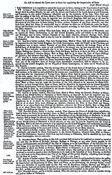 Corn LawsWork / monumentThe Corn Laws were tariffs and other restrictions on imported grain in the United Kingdom, in force from 1815 to 1846, which kept bread prices high to protect the…
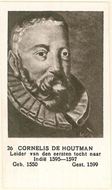 Cornelis de HoutmanPersonCornelis de Houtman was a Dutch explorer who led the first Dutch expedition to the East Indies, which sailed in 1595.
- Cornelis GooyerPersonCornelis Gooyer was the first Dutch commander of Mauritius, sent by the Dutch East India Company in 1638 to set up a permanent post at Grand Port in the south-east of…
 Cornelis JolPersonCornelis Jol, nicknamed Houtebeen ('Peg Leg'), was a Dutch admiral and privateer of the Dutch West India Company.
- Cornelis LampsinsPersonCornelis Lampsins was a merchant and burgomaster of Vlissingen in Zeeland.
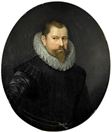 Cornelis Matelief de JongePersonCornelis Matelief de Jonge was a Dutch admiral of the Dutch East India Company (VOC).
 Cornelis SpeelmanPersonCornelis Speelman was a Dutch East India Company commander and governor-general of the Dutch East Indies from 1681 to 1684.
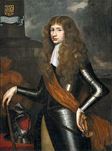 Cornelis van Aerssen van SommelsdijckPersonCornelis van Aerssen van Sommelsdijck was a Dutch nobleman who held a one-third share in the Society of Suriname, formed in 1683 with the Dutch West India Company and…
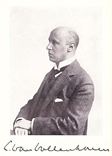 Cornelis van VollenhovenPersonCornelis van Vollenhoven was a Dutch legal scholar at Leiden University who founded the systematic study of adat, the customary law of the peoples of the Dutch East…
- Cornelius FuscusPersonCornelius Fuscus was a Roman equestrian who served as praetorian prefect under the emperor Domitian.
 Cornelius VanderbiltPersonCornelius Vanderbilt was an American shipping and railway magnate, one of the richest men of the nineteenth century.
 CornplanterPersonCornplanter was a Seneca war chief who fought on the British side in the American War of Independence and later sought peace with the United States.
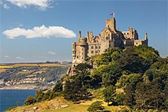 CornwallPlaceCornwall is a county in the far south-west of England, a peninsula bounded by the Atlantic and the English Channel.
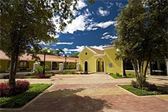 Coro, VenezuelaPlaceCoro, formally Santa Ana de Coro, is a city in north-western Venezuela, the capital of Falcón state.
 Coromandel CoastPlaceThe Coromandel Coast is the southeastern coast of the Indian subcontinent, along the Bay of Bengal.
 Coronation of CharlemagneEventThe coronation of Charlemagne took place in Rome on Christmas Day 800 CE, when Pope Leo III crowned the Frankish king as emperor.
- Coronation of NabopolassarEventThe coronation of Nabopolassar took place in Babylon in 626 BCE, after the Chaldean leader seized the city and declared independence from Assyria.
- Coronation of ShivajiEventThe coronation of Shivaji took place in 1674 at Raigad, where he was crowned as Chhatrapati with elaborate Vedic rites.
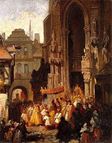 Corpus Christi (feast)Religion / ideaCorpus Christi is a Christian feast honouring the Eucharist, celebrated on the Thursday after Trinity Sunday.
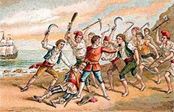 Corpus de SangRevolt · 1640The Corpus de Sang ('Bloody Corpus') was the riot of 7 June 1640 in Barcelona, when reapers and townspeople, angered by the billeting of royal troops, killed the…
- Corpus EvangelicorumInstitutionThe Corpus Evangelicorum was the body of the Protestant estates at the Imperial Diet of the Holy Roman Empire, formally constituted in 1653 under the Peace of…
 Corpus Juris CivilisWork / monumentThe Corpus Juris Civilis is the body of Roman law compiled on the orders of the Byzantine emperor Justinian I, completed in 534 CE.
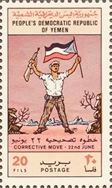 Corrective MoveEventThe Corrective Move was the seizure of power on 22 June 1969 by the left wing of South Yemen's ruling National Liberation Front, which removed President Qahtan al-Shaabi.
 Correo del OrinocoWork / monumentThe Correo del Orinoco was a newspaper published at Angostura, now Ciudad Bolívar, from 1818 to 1822 by the patriot government of Simón Bolívar.
- CorreusPersonCorreus was a leader of the Bellovaci, a Belgic people of northern Gaul.
 CorrientesPlaceCorrientes is a city in north-eastern Argentina on the east bank of the Paraná river and the capital of Corrientes Province.
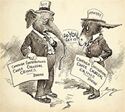 CorruptionHistorical factorCorruption, the abuse of public office for private gain, is a recurring cause of imperial decline.