Encyclopedia: C
2,041 entries under C · page 18 of 21: Corinium Dobunnorum – Council of Italy
 Corinium DobunnorumPlaceCorinium Dobunnorum was the Roman town at Cirencester in Gloucestershire, England.
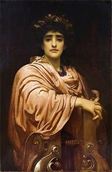 CorinnaPersonCorinna was a lyric poet from Tanagra in Boeotia who wrote narrative poems on local myths in the Boeotian dialect.
 Corinth CanalWork / monumentThe Corinth Canal is a canal across the Isthmus of Corinth in Greece, connecting the Gulf of Corinth with the Saronic Gulf and separating the Peloponnese from the…
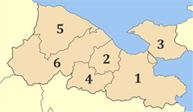 CorinthiaPlaceCorinthia is a region of southern Greece around the Isthmus of Corinth, linking the Peloponnese with the mainland.
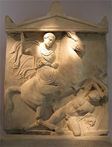 Corinthian WarWar · 395–387 BCEThe Corinthian War was fought from 395 to 387 BCE between Sparta and an alliance of Thebes, Athens, Corinth and Argos, supported at first by Persia.
- CorintoPlaceCorinto is a port city on the Pacific coast of north-western Nicaragua, on Aserradores Island in the department of Chinandega.
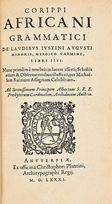 CorippusPersonFlavius Cresconius Corippus was a Latin poet from Roman North Africa in the 6th century.
- CorkPlaceCork is the second-largest city in Ireland, on the River Lee in the south of the country.
- Cormac Mac CarthaighPersonCormac Mac Carthaigh was king of Desmond, and at times of all Munster, from about 1123 until his murder in 1138.
- Cormac's ChapelWork / monumentCormac's Chapel is a Romanesque chapel on the Rock of Cashel in County Tipperary, Ireland, built by Cormac Mac Carthaigh, king of Desmond, and consecrated in 1134.
 Corn LawsWork / monumentThe Corn Laws were tariffs and other restrictions on imported grain in the United Kingdom, in force from 1815 to 1846, which kept bread prices high to protect the…
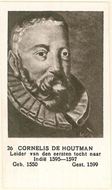 Cornelis de HoutmanPersonCornelis de Houtman was a Dutch explorer who led the first Dutch expedition to the East Indies, which sailed in 1595.
- Cornelis GooyerPersonCornelis Gooyer was the first Dutch commander of Mauritius, sent by the Dutch East India Company in 1638 to set up a permanent post at Grand Port in the south-east of…
 Cornelis JolPersonCornelis Jol, nicknamed Houtebeen ('Peg Leg'), was a Dutch admiral and privateer of the Dutch West India Company.
- Cornelis LampsinsPersonCornelis Lampsins was a merchant and burgomaster of Vlissingen in Zeeland.
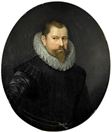 Cornelis Matelief de JongePersonCornelis Matelief de Jonge was a Dutch admiral of the Dutch East India Company (VOC).
 Cornelis SpeelmanPersonCornelis Speelman was a Dutch East India Company commander and governor-general of the Dutch East Indies from 1681 to 1684.
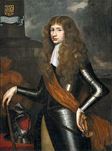 Cornelis van Aerssen van SommelsdijckPersonCornelis van Aerssen van Sommelsdijck was a Dutch nobleman who held a one-third share in the Society of Suriname, formed in 1683 with the Dutch West India Company and…
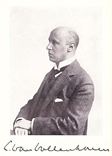 Cornelis van VollenhovenPersonCornelis van Vollenhoven was a Dutch legal scholar at Leiden University who founded the systematic study of adat, the customary law of the peoples of the Dutch East…
- Cornelius FuscusPersonCornelius Fuscus was a Roman equestrian who served as praetorian prefect under the emperor Domitian.
 Cornelius VanderbiltPersonCornelius Vanderbilt was an American shipping and railway magnate, one of the richest men of the nineteenth century.
 CornplanterPersonCornplanter was a Seneca war chief who fought on the British side in the American War of Independence and later sought peace with the United States.
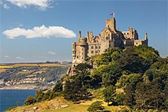 CornwallPlaceCornwall is a county in the far south-west of England, a peninsula bounded by the Atlantic and the English Channel.
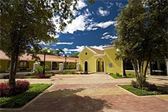 Coro, VenezuelaPlaceCoro, formally Santa Ana de Coro, is a city in north-western Venezuela, the capital of Falcón state.
 Coromandel CoastPlaceThe Coromandel Coast is the southeastern coast of the Indian subcontinent, along the Bay of Bengal.
 Coronation of CharlemagneEventThe coronation of Charlemagne took place in Rome on Christmas Day 800 CE, when Pope Leo III crowned the Frankish king as emperor.
- Coronation of NabopolassarEventThe coronation of Nabopolassar took place in Babylon in 626 BCE, after the Chaldean leader seized the city and declared independence from Assyria.
- Coronation of ShivajiEventThe coronation of Shivaji took place in 1674 at Raigad, where he was crowned as Chhatrapati with elaborate Vedic rites.
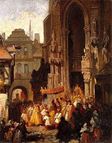 Corpus Christi (feast)Religion / ideaCorpus Christi is a Christian feast honouring the Eucharist, celebrated on the Thursday after Trinity Sunday.
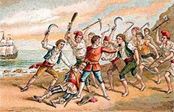 Corpus de SangRevolt · 1640The Corpus de Sang ('Bloody Corpus') was the riot of 7 June 1640 in Barcelona, when reapers and townspeople, angered by the billeting of royal troops, killed the…
- Corpus EvangelicorumInstitutionThe Corpus Evangelicorum was the body of the Protestant estates at the Imperial Diet of the Holy Roman Empire, formally constituted in 1653 under the Peace of…
 Corpus Juris CivilisWork / monumentThe Corpus Juris Civilis is the body of Roman law compiled on the orders of the Byzantine emperor Justinian I, completed in 534 CE.
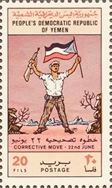 Corrective MoveEventThe Corrective Move was the seizure of power on 22 June 1969 by the left wing of South Yemen's ruling National Liberation Front, which removed President Qahtan al-Shaabi.
 Correo del OrinocoWork / monumentThe Correo del Orinoco was a newspaper published at Angostura, now Ciudad Bolívar, from 1818 to 1822 by the patriot government of Simón Bolívar.
- CorreusPersonCorreus was a leader of the Bellovaci, a Belgic people of northern Gaul.
 CorrientesPlaceCorrientes is a city in north-eastern Argentina on the east bank of the Paraná river and the capital of Corrientes Province.
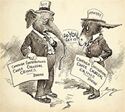 CorruptionHistorical factorCorruption, the abuse of public office for private gain, is a recurring cause of imperial decline.
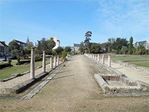 CorseulPlaceCorseul is a village in the Côtes-d'Armor department of Brittany, France, whose name preserves that of the Coriosolites.
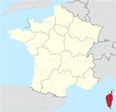 CorsicaPlaceCorsica is a mountainous island in the western Mediterranean, north of Sardinia.
- CortePlaceCorte is a town in the mountainous centre of Corsica, overlooked by a citadel on a rocky spur above the Tavignano and Restonica rivers.
- CortesInstitutionThe Cortes were the representative assemblies of the Iberian kingdoms, in which the king met the clergy, nobility and towns to grant taxes, hear grievances and swear to…
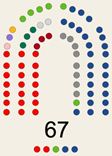 Cortes of AragonInstitutionThe Cortes of Aragon were the parliament of the Kingdom of Aragon, made up of four estates: the clergy, the great nobles, the knights and lesser nobles, and the towns.
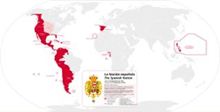 Cortes of CádizInstitutionThe Cortes of Cádiz was the national parliament that met in Cádiz from 1810 to 1814, while most of Spain was occupied by French forces.
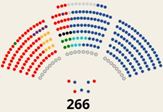 Cortes of CastileInstitutionThe Cortes of Castile were the representative assembly of the kingdom, made up of the clergy, nobles and representatives of the towns.
- Cortes of Coimbra (1385)EventThe Cortes of Coimbra was the assembly of clergy, nobles and town representatives that met at Coimbra in March and April 1385, during the succession crisis after the…
- Cortes of Leiria (1254)EventThe Cortes of Leiria, summoned by King Afonso III in 1254, is the first Portuguese Cortes known to have included representatives of the towns alongside the clergy and…
 Cortes of León of 1188EventThe Cortes of León of 1188 was an assembly summoned by King Alfonso IX of León at the start of his reign, at which elected representatives of the towns sat for the…
- Cortes of TomarEventThe Cortes of Tomar was the assembly of the Portuguese estates held at Tomar in April 1581, which recognised Philip II of Spain as King Philip I of Portugal.
- Corvée labourTermCorvée labour is unpaid work required by a state from its subjects, often for building and maintaining public works or for military service.
- CorvusTermThe corvus was a boarding bridge with a spike at its end, used by the Roman navy during the First Punic War.
- CorylasPersonCorylas was a ruler of Paphlagonia around 400 BCE, mentioned by Xenophon in the Anabasis.
 CosenzaPlaceCosenza is a city in Calabria in southern Italy, at the meeting of the Crati and Busento rivers.
 Cosimo de' MediciPersonCosimo de' Medici, called the Elder, was a Florentine banker who controlled the Republic of Florence from 1434 until his death without holding formal power for long.
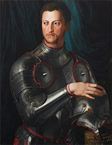 Cosimo I de' MediciPersonCosimo I de' Medici became duke of Florence at seventeen after the murder of his cousin Alessandro in 1537.
 Cosimo II de' MediciPersonCosimo II de' Medici was Grand Duke of Tuscany from 1609 to 1621.
 Cosimo III de' MediciPersonCosimo III de' Medici was Grand Duke of Tuscany from 1670 to 1723, the longest reign of the dynasty.
 Cosmas IndicopleustesPersonCosmas Indicopleustes, 'the India-voyager', was a sixth-century merchant from Alexandria who travelled the Red Sea and Indian Ocean trade routes and later became a monk.
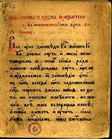 Cosmas the PriestPersonCosmas the Priest was a Bulgarian churchman of the 10th century and author of the Sermon against the Heretics, the main source on the early Bogomils.
 Cossack HetmanateStateThe Cossack Hetmanate was the state of the Zaporozhian Cossacks in central Ukraine, founded during Bohdan Khmelnytsky's uprising against the Polish-Lithuanian…
- CossacksPeople / groupThe Cossacks were self-governing communities of warriors in the steppe borderlands of Ukraine and southern Russia.
- Cossus Cornelius LentulusPersonCossus Cornelius Lentulus was a Roman aristocrat and general of the reign of Augustus, consul in 1 BCE.
- Costa (Ecuador)PlaceThe Costa is Ecuador's Pacific coastal lowland, lying between the ocean and the Andes and centred on the port of Guayaquil.
- Costanza da VaranoPersonCostanza da Varano was an Italian noblewoman and humanist writer from the Varano family of Camerino, admired for her Latin orations and letters.
 Costanzo I SforzaPersonCostanzo I Sforza was lord of Pesaro from 1473 to 1483, son of Alessandro Sforza and Costanza da Varano.
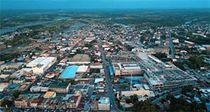 Cotabato CityPlaceCotabato City is a port on the Mindanao (Pulangi) River in the southern Philippines, the historic seat of the Sultanate of Maguindanao.
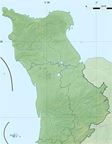 Cotentin PeninsulaPlaceThe Cotentin Peninsula is a peninsula of Normandy in north-western France, projecting into the English Channel, with the port of Cherbourg at its tip.
 Côtes-d'ArmorPlaceCôtes-d'Armor is a department of Brittany in north-western France, on the coast of the English Channel, with its prefecture at Saint-Brieuc.
 Coto WarWar · 1921The Coto War was a brief border conflict between Panama and Costa Rica in February and March 1921 over the Coto region on the Pacific side of their disputed frontier.
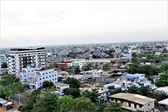 CotonouPlaceCotonou is the largest city and economic capital of Benin, on the coast between Lake Nokoué and the Atlantic.
 CotswoldsPlaceThe Cotswolds are a range of limestone hills in south-central England, mainly in Gloucestershire and Oxfordshire.
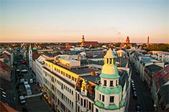 CottbusPlaceCottbus (Lower Sorbian: Chóśebuz) is the second-largest city of Brandenburg, Germany, on the Spree in Lower Lusatia.
 Cottian AlpsPlaceThe Cottian Alps are a range of the western Alps on the modern French–Italian border, crossed by the Mont Genèvre and Mont Cenis passes.
 Cottica RiverPlaceThe Cottica is a river in eastern Suriname and a tributary of the Commewijne.
 CottonTermCotton is a plant fibre spun and woven into textiles, one of the most important traded commodities in history.
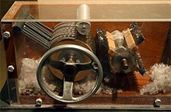 Cotton ginTermThe cotton gin is a machine that separates cotton fibres from their seeds; the earliest evidence of it is a single-roller gin depicted in 5th-century Buddhist paintings…
- CotubanamáPersonCotubanamá was the last paramount cacique of Higüey in eastern Hispaniola.
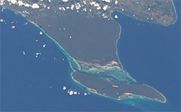 Cotubanamá National ParkPlaceCotubanamá National Park, formerly the Parque Nacional del Este, is a protected area in the south-east of the Dominican Republic that includes Saona Island.
 CotyoraPlaceCotyora (Kotyora) was an ancient Greek colony of Sinope on the Black Sea coast of north-eastern Anatolia, near modern Ordu in Turkey.
- Cotys I (Odrysian)PersonCotys I was king of the Odrysian kingdom of Thrace from 384 to 360 BCE.
 Coudenberg PalaceWork / monumentThe Coudenberg Palace was the main residence of the dukes of Brabant and later of the Burgundian and Habsburg rulers in Brussels, standing on the Coudenberg hill above…
- Council NegriInstitutionThe Council Negri is the legislature of Sarawak, first convened in 1867 under the Brooke rajahs and one of the oldest legislative bodies in South-East Asia.
- Council of AghuenEventThe Council of Aghuen was a church assembly convened around 488 by King Vachagan III the Pious of Caucasian Albania.
- Council of AragonInstitutionThe Council of Aragon was the royal council that advised the Spanish monarchs on the government of the Crown of Aragon, comprising Aragon, Catalonia, Valencia and the…
- Council of ArlesEventThe Council of Arles was a church council summoned by Constantine the Great to Arles in southern Gaul in 314 to settle the Donatist dispute in North Africa.
- Council of AssiniboiaInstitutionThe Council of Assiniboia was the appointed governing body of the District of Assiniboia, the Red River Settlement in present-day Manitoba, from 1835 to 1870.
 Council of BaselEventThe Council of Basel was a general council of the Catholic Church that met at Basel from 1431, continuing the conciliar movement.
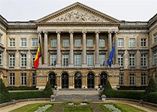 Council of BrabantInstitutionThe Council of Brabant was the highest court of justice and chief administrative council of the Duchy of Brabant, organised as a professional body under Philip the Good…
- Council of BurgosEventThe Council of Burgos was a church council held in 1080 under Alfonso VI of León and Castile, with a papal legate present.
- Council of CastileInstitutionThe Council of Castile was the chief governing council of the Crown of Castile, created by John I in 1385 and reorganised by Isabella I and Ferdinand II in 1480 with a…
 Council of ChalcedonEventThe Council of Chalcedon was the fourth ecumenical council of the Christian Church, held in 451 at Chalcedon, across the Bosporus from Constantinople, under Emperor…
- Council of CharrouxPeace · 989The Council of Charroux was a church synod held in 989 at the abbey of Charroux in Poitou, convened by Archbishop Gunbald of Bordeaux.
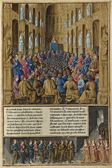 Council of ClermontEventThe Council of Clermont was a church council held by Pope Urban II at Clermont in Auvergne in November 1095.
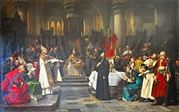 Council of ConstanceEventThe Council of Constance was a general council of the Catholic Church held in the imperial city of Constance, convened at the urging of King Sigismund.
- Council of Elders (Carthage)InstitutionThe Council of Elders was a governing body of Carthage, composed of members of the city's aristocracy.
 Council of ElviraEventThe Council of Elvira was a synod of the church in Roman Hispania held at Iliberris (Elvira), near modern Granada, in the early 4th century, usually dated around 305.
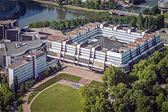 Council of EuropeInstitutionThe Council of Europe is an international organisation founded in 1949 by the Treaty of London to uphold human rights, democracy and the rule of law in Europe.
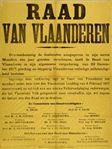 Council of FlandersInstitutionThe Council of Flanders was the high court and governing council of the County of Flanders, founded by Philip the Bold, duke of Burgundy, in 1386.
 Council of FlorenceEventThe Council of Florence was an ecumenical council of the Catholic Church that met at Ferrara from 1438 and in Florence from 1439, continuing the Council of Basel.
- Council of IndiaInstitutionThe Council of India was a body in London that advised the Secretary of State for India from 1858 to 1937.
- Council of ItalyInstitutionThe Council of Italy was a council of the Spanish monarchy, created under Philip II in the 1550s to advise the king on the government of his Italian possessions: the…