Encyclopedia: C
2,001 entries under C · page 16 of 21: Confucius – Constitution of Ireland
 ConfuciusPersonConfucius (Kong Qiu, Kongzi) was a teacher and minor official of the State of Lu whose sayings, collected by his disciples in the Analects, became the basis of…
- Congal CáechPersonCongal Cáech was king of the Dál nAraidi and of Ulaid in north-eastern Ireland, and is said to have claimed the high kingship of Tara.
- Congalach CnogbaPersonCongalach Cnogba was king of Brega and high king of Ireland from 944 until his death in 956, the last of the Síl nÁedo Sláine to hold the kingship of Tara.
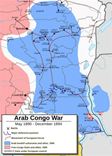 Congo Arab warWar · 1892–1894The Congo Arab war was fought from 1892 to 1894 between the Congo Free State and the Swahili-Arab traders of the eastern Congo, whose power had been built by Tippu Tip.
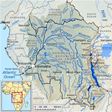 Congo BasinPlaceThe Congo basin is the vast drainage area of the Congo River in Central Africa, largely covered by tropical rainforest.
- Congo CrisisCrisis · 1960–1965The Congo Crisis was the period of upheaval in the Republic of the Congo, now the Democratic Republic of the Congo, from its independence from Belgium in June 1960 to…
 Congo Free StateStateThe Congo Free State was a state in Central Africa controlled personally by King Leopold II of Belgium from 1885 to 1908.
- Congo people (Liberia)People / groupIn Liberia, Congo people, or Congoes, were the Africans freed from slave ships by the United States Navy and settled in Liberia in the 19th century, many of them…
- Congo Reform AssociationPeople / groupThe Congo Reform Association was a humanitarian campaign founded in 1904 by the journalist E.
 Congo RiverPlaceThe Congo River is the second longest river in Africa, flowing through Central Africa to the Atlantic.
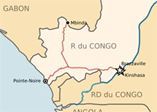 Congo–Ocean RailwayWork / monumentThe Congo–Ocean Railway runs for about 500 kilometres from Brazzaville to the port of Pointe-Noire in the Republic of the Congo.
 Congress of AngosturaEventThe Congress of Angostura was the assembly convened by Simón Bolívar at Angostura, now Ciudad Bolívar, on the Orinoco, which opened in February 1819.
 Congress of BerlinTreaty · Peace · 1878The Congress of Berlin was a meeting of the great powers chaired by Bismarck in June and July 1878 to revise the Treaty of San Stefano after the Russo-Turkish War.
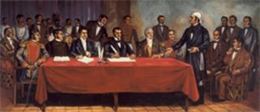 Congress of ChilpancingoInstitutionThe Congress of Chilpancingo, or Congress of Anáhuac, was the first independent legislative assembly of Mexico, convened by José María Morelos at Chilpancingo in…
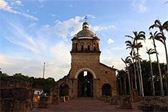 Congress of CúcutaEventThe Congress of Cúcuta was the constituent assembly of Gran Colombia, meeting at Villa del Rosario de Cúcuta from May to October 1821.
 Congress of ErfurtEventThe Congress of Erfurt was a meeting between Napoleon and Tsar Alexander I of Russia held in Erfurt from 27 September to 14 October 1808, attended by many German princes.
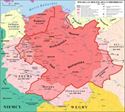 Congress of GnieznoEventThe Congress of Gniezno was a meeting in March 1000 between Emperor Otto III and Duke Bolesław I the Brave of Poland at the tomb of Saint Adalbert in Gniezno.
 Congress of LushnjëEventThe Congress of Lushnjë was a national assembly of Albanian delegates held at Lushnjë from 28 to 31 January 1920.
- Congress of MicronesiaInstitutionThe Congress of Micronesia was the elected legislature of the Trust Territory of the Pacific Islands, created in 1965 and first convened at Saipan.
- Congress of OrienteEventThe Congress of Oriente was an assembly of the Federal League convened by José Gervasio Artigas at Arroyo de la China, now Concepción del Uruguay, in June 1815.
 Congress of PanamaEventThe Congress of Panama was a meeting of Spanish American republics called by Simón Bolívar and held in Panama City in June and July 1826 to form a league of the new…
 Congress of People's Deputies of RussiaInstitutionThe Congress of People's Deputies of Russia was the highest legislative body of the Russian SFSR and then the Russian Federation from 1990 to 1993.
- Congress of People's Deputies of the Soviet UnionInstitutionThe Congress of People's Deputies of the Soviet Union was the highest body of state power in the USSR from 1989 to 1991, created by Mikhail Gorbachev's reforms.
 Congress of Soviets of the Soviet UnionInstitutionThe Congress of Soviets of the Soviet Union was the supreme organ of state power in the USSR from 1922 to 1936, made up of delegates from the soviets of the union…
 Congress of TacnaTreaty · 1837The Pact of Tacna was the agreement of May 1837 by which delegates of the North Peruvian Republic, the South Peruvian Republic and Bolivia defined the Peru–Bolivian…
- Congress of TroppauEventThe Congress of Troppau was a conference of the powers of the Holy Alliance held in late 1820 at Troppau (Opava) in Austrian Silesia.
 Congress of TucumánEventThe Congress of Tucumán was the assembly of deputies from the United Provinces of the Río de la Plata that met in San Miguel de Tucumán from March 1816.
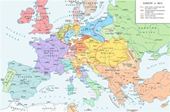 Congress of ViennaTreaty · Peace · 1815The Congress of Vienna was a conference of European powers held in 1814–1815 to reorganise Europe after the Napoleonic Wars.
- Congreve rocketTermThe Congreve rocket was a British military rocket developed by William Congreve in the early nineteenth century, based on rockets used in Mysore.
 ConimbrigaPlaceConimbriga is the site of a Roman town near Condeixa-a-Nova, south of Coimbra in central Portugal.
- Conn Bacach O'NeillPersonConn Bacach O'Neill was king of Tír Eoghain from 1519 and the first Earl of Tyrone.
- Conn of the Hundred BattlesPersonConn of the Hundred Battles is a legendary High King of Ireland, said to have reigned in the 2nd century CE.
- ConnachtaPeople / groupThe Connachta were a group of early Irish dynasties who claimed descent from the legendary king Conn of the Hundred Battles and gave their name to the province of…
 ConnecticutPlaceConnecticut is a state in the New England region of the north-eastern United States, named after the Connecticut River.
 Connecticut RiverPlaceThe Connecticut River is the longest river in New England, flowing south from near the Canadian border to Long Island Sound.
 ConnemaraPlaceConnemara is a region of western County Galway, Ireland, between Lough Corrib and the Atlantic.
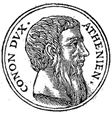 CononPersonConon was an Athenian admiral of the late 5th and early 4th centuries BCE.
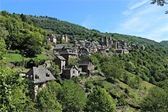 ConquesPlaceConques is a village in the Aveyron department of southern France, in the Rouergue hills.
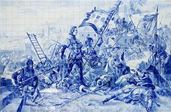 Conquest of CeutaCampaign · 1415The conquest of Ceuta was the capture of the Muslim port on the North African coast by Portuguese forces under King João I and his sons, including Prince Henry, in 1415.
- Conquest of LarsaCampaign · 1762 BCEThe conquest of Larsa was Hammurabi's capture of the rival southern Mesopotamian kingdom of Larsa, ruled by Rim-Sin, in 1762 BCE.
 Conquest of the DesertCampaign · 1878–1885The Conquest of the Desert was the Argentine military campaign, led by General Julio Argentino Roca from 1878 to 1879 and continued until 1885, that seized the pampas…
 Conquest of Wales by Edward IWar · 1277–1283The conquest of Wales by Edward I was the series of English campaigns of 1277 and 1282–1283 that ended the independent Welsh principality ruled from Gwynedd.
 Conrad I of BurgundyPersonConrad I of Burgundy, called the Peaceful, was king of the united Kingdom of Burgundy, or Arles, from 937 to 993.
 Conrad I of GermanyPersonConrad I was King of East Francia from 911 to 918, the first king not of the Carolingian line.
- Conrad I of WürttembergPersonConrad of Wirtemberg is the first known lord of Württemberg, recorded between 1081 and 1110.
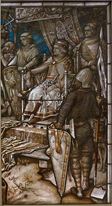 Conrad I, Duke of ZähringenPersonConrad I was Duke of Zähringen from 1122 until his death in 1152.
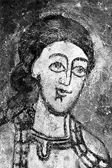 Conrad II of ZnojmoPersonConrad II of Znojmo was a Přemyslid prince who ruled the Moravian appanage of Znojmo in the 12th century.
- Conrad II, Count of DachauPersonConrad II (d. 1159) was a Bavarian count of Dachau to whom Frederick Barbarossa gave the title Duke of Merania around 1152, making him its first holder.
 Conrad II, Holy Roman EmperorPersonConrad II was the first Salian king of Germany, elected in 1024 and crowned emperor in Rome in 1027.
 Conrad III of GermanyPersonConrad III was King of Germany from 1138 to 1152, the first ruler of the Hohenstaufen dynasty.
- Conrad III OttoPersonConrad III Otto was a Přemyslid prince of Znojmo and Brno whom Emperor Frederick Barbarossa made margrave of Moravia in 1182, holding the land directly from the empire.
 Conrad of MontferratPersonConrad of Montferrat was an Italian nobleman who arrived at Tyre in 1187 and held it against Saladin after the fall of Jerusalem.
- Conrad of SellenbürenPersonConrad of Sellenbüren was a Swiss nobleman who in 1120 founded the Benedictine abbey of Engelberg in a remote Alpine valley in central Switzerland, settling it with…
- Conrad the RedPersonConrad the Red was duke of Lotharingia from 944, a Franconian noble of the Salian family who married Liutgard, daughter of Otto I.
- Conrad, Count Palatine of the RhinePersonConrad of Hohenstaufen was count palatine of the Rhine from 1156 until his death in 1195, a half-brother of Emperor Frederick Barbarossa.
 ConradinPersonConradin was the last legitimate member of the Hohenstaufen dynasty, Duke of Swabia and claimant to the kingdoms of Sicily and Jerusalem.
- ConscriptionTermConscription is compulsory enlistment of people into state service, especially the armed forces.
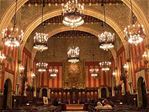 Consell de CentInstitutionThe Consell de Cent ('Council of One Hundred') was the governing council of the city of Barcelona from the 1260s until 1714.
- Consell de la TerraInstitutionThe Consell de la Terra ('Council of the Land') was the assembly of Andorra, created in 1419 when the co-princes allowed the parishes to send representatives to deal…
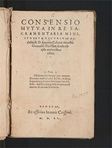 Consensus TigurinusWork / monumentThe Consensus Tigurinus was an agreement on the Lord's Supper concluded in 1549 between the churches of Zürich and Geneva, led by Heinrich Bullinger and John Calvin.
- Conservative Party (Brazil)People / groupThe Conservative Party was one of the two main political parties of the Brazilian Empire, alongside the Liberal Party.
- Conservative Party (UK)People / groupThe Conservative Party is a centre-right political party in the United Kingdom that developed from the Tory party in the 1830s under Robert Peel.
- Consilium RogatorumInstitutionThe Consilium Rogatorum, or Senate, was the chief governing council of the Republic of Ragusa, composed of noblemen elected by the Great Council.
 Consistori del Gai SaberInstitutionThe Consistori del Gai Saber ('Consistory of the Gay Science') was a literary society founded in Toulouse in 1323 by seven citizens to preserve the poetry of the…
 The Consolation of PhilosophyWork / monumentThe Consolation of Philosophy is a Latin work by the Roman statesman Boethius, written around 524 while he awaited execution after falling from favour with the…
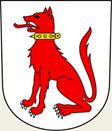 ConstaffelInstitutionThe Constaffel was the corporation of the nobility, knights, rentiers and leading merchants of Zürich, created by Rudolf Brun's constitution of 1336 alongside the craft…
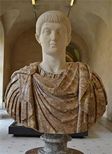 Constans IPersonConstans I was a Roman emperor, the youngest son of Constantine the Great, who ruled from 337 to 350.
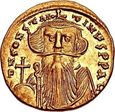 Constans IIPersonConstans II was Byzantine emperor from 641 to 668, during the Arab conquests that took Egypt and threatened Anatolia.
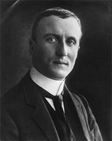 Constantin CarathéodoryPersonConstantin Carathéodory (1873–1950) was a Greek mathematician who spent most of his career in Germany.
- Constantin-François de HoensbroeckPersonConstantin-François de Hoensbroeck was prince-bishop of Liège from 1784 to 1792.
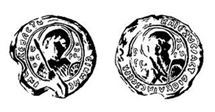 Constantine BodinPersonConstantine Bodin was King of Duklja from about 1081 to around 1101, son of Mihailo I.
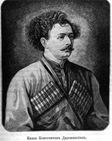 Constantine DadeshkelianiPersonConstantine Dadeshkeliani was the last ruling prince of Svaneti in the Georgian Caucasus.
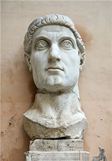 Constantine IPersonConstantine I, known as Constantine the Great, was Roman emperor in the early fourth century CE.
 Constantine I of GreecePersonConstantine I was King of Greece from 1913 to 1917 and from 1920 to 1922.
- Constantine II of GeorgiaPersonConstantine II of Georgia was a Bagrationi king who claimed rule over all Georgia from 1478, as the united kingdom broke apart.
 Constantine II of GreecePersonConstantine II of Greece was the last king of Greece, reigning from 1964.
- Constantine II of ScotlandPersonConstantine II was king of Alba, the kingdom that became Scotland, from about 900 to 943, one of the longest reigns of early Scottish kings.
 Constantine III (Western Roman emperor)PersonConstantine III was a common soldier proclaimed emperor by the Roman army in Britain in 407.
- Constantine III of AbkhaziaPersonConstantine III of Abkhazia was king of Abkhazia from about 898 to 916.
 Constantine IVPersonConstantine IV (c. 650–685) was Byzantine emperor from 668 to 685.
 Constantine MavrocordatosPersonConstantine Mavrocordatos was a Phanariot Greek who ruled Wallachia and Moldavia many times between 1730 and 1769.
- Constantine of PreslavPersonConstantine of Preslav was a Bulgarian writer and churchman of the late 9th and early 10th centuries, a pupil of Methodius and one of the leading figures of the Preslav…
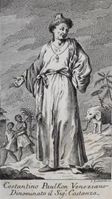 Constantine PhaulkonPersonConstantine Phaulkon was a Greek adventurer from Cephalonia who came to Ayutthaya with the English East India Company and became the chief minister of King Narai in the…
 Constantine TikhPersonConstantine Tikh was tsar of Bulgaria from 1257 to 1277, chosen by the boyars after the murder of Michael II Asen.
 Constantine VIPersonConstantine VI (771–c. 797) was Byzantine emperor from 780 to 797, at first under the regency of his mother Irene.
 Constantine VIIPersonConstantine VII Porphyrogenitus was Byzantine emperor, nominally from 913 and in real power from 945 to 959.
 Constantine XI PalaiologosPersonConstantine XI Palaiologos was the last emperor of the Byzantine Empire.
 Constantine, AlgeriaPlaceConstantine is a city in north-eastern Algeria, built on a rocky plateau cut by the gorge of the Rhumel River.
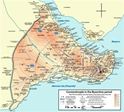 ConstantinoplePlaceConstantinople, now Istanbul, was the city on the Bosphorus refounded by Constantine I in the fourth century CE on the site of Byzantion.
 Constantius IPersonConstantius I, known as Chlorus, was a Roman emperor of the Tetrarchy, made Caesar in the west under Maximian in 293 and senior emperor in 305.
 Constantius IIPersonConstantius II was a Roman emperor of the fourth century CE, a son of Constantine I.
 Constitutio AntoninianaEventThe Constitutio Antoniniana, also called the Edict of Caracalla, was a decree issued by the Roman emperor Caracalla in 212 CE.
 Constitutio RomanaWork / monumentThe Constitutio Romana was an agreement issued in 824 by the Frankish co-emperor Lothair I with Pope Eugene II.
 Constitution Act, 1867Work / monumentThe Constitution Act, 1867, originally the British North America Act, is the act of the British Parliament that created the Dominion of Canada on 1 July 1867 by uniting…
 Constitution Act, 1982Work / monumentThe Constitution Act, 1982 is part of the Constitution of Canada, enacted together with the Canada Act 1982 of the British Parliament.
 Constitution of 3 May 1791Work / monumentThe Constitution of 3 May 1791 was a reforming constitution adopted by the Sejm of the Polish-Lithuanian Commonwealth.
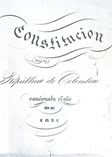 Constitution of CúcutaWork / monumentThe Constitution of Cúcuta was the constitution of Gran Colombia, adopted by the Congress of Cúcuta in 1821.
- Constitution of GuáimaroWork / monumentThe Constitution of Guáimaro was adopted on 10 April 1869 by an assembly of Cuban rebels in the town of Guáimaro, in Camagüey, during the Ten Years' War.
 Constitution of IndiaWork / monumentThe Constitution of India is the supreme law of the Republic of India, adopted by the Constituent Assembly on 26 November 1949 and in force from 26 January 1950, a date…
- Constitution of IrelandWork / monumentThe Constitution of Ireland, Bunreacht na hÉireann, is the basic law of Ireland, drafted under Éamon de Valera and approved by referendum on 1 July 1937.