Encyclopedia: C
2,001 entries under C · page 19 of 21: County Offaly – Crusader states
- County OffalyPlaceCounty Offaly is a county in the Irish midlands.
 County Palatine of SaxonyStateThe County Palatine of Saxony was a medieval palatinate within the stem duchy of Saxony, whose counts palatine represented royal authority in the region around the…
- County RoscommonPlaceCounty Roscommon is an inland county in the province of Connacht, in the west of Ireland, bounded on the east by the River Shannon.
- County SligoPlaceCounty Sligo is a county in the province of Connacht in north-west Ireland, on the Atlantic coast, with the town of Sligo as its county seat.
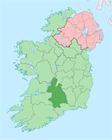 County TipperaryPlaceCounty Tipperary is an inland county in the province of Munster, in southern Ireland, crossed by the River Suir.
 County WaterfordPlaceCounty Waterford is a county in the province of Munster, in the south-east of Ireland, named after the city of Waterford, founded by Vikings in the early 10th century.
- County WestmeathPlaceCounty Westmeath is an inland county in the Irish midlands, in the province of Leinster, with Mullingar as its county town.
- County WexfordPlaceCounty Wexford is a county in the province of Leinster in south-eastern Ireland, named after its county town, Wexford, and bordered by the Irish Sea and St George's…
 County WicklowPlaceCounty Wicklow is a county on the east coast of Ireland, south of Dublin, known for the Wicklow Mountains and the early monastic site of Glendalough.
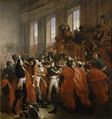 Coup of 18 BrumaireEventThe Coup of 18 Brumaire was the seizure of power in France by Napoleon Bonaparte on 9–10 November 1799 (18–19 Brumaire, Year VIII, in the revolutionary calendar).
- Coup of RucunshuEventThe Coup of Rucunshu was a succession struggle at the Rwandan court in late 1896.
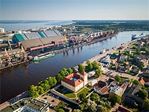 CourlandPlaceCourland is a historical region of western Latvia, lying between the Gulf of Riga and the Baltic Sea and including Liepāja and Ventspils.
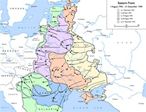 Courland PocketCampaign · 1944–1945The Courland Pocket was the area of western Latvia where German Army Group North, later renamed Army Group Courland, was cut off by the Red Army from October 1944.
 Court of Justice of the European UnionInstitutionThe Court of Justice of the European Union is the judicial institution of the European Union, seated in Luxembourg.
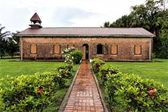 Court of PolicyInstitutionThe Court of Policy was the governing council of the Dutch colonies of Essequibo and Demerara and later of British Guiana.
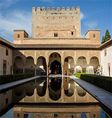 Court of the MyrtlesWork / monumentThe Court of the Myrtles (Patio de los Arrayanes) is the central courtyard of the Comares Palace in the Alhambra, Granada, built mainly in the reign of Yusuf I in the…
- Court of the One Hundred and FourInstitutionThe Court of the One Hundred and Four was a judicial body of ancient Carthage.
 CouseransPlaceThe Couserans is a historic region of the central French Pyrenees, in the upper Salat valley, now in the department of Ariège.
 CoutancesPlaceCoutances is a town in the Cotentin peninsula of Normandy, France.
- Covenant ChainInstitutionThe Covenant Chain was a series of alliances between the Iroquois Confederacy and the English colonies of North America, formalised at Albany in 1677.
- Covenant of KuiqiuTreaty · 651 BCEThe Covenant of Kuiqiu was an assembly of Chinese feudal lords convened by Duke Huan of Qi in 651 BCE at Kuiqiu, in present-day Henan.
- Covenant of ShaolingTreaty · Peace · 656 BCEThe Covenant of Shaoling was the agreement of 656 BCE that ended Duke Huan of Qi's campaign against the State of Chu.
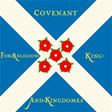 CovenantersPeople / groupThe Covenanters were Scottish Presbyterians who bound themselves by the National Covenant of 1638 and the Solemn League and Covenant of 1643 to defend their church…
 COVID-19 pandemicEventThe COVID-19 pandemic was a global outbreak of the disease caused by the SARS-CoV-2 coronavirus, first identified in Wuhan, China, in December 2019.
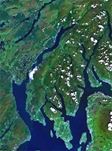 CowalPlaceCowal is a peninsula in Argyll and Bute in western Scotland, between Loch Fyne and the Firth of Clyde, with Dunoon as its main town.
- CowkeeperPersonCowkeeper, or Ahaya, was a Creek leader who led a group of Oconee people to the Alachua prairie in Florida around 1750.
- Cowrie shellTermThe cowrie shell is the shell of a small sea snail, used as currency across Africa and Asia.
 Cox's BazarPlaceCox's Bazar is a town and district on the south-eastern coast of Bangladesh, near the border with Myanmar, known for its long sandy beach on the Bay of Bengal.
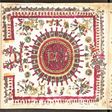 CoxcoxPersonCoxcox was a ruler of Culhuacan in the Valley of Mexico in the early 14th century, known from Mexica chronicles.
 Coxen HolePlaceCoxen Hole is the main town of the island of Roatán and capital of the Bay Islands department of Honduras.
- CoyotlatelcoTermCoyotlatelco is a style of red-on-buff pottery, and by extension the archaeological culture associated with it, found in the Basin of Mexico in the centuries after the…
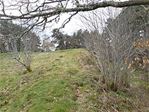 Craig PhadrigPlaceCraig Phadrig is a hillfort on a wooded hill on the western edge of Inverness in the Scottish Highlands.
- Craigellachie, British ColumbiaPlaceCraigellachie is a place in Eagle Pass in the interior of British Columbia, Canada, where the last spike of the Canadian Pacific Railway was driven on 7 November 1885.
- CraiovaPlaceCraiova is a city in south-western Romania, the largest in the historical region of Oltenia.
 CratiPlaceThe Crati, the ancient Crathis, is the longest river of Calabria in southern Italy, flowing about 80 kilometres from the Sila mountains past Cosenza to the Gulf of…
- Crazy HorsePersonCrazy Horse was an Oglala Lakota war leader who resisted American expansion onto the northern Plains.
 Credit SuisseInstitutionCredit Suisse was a Swiss bank founded in Zurich in 1856 by Alfred Escher, originally to finance railway building, and for long one of the country's two largest banks.
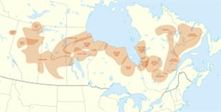 CreePeople / groupThe Cree are one of the largest Indigenous peoples of Canada, speaking Algonquian languages, with lands stretching from Quebec and the Hudson Bay lowlands to the…
- Creek TownPlaceCreek Town is an Efik town on the Calabar River in Cross River State, south-eastern Nigeria.
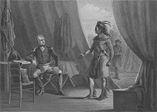 Creek WarWar · 1813–1814The Creek War of 1813 to 1814 began as a civil war among the Muscogee between the Red Sticks, who resisted American expansion, and those friendly to the United States.
- Creevelea FriaryWork / monumentCreevelea Friary is a ruined Franciscan friary near Dromahair in County Leitrim, Ireland, founded in 1508 by Margaret O'Brien and her husband Eoghan O'Rourke, lord of…
- CremaPlaceCrema is a town in Lombardy, northern Italy, on the Serio river between Milan and Cremona.
 Crémieux DecreeWork / monumentThe Crémieux Decree was a decree issued by the French Government of National Defence on 24 October 1870, named after the justice minister Adolphe Crémieux.
 Creoda of MerciaPersonCreoda is named in Anglo-Saxon royal genealogies as an early king of Mercia, a great-grandson of Icel, the father of Pybba and the grandfather of Penda.
 Crescentia of KaufbeurenPersonCrescentia of Kaufbeuren, born Anna Höss, was a Franciscan nun in the convent of Kaufbeuren in Bavarian Swabia, of which she became mother superior in 1741.
- Cretan KoinonInstitutionThe Cretan Koinon was a federation of the city-states of Crete formed in the Hellenistic period and attested from the late third century BCE.
 CretePlaceCrete is the largest Greek island, in the eastern Mediterranean, home of the Bronze Age Minoan civilisation.
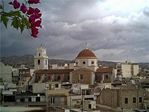 CrevillentPlaceCrevillent is a town at the foot of the Sierra de Crevillent in the province of Alicante, Valencian Community, Spain.
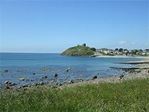 CricciethPlaceCriccieth is a small town on Tremadog Bay in Gwynedd, north-west Wales, in the old district of Eifionydd.
 The Crime of the CongoWork / monumentThe Crime of the Congo is a book of 1909 by Arthur Conan Doyle, written in support of the Congo Reform Association.
 CrimeaPlaceCrimea is a peninsula on the northern coast of the Black Sea.
 Crimean KaraitesPeople / groupThe Crimean Karaites are a Turkic-speaking community of the Karaite faith, a branch of Judaism that accepts the Hebrew Bible but rejects rabbinic tradition.
 Crimean TatarsPeople / groupThe Crimean Tatars are a Turkic Muslim people of the Crimean peninsula.
 Crimean WarWar · 1853–1856The Crimean War was fought from 1853 to 1856 between the Russian Empire and an alliance of the Ottoman Empire, Britain, France and Sardinia.
- Crínán of DunkeldPersonCrínán was the lay abbot of Dunkeld in Scotland in the early 11th century and the ancestor of the dynasty that ruled Scotland until 1286.
- Criollo peoplePeople / groupCriollos, or creoles, were people of Spanish descent born in the Americas during the colonial period.
- Cripps MissionEventThe Cripps Mission was a British attempt in March and April 1942 to secure Indian cooperation in the Second World War.
 Crisis of the Third CenturyEventThe Crisis of the Third Century was a period of turmoil in the Roman Empire from 235 to 284 CE.
 Crispo familyPeople / groupThe Crispo family were the second dynasty of the Duchy of the Archipelago, the Latin state centred on Naxos in the Aegean.
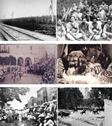 Cristero WarWar · Revolt · 1926–1929The Cristero War (1926–1929) was an armed uprising in central and western Mexico against the anticlerical laws of President Plutarco Elías Calles.
 Cristina Fernández de KirchnerPersonCristina Fernández de Kirchner is an Argentine Peronist politician who succeeded her husband Néstor Kirchner as president, serving from 2007 to 2015, and was…
- Cristóbal Arnaldo YsasiPersonCristóbal Arnaldo Ysasi was the last Spanish governor of Jamaica.
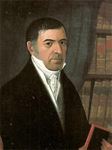 Cristóbal MendozaPersonCristóbal Mendoza was a Venezuelan lawyer and the first holder of executive power in independent Venezuela, as a member of the triumvirate created in March 1811.
 Cristoforo MadruzzoPersonCristoforo Madruzzo was prince-bishop of Trent from 1539 to 1567, later also bishop of Brixen, and a cardinal from 1542.
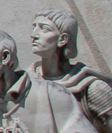 Cristóvão da GamaPersonCristóvão da Gama was a Portuguese commander, a son of Vasco da Gama, who led about 400 musketeers to support the Ethiopian Empire against the Adal Sultanate in 1541.
- Critolaus (Achaean general)PersonCritolaus was general of the Achaean League in 147–146 BCE and led it into war with Rome.
 Crnojević noble familyPeople / groupThe Crnojević family ruled Zeta, the core of present-day Montenegro, in the fifteenth century.
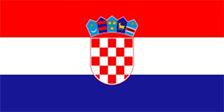 CroatiaPlaceCroatia is a country in south-eastern Europe on the eastern Adriatic coast, with its capital at Zagreb.
 Croatian Academy of Sciences and ArtsInstitutionThe Croatian Academy of Sciences and Arts is Croatia's national academy, founded in Zagreb in 1866 as the Yugoslav Academy of Sciences and Arts on the initiative of…
 Croatian ParliamentInstitutionThe Croatian Parliament, or Sabor, is the legislature of Croatia and one of the oldest representative assemblies in Europe, with records of assemblies of the Croatian…
- Croatian Peasant PartyPeople / groupThe Croatian Peasant Party is a Croatian political party founded in 1904 by the brothers Antun and Stjepan Radić.
 Croatian–Hungarian SettlementWork / monumentThe Croatian–Hungarian Settlement, or Nagodba, was the agreement of 1868 that defined the place of Croatia-Slavonia within the Kingdom of Hungary after the…
- Croatian–Ottoman warsWar · 15th–16th centuryThe Croatian–Ottoman wars were a long series of conflicts between the Kingdom of Croatia and the Ottoman Empire from the fifteenth century to the end of the sixteenth.
- CroatsPeople / groupThe Croats are a South Slavic people whose homeland lies in present-day Croatia.
- Croat–Serb CoalitionPeople / groupThe Croat–Serb Coalition was an alliance of Croatian and Serbian parties in Croatia-Slavonia and Dalmatia formed in 1905, following the Rijeka and Zadar resolutions.
 Crocifisso del TufoPlaceThe Crocifisso del Tufo is an Etruscan necropolis below the cliffs of Orvieto in Umbria, Italy, used mainly in the 6th and 5th centuries BCE.
- Crocus (Alemannic king)PersonCrocus was an Alemannic king in Roman service in the early fourth century.
 CroesusPersonCroesus was the last king of Lydia in western Anatolia, ruling in the sixth century BCE and proverbial for his wealth.
 Cromarty FirthPlaceThe Cromarty Firth is a sea inlet in Easter Ross in the Scottish Highlands, separating the Black Isle from the mainland to the north.
- Cross GroupWork / monumentThe Cross Group is a set of three temple-pyramids at Palenque, the Temple of the Cross, the Temple of the Foliated Cross and the Temple of the Sun, dedicated in 692 by…
- Cross of LorraineTermThe Cross of Lorraine is a cross with two horizontal bars, originally the Cross of Anjou, which René II brought into use as an emblem of the dukes of Lorraine in the…
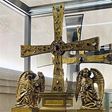 Cross of the AngelsWork / monumentThe Cross of the Angels is a jewelled cross of gold, gems and cameos given by Alfonso II of Asturias to the cathedral of Oviedo in 808.
 Cross of VictoryWork / monumentThe Cross of Victory is a jewelled processional cross given by Alfonso III of Asturias and Queen Jimena to the cathedral of Oviedo in 908.
- Cross RiverPlaceThe Cross River is a river of West Africa that rises in the highlands of western Cameroon and flows through south-eastern Nigeria to the Gulf of Guinea, entering the…
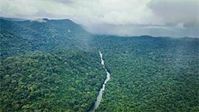 Cross River StatePlaceCross River State is a state in south-eastern Nigeria, bordering Cameroon, with its capital at Calabar.
- CrossbowTermA crossbow is a bow mounted horizontally on a stock, shot by a trigger mechanism, allowing troops with limited training to shoot powerful bolts.
 Crossing of the RubiconEventThe crossing of the Rubicon was Julius Caesar's decision in 49 BCE to lead his army across the Rubicon River in northern Italy, the boundary of his province, in…
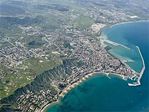 CrotonePlaceCrotone is a city on the Ionian coast of Calabria, southern Italy, on the site of the Greek colony of Croton, founded around 710 BCE.
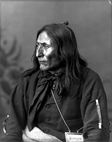 CrowfootPersonCrowfoot was a chief of the Siksika, one of the Blackfoot peoples of the northern plains.
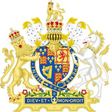 Crown colonyInstitutionA Crown Colony was a British colonial territory governed directly by the British crown, usually through an appointed governor, rather than through local self-government.
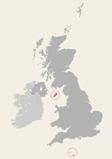 Crown DependenciesTermThe Crown Dependencies are the Bailiwick of Jersey, the Bailiwick of Guernsey and the Isle of Man, self-governing possessions of the British Crown.
- Crown of Ireland Act 1542Work / monumentThe Crown of Ireland Act was passed by the Irish Parliament in June 1541, at the urging of Henry VIII, and created the title of King of Ireland for him and his…
 Crown of the Kingdom of PolandStateThe Crown of the Kingdom of Poland was the term for the Polish state as a whole, distinct from the person of the king, which developed in the fourteenth century.
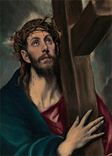 Crown of ThornsWork / monumentThe Crown of Thorns is a relic venerated as the crown placed on Jesus's head before the crucifixion.
- Croÿ TapestryWork / monumentThe Croÿ Tapestry is a large tapestry made in 1554 by Peter Heymans for Duke Philip I of Pomerania.
- CrucifixionTermCrucifixion is a method of execution in which the condemned is fastened to a cross or stake and left to die.
- Cruithne (legendary king)PersonCruithne is the legendary father of the Picts in medieval Irish and Pictish origin legends.
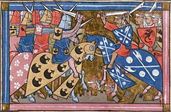 CrusadeWarA crusade was a war sanctioned by the papacy, typically against Muslims or other perceived enemies of the Church, in which participants received spiritual privileges.
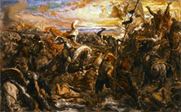 Crusade of VarnaCampaign · 1443–1444The Crusade of Varna was a campaign of 1443–1444 against the Ottoman Empire by Hungary, Poland, Wallachia and others, led by King Władysław III and John Hunyadi.
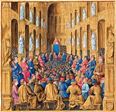 Crusader statesStateThe Crusader states were Latin Christian states established in the Levant after the First Crusade, including the Kingdom of Jerusalem, the County of Edessa, the…