Person
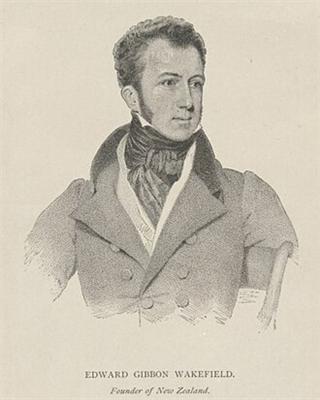
Edward Gibbon Wakefield
Edward Gibbon Wakefield was a British colonial theorist who argued that colonial land should be sold at a sufficient price to fund the emigration of free labourers. Developed while he was in prison for abducting an heiress, his ideas shaped the founding of South Australia in 1836 and the New Zealand Company's settlements. He later moved to New Zealand, where he sat in its first parliament.
Mentioned in 1 state history
See also







Cite this entry
- APA
- The Epoch Institute. (2026). Edward Gibbon Wakefield. In The Epoch Institute Encyclopedia. https://the-epoch-institute.org/encyclopedia/edward-gibbon-wakefield
- MLA
- “Edward Gibbon Wakefield.” The Epoch Institute Encyclopedia, The Epoch Institute, 2026, https://the-epoch-institute.org/encyclopedia/edward-gibbon-wakefield. Accessed .
- Chicago
- The Epoch Institute. “Edward Gibbon Wakefield.” The Epoch Institute Encyclopedia. 2026. https://the-epoch-institute.org/encyclopedia/edward-gibbon-wakefield.
- Harvard
- The Epoch Institute (2026) ‘Edward Gibbon Wakefield’, The Epoch Institute Encyclopedia. Available at: https://the-epoch-institute.org/encyclopedia/edward-gibbon-wakefield (Accessed: ).
Last reviewed October 2026Random entry ↻