Inventions & Discoveries · Chemistry
Electrolysis
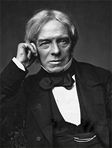
Electrolysis is the use of a direct electric current to drive a chemical reaction that would not otherwise occur, as in separating elements from ores and compounds. In 1800 William Nicholson and Anthony Carlisle, furthering Volta’s experiments, placed the wires of a voltaic pile in water and saw hydrogen and oxygen bubble from them. Humphry Davy discovered potassium, sodium, barium, calcium and magnesium by electrolysis by 1808, and his assistant Michael Faraday published two laws of electrolysis and introduced the word in 1834. The method later yielded gallium in 1875, fluorine in 1886 and, through the Hall–Héroult process of the same year, aluminium.
On the inventions tree
- First known
- 1800
- Credited to
- William Nicholson · Anthony Carlisle · Michael Faraday
NoteIn 1785 Martinus van Marum reduced tin, zinc and antimony from their salts with an electrostatic generator without knowing the process, and in 1789 Adriaan Paets van Troostwijk and Jan Rudolph Deiman split small amounts of water; Johann Ritter also demonstrated it in 1800.
See also


Cite this entry
- APA
- The Epoch Institute. (2026). Electrolysis. In The Epoch Institute Encyclopedia. https://the-epoch-institute.org/encyclopedia/electrolysis
- MLA
- “Electrolysis.” The Epoch Institute Encyclopedia, The Epoch Institute, 2026, https://the-epoch-institute.org/encyclopedia/electrolysis. Accessed .
- Chicago
- The Epoch Institute. “Electrolysis.” The Epoch Institute Encyclopedia. 2026. https://the-epoch-institute.org/encyclopedia/electrolysis.
- Harvard
- The Epoch Institute (2026) ‘Electrolysis’, The Epoch Institute Encyclopedia. Available at: https://the-epoch-institute.org/encyclopedia/electrolysis (Accessed: ).
Last reviewed October 2026Random entry ↻