Inventions & Discoveries · Building and engineering
Flying buttress
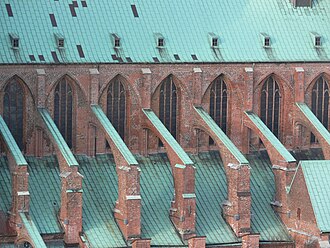
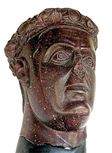
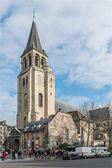
A flying buttress is a ramping arch that carries the outward thrust of a stone vault or roof from the upper part of a wall across open space to a massive pier standing away from it. Ancient examples survive on the Basilica of San Vitale in Ravenna and the Rotunda of Galerius in Thessaloniki, and Romanesque churches such as Durham Cathedral hid similar arches under their gallery roofs. By the 1160s builders in the Île-de-France ran longer, visible arches over the aisles, as at Saint-Germain-des-Prés, completed in 1163, and Notre Dame de Paris in 1180. Walls could then be thinner, with larger windows of stained glass, and the flying buttress became a defining feature of Gothic architecture.
On the inventions tree
- First known
- 1160s
- Where
- Île-de-France (Saint-Germain-des-Prés, Paris)
NoteThe flying buttress was first developed in late antiquity: early, undated examples stand on the Basilica of San Vitale in Ravenna and the Rotunda of Galerius in Thessaloniki.
See also



Cite this entry
- APA
- The Epoch Institute. (2026). Flying buttress. In The Epoch Institute Encyclopedia. https://the-epoch-institute.org/encyclopedia/flying-buttress
- MLA
- “Flying buttress.” The Epoch Institute Encyclopedia, The Epoch Institute, 2026, https://the-epoch-institute.org/encyclopedia/flying-buttress. Accessed .
- Chicago
- The Epoch Institute. “Flying buttress.” The Epoch Institute Encyclopedia. 2026. https://the-epoch-institute.org/encyclopedia/flying-buttress.
- Harvard
- The Epoch Institute (2026) ‘Flying buttress’, The Epoch Institute Encyclopedia. Available at: https://the-epoch-institute.org/encyclopedia/flying-buttress (Accessed: ).
Last reviewed October 2026Random entry ↻