Work / monument · artifact
Lapita pottery
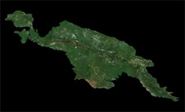
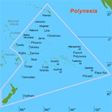
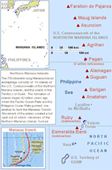
Lapita pottery is the dentate-stamped earthenware that defines the Lapita culture of the western Pacific, which appeared in the Bismarck Archipelago about 1500 BCE. Low-fired and tempered with shell or sand, it bears fine geometric patterns pressed into the clay with toothed stamps and closely resembles pottery from Nagsabaran in northern Luzon. First found on Watom Island in 1909 and named after a site in New Caledonia excavated in 1952, it is known from more than 200 sites between the Bismarck Archipelago and Samoa.

Mentioned in 1 profile
See also




Cite this entry
- APA
- The Epoch Institute. (2026). Lapita pottery. In The Epoch Institute Encyclopedia. https://the-epoch-institute.org/encyclopedia/lapita-pottery
- MLA
- “Lapita pottery.” The Epoch Institute Encyclopedia, The Epoch Institute, 2026, https://the-epoch-institute.org/encyclopedia/lapita-pottery. Accessed .
- Chicago
- The Epoch Institute. “Lapita pottery.” The Epoch Institute Encyclopedia. 2026. https://the-epoch-institute.org/encyclopedia/lapita-pottery.
- Harvard
- The Epoch Institute (2026) ‘Lapita pottery’, The Epoch Institute Encyclopedia. Available at: https://the-epoch-institute.org/encyclopedia/lapita-pottery (Accessed: ).
Last reviewed October 2026Random entry ↻