Culture · Central & East Asia
Yangshao culture
At a glance
- The Yangshao people farmed millet, and some rice, along the middle Yellow River and kept pigs and dogs; over two thousand years their region became a fully settled farming society.
- Their potters, working without a wheel, made fine painted wares whose fish, face and geometric designs changed over time and spread west to the Majiayao culture and beyond.
- Villages of houses round a central square were joined in the later phases by settlement hierarchies, large public buildings and, at Xishan, the first rammed-earth wall in China.
Timeline
- c. 5000 BCEThe Early Yangshao, or Banpo phase, begins, with villages such as Banpo and Jiangzhai in the Wei River valley
- 5th millennium BCEA dragon figure is made that is the oldest known depiction of a dragon
- c. 4000 BCEIn the Middle Yangshao, or Miaodigou phase, the culture and its population expand in all directions
- c. 3500 BCEThe Late Yangshao begins, with settlement hierarchies spreading and the first rammed-earth wall in China built at Xishan
- c. 3300 BCEThe Majiayao culture, which grew out of the middle Yangshao through an intermediate Shilingxia phase, begins to the west
- 1921Johan Gunnar Andersson discovers the Yangshao site in western Henan, which gives the culture its name
- 1954The Yangshao culture is estimated to be more than 1,000 years older than the Anau culture, weakening Andersson’s theory of a western origin
Origins
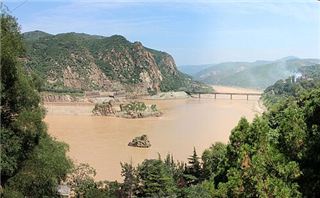
The Yangshao culture is a Neolithic culture that spread widely along the middle reaches of the Yellow River in China between about 5000 and 3000 BCE. Its name is an archaeologists’ label taken from a site: the village of Yangshao in Mianchi County, western Henan, where the Swedish geologist Johan Gunnar Andersson found the first site of this kind in 1921. The culture flourished mainly in Henan and the neighbouring provinces of Shaanxi and Shanxi, and it saw advances in agriculture, architecture and crafts.
Andersson compared the painted pottery of Yangshao with that of the Anau culture of Central Asia and the Trypillian culture of south-eastern Europe and suggested that the Yangshao came from there. His theory is now considered weak: the likeness of the patterns is thought to be coincidental, and in 1954 the Yangshao culture was estimated to be more than 1,000 years older than the Anau culture. Chinese archaeologists such as Yin Da, Shi Zhangru and Guo Baojun argued instead that it was developed by the native population of the Yellow River and later turned into other cultures. At the Hougang site Liang Siyong found three layers, one above another, that confirmed the sequence from the Yangshao to the Longshan and Shang cultures.
The culture is conventionally divided into three phases. The Early Yangshao, or Banpo phase (c. 5000–4000 BCE), is known from Banpo, Jiangzhai, Beishouling and Dadiwan in the Wei River valley of Shaanxi. In the Middle Yangshao, or Miaodigou phase (c. 4000–3500 BCE), the culture and its population expanded in all directions, and hierarchies of settlements developed in some areas, such as western Henan. In the Late Yangshao (c. 3500–3000 BCE) such hierarchies spread more widely.
Society
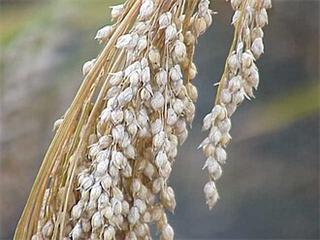
The Yangshao people lived mainly on millet: foxtail millet at some sites, proso millet at others. They also grew and ate rice, though less of it, and gradually introduced it into young children’s diets alongside the two millets. Whether early Yangshao farming was small-scale slash-and-burn cultivation or intensive work in permanent fields is debated; on one account, villagers moved on and built new villages once the soil was exhausted. By the late Yangshao the region had become a fully settled farming society based on crops and animals. Pigs were the main source of meat and dogs were kept, while sheep, goats and cattle are rare finds and a little wild game was hunted. The people may also have practised an early form of sericulture, the raising of silkworms.
Villages typically covered ten to fourteen acres, with houses set round a central square. A typical home was dug as a rounded pit about a metre deep, walled with woven wattle plastered with mud and roofed with a cone of poles thatched with millet stalks; inside were a shallow central fireplace, a stool, a bench along the wall and a bed of cloth, and a pen for animals stood outside. Communal storage pits and large public buildings suggest that some production and distribution were managed together. By the late period square houses at ground level and longhouses with several rooms were common, some with lime-covered floors.
Society changed over time. Early communities are thought to have been organised in clans bound by blood ties, which gave way in the later period to smaller, independent family households. Early reports suggested a matriarchal culture; others argued for a society moving from matriarchy to patriarchy, or for a patriarchal one, and recent studies show that the Yangshao were patrilineal. Very large houses and richly furnished tombs at Xipo suggest that the late Yangshao was an early form of chiefdom.
Beliefs & Worldview
The Yangshao left no texts, so their beliefs have to be inferred from burials, buildings and images. A common custom was to place dead children in pottery urns and bury them near the foundations of houses; all the children found buried in this way were girls. Burials are also at the heart of the long debate on how Yangshao families were organised, since the different views rest on different readings of the graves.
Large buildings excavated at several Yangshao sites appear to have served as public ritual spaces rather than homes for an elite; substantial palace-like houses for elites appear only later, in the late Longshan culture at sites such as Guchengzhai and Taosi. Feasting mattered too. Archaeological research indicates that brewing beer and communal feasting were integral to Yangshao culture: the beer was made mainly from common millet and rice, never, it seems, from foxtail millet, which suggests that rice may have been a valued resource in the larger settlements. The narrow-necked jiandiping amphorae may have been used to ferment grain, or, as other research suggests, to filter the drink.
The Yangshao also left images. A dragon figure dating to the fifth millennium BCE is the world’s oldest known depiction of a dragon. Painted pottery shows human faces and animals, especially fish in the early period. At Banpo and Jiangzhai, marks incised on pottery have been read by a few scholars as numerals or as forerunners of Chinese characters, but these readings are not widely accepted.
Arts & Knowledge
Yangshao potters made fine white, red and black painted wares decorated with human faces, animals and geometric designs. Unlike the later Longshan culture, they did not use the potter’s wheel. Pottery production developed quickly in this period and gave rise to distinctive forms such as the jiandiping amphora, with its narrow mouth, cone-shaped base and varied rims. Decoration changed over time: fish patterns were favoured at first, giving way to more abstract, streamlined and geometric designs in the middle period and to single-colour pottery in the late period.
Stone tools were polished and highly specialised. Farmers used axes, hoes, sickles and millstones and worked two kinds of land: wet alluvial plots in the lowlands and the easily drained loess of the higher ground at the edges of valleys. In the Guanzhong Plain stone axes developed in many forms, and by the late period some were made for woodworking and others for chopping, from different raw materials that suggest different groups made and used them. Rectangular harvesting knives of stone and pottery, notched or pierced for a cord, replaced the stone sickles of the earlier Peiligang and Cishan cultures; many were cut from fine sandstone and probably used on plants and sometimes on grain.
The Yangshao wove hemp and produced a little silk. Men wore loincloths and tied their hair in a topknot, and women wrapped a length of cloth around themselves and tied their hair in a bun. Raised-floor buildings at some Middle Yangshao settlements may have stored surplus grain, and grinding stones for making flour have been found.
Contact & Exchange
The Yangshao culture had a wide reach across the Central Plains. Its pottery traditions were passed on from east to west, and it is linked to cultures on either side: the Shandong Longshan culture is considered its eastern branch and the Majiayao culture its western one. Majiayao (c. 3300 – c. 2000 BCE) is now treated as a separate culture that grew out of the middle Yangshao through an intermediate Shilingxia phase. Through it, the pottery style that began with the Yangshao travelled further west, to Xinjiang and Central Asia.
The Middle Yangshao, or Miaodigou phase, was a time of expansion in all directions, both of the culture and of its population. Some villages were enclosed by ditches. Banpo near Xi’an is one of the best-known ditch-enclosed Yangshao settlements, and Jiangzhai, excavated to its limits, proved to be completely surrounded by a ring-ditch. In the late period Xishan in central Henan, a settlement of 25 hectares near modern Zhengzhou, received the first wall of rammed earth in China, and the first walled town of the Yellow River valley appeared.
The question of where the Yangshao came from has also been a question of contact. Andersson’s idea of a link with Central Asia or south-eastern Europe, based on pottery patterns, has been set aside, and the culture is now seen as a development of the Yellow River valley itself. Some researchers argue that the Yangshao farmers were not primitive beginners but heirs to several earlier and distant farming traditions, and recent research links the Cishan, Yangshao and/or Majiayao cultures to a common origin and spread of the Sino-Tibetan languages.
Legacy
The layers at the Hougang site show the Yangshao followed by the Longshan and then the Shang cultures, and the Yangshao is understood to have turned into the cultures that came after it in the region. Its painted pottery tradition continued westward in the Majiayao culture. Its mixed farming, spreading across more and more sites, moved people away from gathering and laid the foundation for an agricultural society in the Central Plain.
Yangshao times saw settlement hierarchies, large public buildings, the first rammed-earth wall in China, the first walled town of the Yellow River valley, signs of an early chiefdom at Xipo, the possible beginnings of sericulture and the oldest known depiction of a dragon. Palace-like houses for an elite, and a clearer separation of classes, followed only in the late Longshan culture.
Today the Yangshao site in Mianchi County, Sanmenxia, which gave the culture its name, has a museum next to the excavations.
The Yangshao culture was a Neolithic farming culture of the middle Yellow River valley in China, from about 5000 to 3000 BCE. Its people grew millet and some rice, kept pigs and lived in villages of semi-subterranean houses, some enclosed by ditches. Its painted pottery spread west through the Majiayao culture, and its later phases show settlement hierarchies, the first rammed-earth wall in China and an early chiefdom.