Inventions & Discoveries · Farming and food
Canning
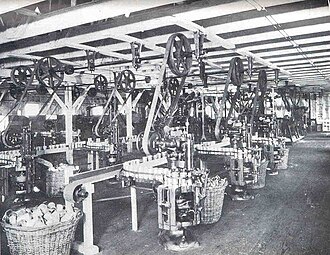
Canning is a method of preserving food by processing it and sealing it in an airtight container, a glass jar or a steel or tin can. In 1809 the French confectioner and brewer Nicolas Appert, answering a government prize of 12,000 francs for preserved rations for the Grande Armée, developed a way of sealing food in glass jars, and was awarded the prize in 1810. In London Peter Durand patented the tin can process in 1810, and Bryan Donkin made sealed cans of tinned wrought iron, sold chiefly to the British Army and Royal Navy. Why the food kept was explained only when Louis Pasteur showed the role of microbes.
On the inventions tree
- First known
- 1809
- Where
- France
- Credited to
- Nicolas Appert · Peter Durand · Bryan Donkin
NoteThe Dutch navy was reported to carry salmon in tin-plated iron boxes as early as 1772; the tin can patented by Durand in 1810 was allegedly the idea of the Frenchman Philippe de Girard.
Mentioned in 4 state histories
See also




Cite this entry
- APA
- The Epoch Institute. (2026). Canning. In The Epoch Institute Encyclopedia. https://the-epoch-institute.org/encyclopedia/canning
- MLA
- “Canning.” The Epoch Institute Encyclopedia, The Epoch Institute, 2026, https://the-epoch-institute.org/encyclopedia/canning. Accessed .
- Chicago
- The Epoch Institute. “Canning.” The Epoch Institute Encyclopedia. 2026. https://the-epoch-institute.org/encyclopedia/canning.
- Harvard
- The Epoch Institute (2026) ‘Canning’, The Epoch Institute Encyclopedia. Available at: https://the-epoch-institute.org/encyclopedia/canning (Accessed: ).
Last reviewed October 2026Random entry ↻