Encyclopedia: C
2,001 entries under C · page 2 of 21: Cambyses II – Cape Juby
 Cambyses IIPersonCambyses II was the second king of the Achaemenid Empire, the son and successor of Cyrus the Great, who ruled in the late sixth century BCE.
 Camden, South CarolinaPlaceCamden is a town in Kershaw County, South Carolina, on the Wateree River, and one of the oldest inland towns in the state, settled in the 1730s.
- CamelTermThe camel is a large hoofed mammal adapted to arid environments, used for transport, milk, meat and warfare.
- Camel warfareTermCamel warfare refers to the use of camels in combat, for transport of troops and supplies or as mounts.
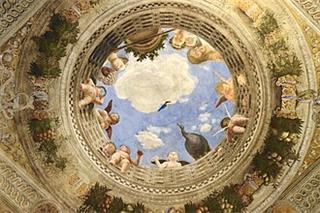 Camera degli SposiWork / monumentThe Camera degli Sposi ('Bridal Chamber') is a room in the Castle of San Giorgio in Mantua frescoed by Andrea Mantegna between about 1465 and 1474 for Ludovico III…
- CamerinoPlaceCamerino is a hill town in the Marche region of central Italy, in the province of Macerata.
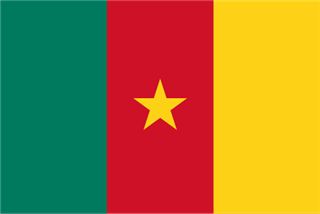 CameroonPlaceCameroon is a country in west-central Africa on the Gulf of Guinea.
 Cameroon GrassfieldsPlaceThe Cameroon Grassfields, or Western High Plateau, are the volcanic highlands of western Cameroon, covering the present North-West and West regions.
 Camillo Benso, Count of CavourPersonCamillo Benso, Count of Cavour, was the leading statesman of the Kingdom of Sardinia and the first prime minister of united Italy.
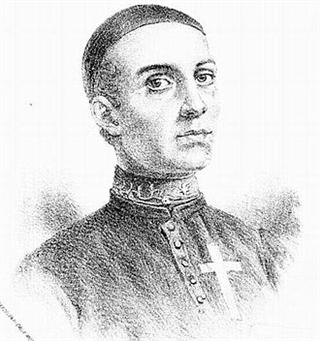 Camilo HenríquezPersonCamilo Henríquez was a Chilean priest, writer and patriot of the independence era.
- Camilo Torres TenorioPersonCamilo Torres Tenorio was a lawyer from Popayán and a leading figure of New Granada's independence movement.
 Camino de SantiagoPlaceThe Camino de Santiago, or Way of St James, is the network of pilgrimage routes leading to the shrine of the apostle St James at Santiago de Compostela in Galicia.
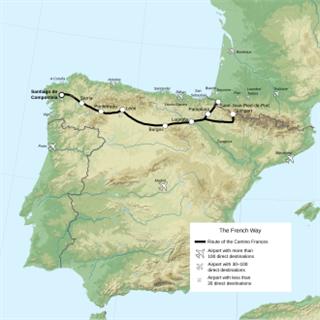 Camino FrancésWork / monumentThe Camino Francés is the principal route of the pilgrimage to Santiago de Compostela, crossing the Pyrenees at Roncesvalles and running through Pamplona, Puente la…
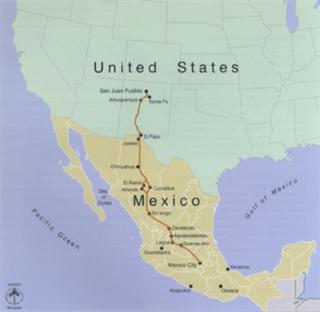 Camino Real de Tierra AdentroWork / monumentThe Camino Real de Tierra Adentro was the Spanish colonial royal road running some 2,500 km north from Mexico City through the silver-mining towns of New Spain to Santa…
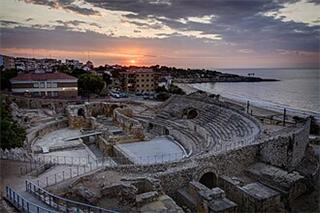 Camp de TarragonaPlaceThe Camp de Tarragona is a coastal plain and historic region of southern Catalonia around the cities of Tarragona and Reus, enclosed by the Prades mountains and other…
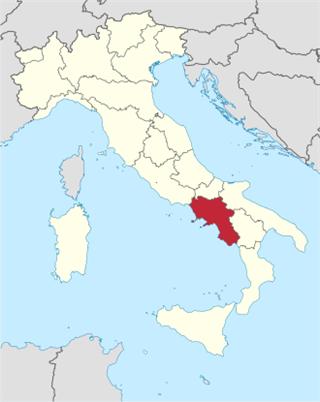 CampaniaPlaceCampania is a region of southern Italy on the Tyrrhenian Sea, with Naples as its capital.
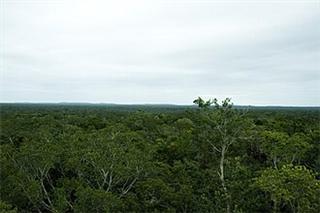 CampechePlaceCampeche is a state of Mexico on the western side of the Yucatán Peninsula, facing the Gulf of Mexico.
- CamphorTermCamphor is a fragrant crystalline substance obtained from trees, prized in Asia as a medicine, perfume and ritual material.
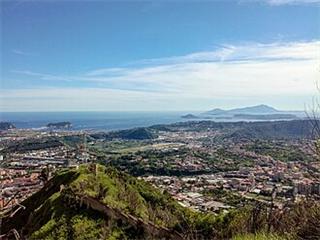 Campi FlegreiPlaceThe Campi Flegrei, or Phlegraean Fields, is a large volcanic caldera west of Naples, in southern Italy.
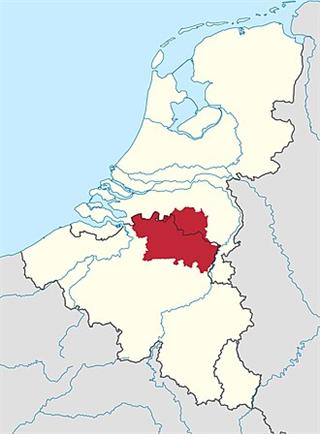 CampinePlaceThe Campine, or Kempen, is a region of sandy heathland and pine forest in north-eastern Belgium and the southern Netherlands, roughly between the Scheldt, the Meuse and…
- Campo della FieraPlaceCampo della Fiera is an archaeological site at the foot of the cliff of Orvieto, in Umbria, central Italy.
 Campus MartiusInstitutionThe Campus Martius, or Field of Mars, was the annual assembly of the Frankish court, nobility and army in the Carolingian Empire, held each spring.
 CamulodunumPlaceCamulodunum, modern Colchester in Essex, was the chief centre of the Trinovantes and later of Cunobelinus, a vast oppidum protected by long earthwork dykes.
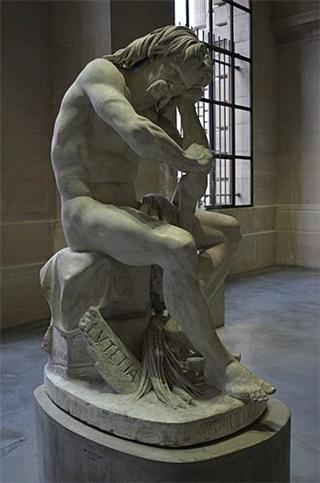 CamulogenusPersonCamulogenus was an elderly leader of the Aulerci in Gaul who commanded the Gallic forces around Lutetia during the revolt of Vercingetorix in 52 BCE.
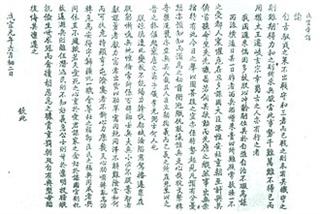 Cần VươngRevolt · 1885–1896The Cần Vương ('Aid the King') movement was a Vietnamese uprising against French rule launched in July 1885, when the regent Tôn Thất Thuyết fled Huế with the boy…
- CanaanPlaceCanaan is the ancient name for the region of the southern Levant, roughly corresponding to present-day Israel, Palestine, Lebanon and western Syria.
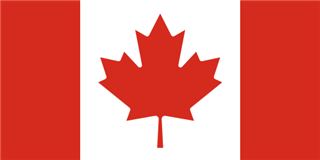 CanadaPlaceCanada is a country in northern North America.
- Canada EastPlaceCanada East was the eastern, mainly French-speaking part of the Province of Canada from 1841 to 1867, corresponding to the former Lower Canada.
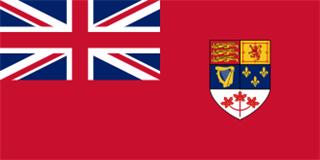 Canadian Red EnsignTermThe Canadian Red Ensign was a red flag with the Union Jack in the canton and the Canadian coat of arms in the fly, used as Canada's unofficial and later official…
- Canadian–American Reciprocity TreatyEventThe Canadian–American Reciprocity Treaty, also called the Elgin–Marcy Treaty, was signed in 1854 between Britain, on behalf of its North American colonies, and the…
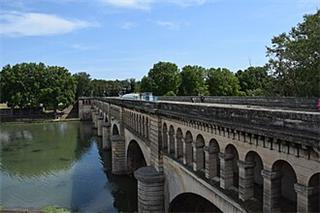 Canal du MidiWork / monumentThe Canal du Midi is a canal in southern France linking Toulouse to the Mediterranean at Sète, which together with the Garonne connects the Atlantic and the…
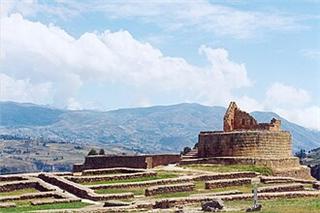 Cañar ProvincePlaceCañar is a province in the southern highlands of Ecuador, north of Azuay, with its capital at Azogues.
 Canary IslandsPlaceThe Canary Islands are an archipelago of volcanic islands in the Atlantic Ocean off the north-west coast of Africa, today an autonomous community of Spain.
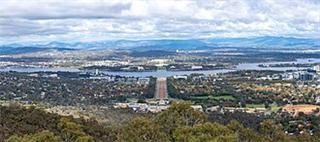 CanberraPlaceCanberra is the capital of Australia, built in the Australian Capital Territory as a compromise between the rival cities of Sydney and Melbourne.
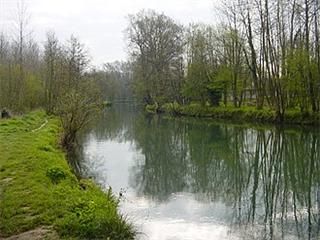 CanchePlaceThe Canche is a river of northern France, about 90 kilometres long, flowing west through the Pas-de-Calais department to the English Channel at Étaples.
 Cancho RoanoPlaceCancho Roano is an archaeological site near Zalamea de la Serena in the province of Badajoz, Extremadura, western Spain.
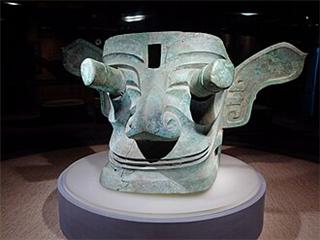 CancongPersonCancong is the first of the legendary kings of Shu in the Chengdu plain, named in later texts such as the Records of the Kings of Shu attributed to Yang Xiong.
- CancorPersonCancor was a Frankish count in the middle Rhine region in the 8th century.
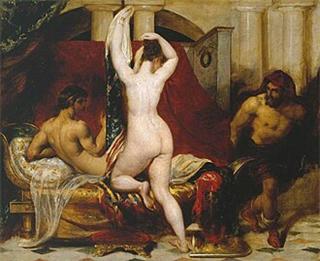 CandaulesPersonCandaules was the last king of the Heraclid dynasty of Lydia, killed around 680 BCE by Gyges, who founded the Mermnad dynasty.
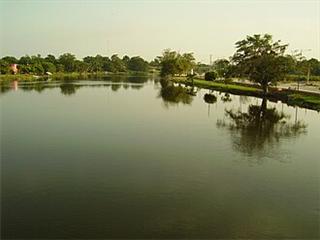 Candelaria RiverPlaceThe Candelaria is a river of south-eastern Mexico that rises in Guatemala and flows through the state of Campeche into the Laguna de Términos on the Gulf of Mexico.
- Candi AgungPlaceCandi Agung is the ruin of a brick temple at Amuntai in South Kalimantan, Indonesia, associated with the early kingdom of Negara Dipa described in the Hikayat Banjar.
- Candi BadutWork / monumentCandi Badut is a Hindu temple near Malang in East Java, Indonesia, among the oldest surviving temples on the island.
- Candi BelahanWork / monumentCandi Belahan is an 11th-century bathing place on the eastern slope of Mount Penanggungan in East Java, Indonesia, traditionally linked with the burial of King Airlangga.
 Candi JagoWork / monumentCandi Jago is a 13th-century Hindu-Buddhist temple near Malang in East Java, built as the memorial shrine of King Wisnuwardhana of Singhasari, who died in 1268.
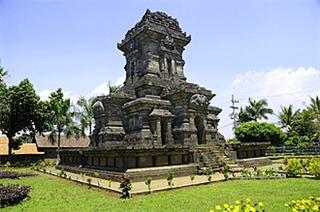 Candi SinghasariWork / monumentCandi Singhasari is a Hindu-Buddhist temple at Singosari near Malang in East Java, built around 1300 as a memorial to Kertanegara, the last king of Singhasari, who was…
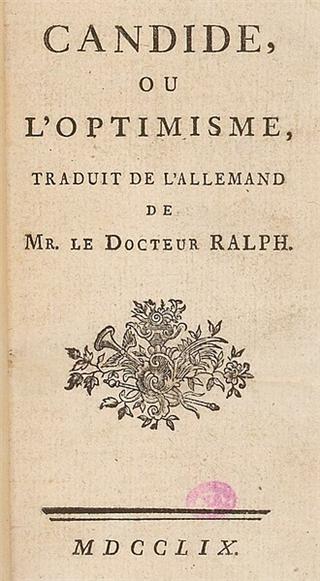 CandideWork / monumentCandide is a satirical novella by Voltaire, published in 1759, in which a naive young man travels the world and meets war, disaster and cruelty while his tutor Pangloss…
- CandombléReligion / ideaCandomblé is an Afro-Brazilian religion that developed in Brazil, especially in Bahia, among enslaved Africans and their descendants.
- Cañete RiverPlaceThe Cañete River flows from the Andes to the Pacific Ocean south of Lima, Peru, and its irrigated valley has been farmed for thousands of years.
 Cangas de OnísPlaceCangas de Onís is a town in eastern Asturias, northern Spain, at the foot of the Picos de Europa.
 Canggal inscriptionWork / monumentThe Canggal inscription is a Sanskrit inscription dated 732 CE, found on Mount Wukir near Magelang in Central Java.
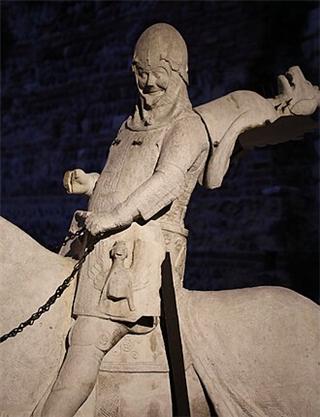 Cangrande I della ScalaPersonCangrande I della Scala was lord of Verona from 1311 to 1329 and the most powerful of the Scaliger family.
- Cảnh ThịnhPersonCảnh Thịnh, born Nguyễn Quang Toản, was the second emperor of the Tây Sơn dynasty of Vietnam, succeeding his father Quang Trung as a boy in 1792.
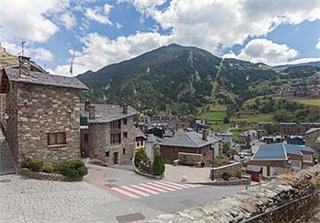 CanilloPlaceCanillo is one of the seven parishes of Andorra and the name of its main village, in the north-east of the principality along the upper valley of the Valira d'Orient.
 Cankili IIPersonCankili II was the last king of Jaffna, in northern Sri Lanka, who seized power in 1617 as regent.
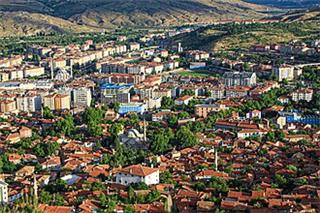 ÇankırıPlaceÇankırı is a city in northern central Turkey.
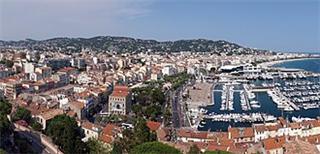 CannesPlaceCannes is a city on the French Riviera, in the department of Alpes-Maritimes.
- Canning AwardPeace · 1861The Canning Award was the 1861 arbitration by Lord Canning, Governor-General of India, of the succession dispute between the sons of Sayyid Said of Oman.
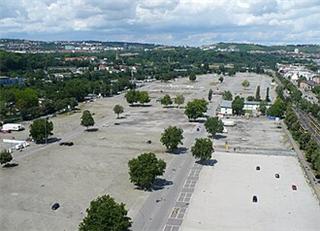 Cannstatter WasenEventThe Cannstatter Wasen, or Cannstatter Volksfest, is a large autumn festival held on the Wasen meadows beside the Neckar at Bad Cannstatt in Stuttgart, Germany.
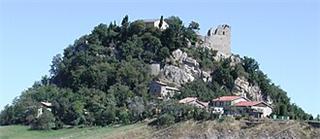 Canossa CastleWork / monumentCanossa Castle is a ruined fortress in the Apennines south of Reggio Emilia, Italy, the seat of the house of Canossa, which held the March of Tuscany from 1027.
 CantabriaPlaceCantabria is an autonomous community and historic region of northern Spain, on the Bay of Biscay between Asturias and the Basque Country, with its capital at Santander.
 Cantabrian WarsWar · 29–19 BCEThe Cantabrian Wars were Rome's final conquest of the Iberian Peninsula, fought from 29 to 19 BCE against the Cantabri and Astures of the northern mountains.
 Cantar de mio CidWork / monumentThe Cantar de mio Cid (Poem of the Cid) is the oldest surviving epic poem in Castilian Spanish, telling of the exile and triumphs of Rodrigo Díaz, El Cid.
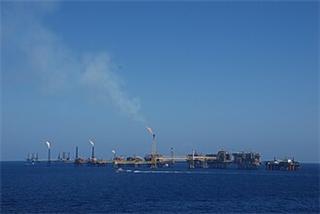 Cantarell FieldPlaceThe Cantarell Field is a supergiant offshore oil field in the Bay of Campeche, off the coast of Mexico.
 CanterburyPlaceCanterbury is a cathedral city in Kent, south-east England.
 The Canterbury TalesWork / monumentThe Canterbury Tales is a collection of stories in Middle English verse and prose by Geoffrey Chaucer, written in the late fourteenth century and left unfinished at his…
 Cantigas de Santa MariaWork / monumentThe Cantigas de Santa Maria are a collection of over 400 songs in Galician-Portuguese in praise of the Virgin Mary, compiled at the court of Alfonso X of Castile in the…
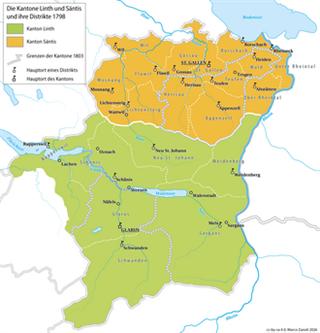 Canton of SäntisStateThe Canton of Säntis was an administrative unit of the Helvetic Republic from 1798 to 1803, named after the Säntis mountain.
 Canton SystemInstitutionThe Canton System was the arrangement formalised by the Qing Empire in 1757 that restricted all Western maritime trade to the single port of Guangzhou, known to…
 Cantonal RebellionRevolt · 1873–1874The Cantonal Rebellion was an uprising of intransigent federal republicans in southern and eastern Spain during the First Spanish Republic.
- Canu HeleddWork / monumentThe Canu Heledd is a cycle of early Welsh englyn poems, probably composed in the 9th or 10th century, in which the princess Heledd laments the death of her brother…
- Canu Llywarch HenWork / monumentCanu Llywarch Hen is a cycle of early Welsh poems in englyn metre, probably composed in the ninth or tenth century and preserved mainly in the Red Book of Hergest.
 CanusiumPlaceCanusium, modern Canosa di Puglia, was one of the main towns of the Daunians in northern Apulia, famed for its rich chamber tombs and painted pottery.
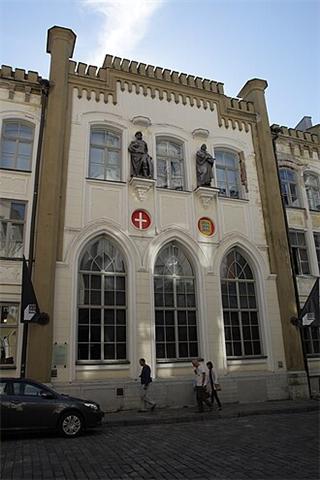 Canute GuildPeople / groupThe Canute Guild was a guild of craftsmen in Reval (Tallinn), named after the Danish saint Canute and dominated by German master artisans.
 Canute LavardPersonCanute Lavard was a Danish prince, son of King Eric I, who became Duke of Schleswig around 1115.
 Canute VI of DenmarkPersonCanute VI was king of Denmark from 1182 to 1202, the son of Valdemar I.
- Cao BằngPlaceCao Bằng is a mountainous province of northern Vietnam on the border with China.
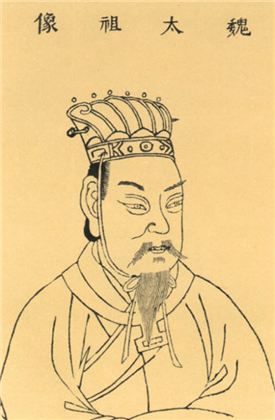 Cao CaoPersonCao Cao was a Chinese warlord and statesman of the late Han period.
- Cao HuanPersonCao Huan was the last emperor of Cao Wei, reigning from 260 to 266 as a figurehead under the Sima family.
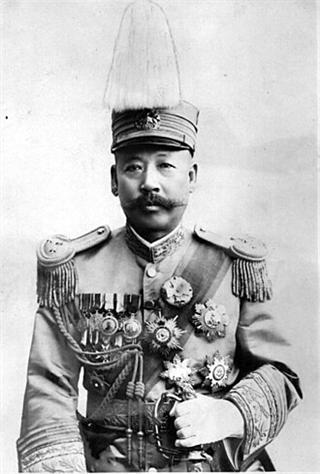 Cao KunPersonCao Kun was a Chinese general of the Beiyang Army and a leader of the Zhili clique of warlords.
 Cao PiPersonCao Pi was the son of the warlord Cao Cao and the first emperor of the Wei dynasty.
- Cao Shu ZhenduoPersonCao Shu Zhenduo was a son of King Wen of Zhou and younger brother of King Wu, who after the Zhou conquest of Shang in the eleventh century BCE enfeoffed him at Taoqiu…
 Cao WeiStateCao Wei, or the Wei dynasty, was the state founded by Cao Pi in 220 CE after he deposed the last Han emperor.
- CaodaismReligion / ideaCaodaism is a syncretic religion founded in southern Vietnam in 1926, with its Holy See at Tây Ninh.
- CaonaboPersonCaonabo was a Taíno cacique of Maguana in central Hispaniola and husband of Anacaona of Jaragua.
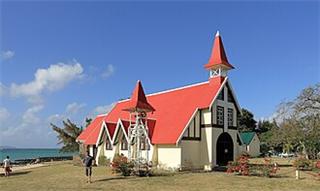 Cap MalheureuxPlaceCap Malheureux is a cape and village at the northern tip of Mauritius.
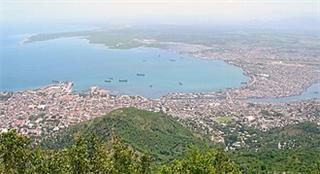 Cap-HaïtienPlaceCap-Haïtien is a port on the north coast of Haiti.
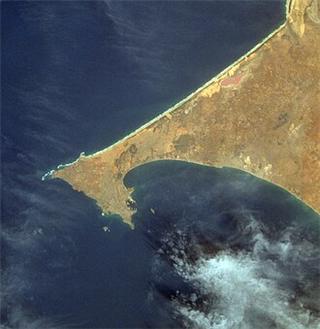 Cap-VertPlaceCap-Vert is the peninsula on the coast of Senegal that forms the westernmost point of mainland Africa.
- CaparraPlaceCaparra was the first Spanish settlement in Puerto Rico, founded in 1508 by Juan Ponce de León a few kilometres inland from San Juan Bay.
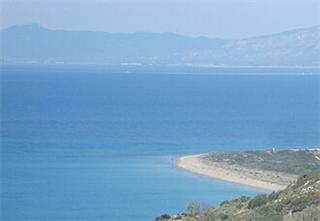 Cape AraxosPlaceCape Araxos is the north-western tip of the Peloponnese in Greece, in western Achaea, where the Gulf of Patras opens into the Ionian Sea.
- Cape BojadorPlaceCape Bojador is a headland on the Atlantic coast of Western Sahara, south of the Canary Islands.
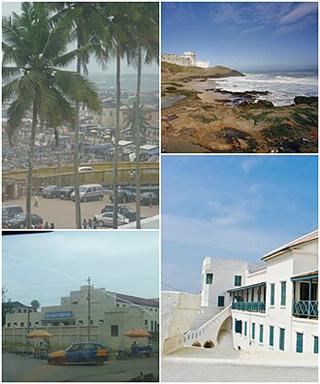 Cape CoastPlaceCape Coast is a port town on the coast of present-day Ghana, in the lands of the Akan kingdom of Fetu.
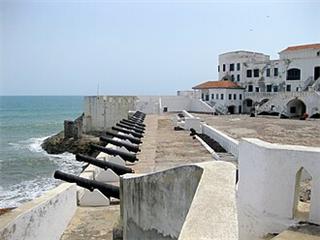 Cape Coast CastleWork / monumentCape Coast Castle is a fort on the coast of Ghana, first built by the Swedes in 1653 as Carolusborg and taken by the English in 1664.
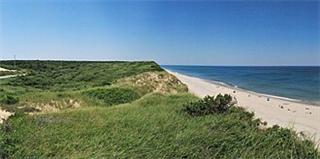 Cape CodPlaceCape Cod is a hook-shaped peninsula in south-eastern Massachusetts reaching about 100 kilometres into the Atlantic Ocean.
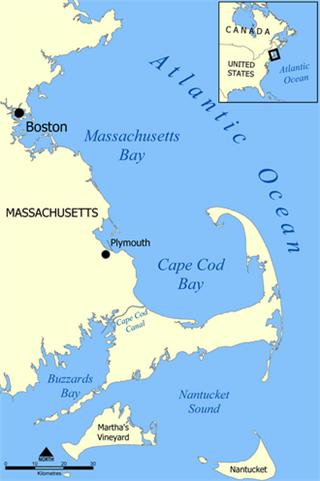 Cape Cod BayPlaceCape Cod Bay is a large bay of the Atlantic Ocean in Massachusetts, enclosed by the hooked peninsula of Cape Cod.
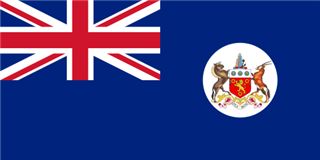 Cape ColonyInstitutionThe Cape Colony was the settlement at the Cape of Good Hope established in 1652 by the Dutch East India Company as a resupply station for ships sailing to Asia.
 Cape DelgadoPlaceCape Delgado is a headland on the coast of northern Mozambique, close to the border with Tanzania.
- Cape DutchTermCape Dutch was the form of Dutch spoken at the Cape of Good Hope by settlers, the enslaved and Khoekhoe communities from the 17th century.
 Cape GuardafuiPlaceCape Guardafui is the headland at the tip of the Horn of Africa in north-eastern Somalia, where the Gulf of Aden meets the Indian Ocean.
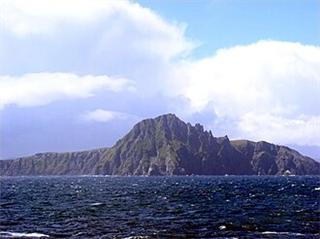 Cape HornPlaceCape Horn is the southernmost headland of the Tierra del Fuego archipelago in Chile, rounded by Dutch navigators in 1616.
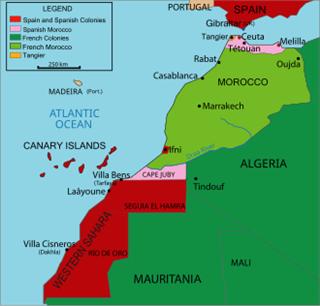 Cape JubyPlaceCape Juby is a headland on the Atlantic coast of southern Morocco, opposite the Canary Islands, beside the town of Tarfaya.