Place · city
Heijō-kyō
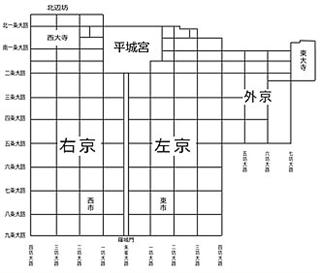
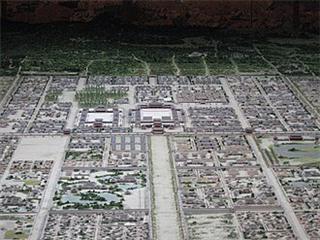
Heijō-kyō was the capital of Japan from 710 to 784, on the site of modern Nara. Built on a grid plan modelled on Chang'an, the capital of Tang China, it gave its name to the Nara period, when the Buddhist temples Tōdai-ji and Kōfuku-ji were built and the ritsuryō state reached its height. Its palace site is a UNESCO World Heritage Site.
Mentioned in 1 state history
See also



Cite this entry
- APA
- The Epoch Institute. (2026). Heijō-kyō. In The Epoch Institute Encyclopedia. https://the-epoch-institute.org/encyclopedia/heijo-kyo
- MLA
- “Heijō-kyō.” The Epoch Institute Encyclopedia, The Epoch Institute, 2026, https://the-epoch-institute.org/encyclopedia/heijo-kyo. Accessed .
- Chicago
- The Epoch Institute. “Heijō-kyō.” The Epoch Institute Encyclopedia. 2026. https://the-epoch-institute.org/encyclopedia/heijo-kyo.
- Harvard
- The Epoch Institute (2026) ‘Heijō-kyō’, The Epoch Institute Encyclopedia. Available at: https://the-epoch-institute.org/encyclopedia/heijo-kyo (Accessed: ).
Last reviewed October 2026Random entry ↻