Encyclopedia: H
1,372 entries under H · page 5 of 14: Hayat Tahrir al-Sham – Helmut Kohl
 Hayat Tahrir al-ShamPeople / groupHayat Tahrir al-Sham was a Sunni Islamist armed group in the Syrian civil war, formed in 2017 from the former al-Nusra Front, once al-Qaeda's Syrian branch, and other…
- Haydar Khan Amu-oghliPersonHaydar Khan Amu-oghli was an Iranian revolutionary who took part in the Persian Constitutional Revolution and later led the Communist Party of Iran.
- Haydar Quli KhanPersonHaydar Quli Khan was a chief of the Turkic Kangarlu tribe who declared himself khan of Nakhichevan after the death of Nader Shah in 1747.
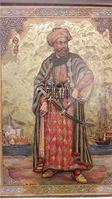 Hayreddin BarbarossaPersonHayreddin Barbarossa was a sixteenth-century corsair who became grand admiral of the Ottoman fleet.
- Haytham ibn KhalidPersonHaytham ibn Khalid was an Arab governor of Shirvan from the Yazidid family who in 861, as Abbasid authority collapsed after the murder of the caliph al-Mutawakkil…
 Hay–Bunau-Varilla TreatyTreaty · 1903The Hay–Bunau-Varilla Treaty was signed on 18 November 1903 by US Secretary of State John Hay and Philippe Bunau-Varilla, acting for the newly independent Panama.
 Hay–Herrán TreatyTreaty · 1903The Hay–Herrán Treaty was signed in January 1903 by US Secretary of State John Hay and the Colombian chargé d'affaires Tomás Herrán.
 HazaelPersonHazael was a king of Aram-Damascus who seized the throne around 842 BCE; an Assyrian text calls him the son of a nobody.
- Hazael of QedarPersonHazael was a king of the Qedarite Arabs of northern Arabia in the early 7th century BCE.
- HazaraPlaceHazara is a region in present-day north-western Pakistan.
 HazarajatPlaceThe Hazarajat is the mountainous central region of Afghanistan, homeland of the Hazara people, centred on Bamiyan and the highlands of the upper Helmand.
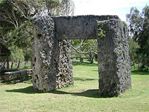 Haʻamonga ʻa MauiWork / monumentThe Haʻamonga ʻa Maui is a stone trilithon on the north-eastern coast of Tongatapu, Tonga.
 Heart of DarknessWork / monumentHeart of Darkness is a novella by Joseph Conrad, published in serial form in 1899 and as a book in 1902.
- Heavenly KhaganInstitutionHeavenly Khagan was the title granted by steppe peoples to Emperor Taizong of the Tang Dynasty.
- Heavy cavalryTermHeavy cavalry refers to mounted troops with substantial armour and weapons, used for shock action against enemy formations.
- Heavy taxationHistorical factorHeavy taxation is a recurring pattern in which rulers raise tax burdens to fund wars, armies or courts, provoking rural distress, revolt and loss of legitimacy.
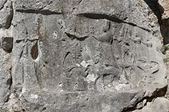 HebatReligion / ideaHebat was a mother goddess of the Hurrians, worshipped as the consort of the storm god Teshub, especially in northern Syria and Kizzuwatna.
 HebeiPlaceHebei is a province of northern China surrounding present-day Beijing.
- HebrewTermHebrew is a Semitic language, the language of the Hebrew Bible and of ancient Israel.
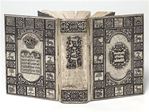 Hebrew BibleWork / monumentThe Hebrew Bible is the collection of scriptures of Judaism, also forming the Old Testament of Christianity.
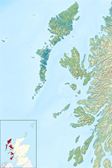 HebridesPlaceThe Hebrides are the islands off the west coast of Scotland, divided into the Inner Hebrides, such as Skye, Mull and Islay, and the Outer Hebrides, such as Lewis and…
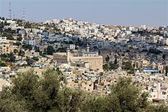 HebronPlaceHebron is a city in the southern West Bank, in the Judaean hills about 30 kilometres south of Jerusalem.
- Hecataeus of MiletusPersonHecataeus of Miletus was an early Greek historian and geographer.
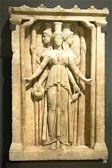 HecateReligion / ideaHecate was a Greek goddess associated with crossroads, entrances, night, magic and the moon, often shown with torches or in triple form.
- Hecatomnid dynastyPeople / groupThe Hecatomnid dynasty ruled Caria in south-west Asia Minor as satraps of the Persian Empire in the 4th century BCE.
 HecatomnusPersonHecatomnus was a Carian dynast from Mylasa who became satrap of Caria for the Achaemenid Empire around 392 BCE, founding the Hecatomnid dynasty.
- HecatompylosPlaceHecatompylos, Greek for 'hundred gates', was an ancient city in north-eastern Iran, identified with the ruins of Shahr-e Qumis near Damghan.
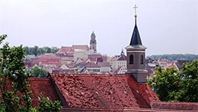 HechingenPlaceHechingen is a town in the Zollernalb district of Baden-Württemberg, Germany, at the foot of the hill crowned by Hohenzollern Castle.
- Hedayat-Allah KhanPersonHedayat-Allah Khan was ruler of Gilan on the Caspian coast of Iran in the second half of the 18th century, from a notable family of Fuman.
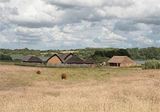 HedebyPlaceHedeby was a Viking Age trading town at the head of the Schlei inlet in Schleswig, now in northern Germany.
- Heden IIPersonHeden II was a duke of Thuringia of the Hedenid line, based at Würzburg on the Main, in the early 8th century.
- Hedong (Shanxi)PlaceHedong, meaning "east of the river", is a historical name for the region of south-western Shanxi east of the great southward bend of the Yellow River, and in Tang and…
 Hedwig Jagiellon, Duchess of BavariaPersonHedwig Jagiellon was a Polish princess, a daughter of King Casimir IV, who married Duke George the Rich of Bavaria-Landshut in 1475.
 Hedwig of SilesiaPersonHedwig of Silesia was a daughter of the counts of Andechs, dukes of Merania, and wife of Duke Henry I the Bearded of Silesia.
 Heeren XVIIInstitutionThe Heeren XVII, or Seventeen Lords, was the governing board of the Dutch East India Company, composed of delegates from its regional chambers.
- HegraPlaceHegra, also known as Mada'in Salih or al-Hijr, is an archaeological site near al-Ula in north-western Saudi Arabia.
 Heian-kyōPlaceHeian-kyō ('capital of peace and tranquillity') was the capital of Japan founded by Emperor Kanmu in 794, on the site of modern Kyoto.
 HeidecksburgPlaceThe Heidecksburg is a baroque palace on a hill above Rudolstadt in Thuringia, Germany.
 HeidelbergPlaceHeidelberg is a city on the Neckar in Baden-Württemberg, south-western Germany.
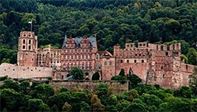 Heidelberg CastleWork / monumentHeidelberg Castle is the ruined residence of the electors palatine above the Neckar in Heidelberg, Germany.
 Heidelberg CatechismWork / monumentThe Heidelberg Catechism is a Reformed Protestant statement of faith in question-and-answer form, published in 1563 at the order of Elector Frederick III of the…
 Heidelberg UniversityInstitutionHeidelberg University was founded in 1386 by Rupert I, Elector Palatine, and is the oldest university in present-day Germany.
 Heijō-kyōPlaceHeijō-kyō was the capital of Japan from 710 to 784, on the site of modern Nara.
 Heilbronn LeaguePeople / groupThe Heilbronn League was an alliance formed at Heilbronn in April 1633 between Sweden and the Protestant estates of the Franconian, Swabian and Rhenish circles, led by…
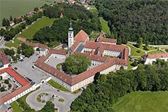 Heiligenkreuz AbbeyWork / monumentHeiligenkreuz Abbey is a Cistercian monastery in the Vienna Woods, Lower Austria, founded in 1133 by Margrave Leopold III of Austria.
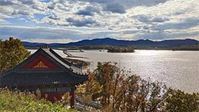 HeilongjiangPlaceHeilongjiang is the northernmost province of China, in north-east Manchuria, bordering Russia along the Amur, whose Chinese name it bears.
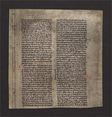 HeimskringlaWork / monumentHeimskringla is a collection of sagas of the kings of Norway written in Old Norse around 1230, usually attributed to the Icelandic historian Snorri Sturluson.
- HeinkelInstitutionHeinkel was a German aircraft maker founded by Ernst Heinkel at Warnemünde in 1922 and based in Rostock.
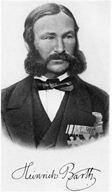 Heinrich BarthPersonHeinrich Barth was a German explorer and scholar who travelled extensively in North and West Africa in the mid-nineteenth century.
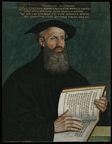 Heinrich BullingerPersonHeinrich Bullinger was a Swiss Reformer who succeeded Huldrych Zwingli as head of the Zürich church in 1531 and led it until his death.
 Heinrich Friedrich Karl vom SteinPersonHeinrich Friedrich Karl vom und zum Stein was a Prussian statesman who, as chief minister in 1807–08, began the reforms that rebuilt Prussia after its defeat by Napoleon.
 Heinrich HimmlerPersonHeinrich Himmler was Reichsführer of the SS from 1929 and from 1936 chief of all German police, including the Gestapo.
 Heinrich LXXII, Prince Reuss of Lobenstein and EbersdorfPersonHeinrich LXXII, Prince Reuss of Lobenstein and Ebersdorf, ruled the small Thuringian principality of Reuss-Ebersdorf from 1822 and inherited Lobenstein in 1824.
 Heinrich ParlerPersonHeinrich Parler was a German master builder from Cologne who worked in Schwäbisch Gmünd, where from 1351 he built the choir of the Holy Cross Minster, one of the first…
- Heinrich PlütschauPersonHeinrich Plütschau was a German Lutheran missionary who, with Bartholomäus Ziegenbalg, founded the Tranquebar Mission in Danish India in 1706, the first Protestant…
 Heinrich RubenowPersonHeinrich Rubenow was a lawyer and burgomaster of Greifswald in Pomerania who founded the University of Greifswald in 1456 with the support of Duke Wartislaw IX and…
- Heinrich SchickhardtPersonHeinrich Schickhardt (1558–1635) was a German Renaissance architect and engineer in the service of Duke Frederick I of Württemberg.
 Heinrich SchliemannPersonHeinrich Schliemann was a German businessman and pioneering archaeologist who set out to prove the historical basis of Homer's epics.
- Heinrich TopplerPersonHeinrich Toppler was Mayor of Rothenburg ob der Tauber in Franconia several times between 1373 and 1407.
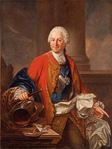 Heinrich von BrühlPersonCount Heinrich von Brühl was the leading minister of Saxony under Augustus III, Elector of Saxony and King of Poland, from the late 1730s until 1763.
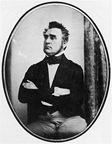 Heinrich von GagernPersonHeinrich von Gagern was a German liberal politician from the Grand Duchy of Hesse.
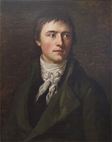 Heinrich von KleistPersonHeinrich von Kleist was a German dramatist, poet and short-story writer from a Prussian military family.
 Heinrich von PlauenPersonHeinrich von Plauen was a knight of the Teutonic Order from the family of the reeves of Plauen in the Vogtland.
- Heinrich von ZütphenPersonHeinrich von Zütphen (1488–1524) was a Dutch Augustinian friar and follower of Martin Luther.
- Heinrich X Reuss of EbersdorfPersonHeinrich X was a younger son of the Lobenstein line of the House of Reuss, for whom the small county of Reuss-Ebersdorf in the Thuringian Highlands was separated in 1678.
- Heinrich X Reuss of LobensteinPersonHeinrich X was a count of the Younger Line of the House of Reuss, which named all its male members Heinrich.
 Heinrich XI, Prince Reuss of GreizPersonHeinrich XI was a count of the Elder Line of the House of Reuss who reunited Upper and Lower Greiz in 1768.
 Heinrich XXII, Prince Reuss of GreizPersonHeinrich XXII, Prince Reuss of Greiz, ruled the principality of Reuss Elder Line from 1859, at first under his mother's regency.
- Heishui MohePeople / groupThe Heishui Mohe, or Black Water Mohe, were the northernmost group of the Mohe peoples, living along the Amur River in Manchuria.
 HeitersheimPlaceHeitersheim is a small town in the Markgräflerland of Baden-Württemberg, south-west of Freiburg im Breisgau.
 HejazPlaceThe Hejaz is a region of western Arabia along the Red Sea, containing the holy cities of Mecca and Medina.
 Helen ClarkPersonHelen Clark is a New Zealand politician who was Prime Minister from 1999 to 2008, leading the Fifth Labour Government through three terms.
 Helen of TroyPersonIn Greek mythology, Helen was the daughter of Zeus and Leda and the wife of Menelaus, king of Sparta.
 Helena DragašPersonHelena Dragaš was a Serbian noblewoman, daughter of Konstantin Dragaš, who in 1392 married the Byzantine emperor Manuel II Palaiologos.
- Helena KantakouzenePersonHelena Kantakouzene was a Byzantine noblewoman, granddaughter of Emperor John VI Kantakouzenos, who married Louis Fadrique, Count of Salona.
 Helena of AdiabenePersonHelena was queen of Adiabene in northern Mesopotamia in the 1st century CE, wife of King Monobazus I and mother of Izates II.
- Helena of Bulgaria, Empress of SerbiaPersonHelena of Bulgaria, called Jelena in Serbian, was the wife of Stefan Dušan and empress of Serbia.
- Helian BoboPersonHelian Bobo was the founder of the Xia state, one of the Sixteen Kingdoms of northern China, and was of Tiefu Xiongnu origin.
- Helian ChangPersonHelian Chang was the second emperor of the Xiongnu-led Helian Xia state in northern China, succeeding his father Helian Bobo in 425.
- Helian DingPersonHelian Ding was the last emperor of Helian Xia, the brother of Helian Chang, who rallied the remnants of the state after Chang's capture by Northern Wei in 428.
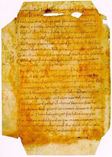 HeliandWork / monumentThe Heliand is an Old Saxon epic poem of about 6,000 lines, written around 830, that retells the life of Christ from the Gospels in Germanic alliterative verse.
 Helier de CarteretPersonHelier de Carteret was a Jersey nobleman, Seigneur of Saint Ouen, who colonised the Channel Island of Sark.
 Heligoland–Zanzibar TreatyTreaty · 1890The Heligoland–Zanzibar Treaty was signed on 1 July 1890 between Britain and Germany.
 Heliodorus pillarWork / monumentThe Heliodorus pillar is a stone column at Besnagar near Vidisha in central India, set up around 113 BCE.
 Heliopolis (ancient Egypt)PlaceHeliopolis, Egyptian Iunu and biblical On, was one of the oldest cities of ancient Egypt, now within north-eastern Cairo, and the chief cult centre of the sun god Ra…
 HeliosReligion / ideaHelios is the god of the sun in Greek religion, pictured driving a chariot across the sky.
- HelissonPlaceThe Helisson is a river of Arcadia in the central Peloponnese, Greece, a tributary of the Alpheus.
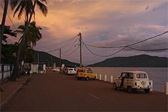 Hell-VillePlaceHell-Ville, officially Andoany, is the main town of the island of Nosy Be off north-western Madagascar.
- HellanodikaiTermThe Hellanodikai, 'judges of the Greeks', were the officials who organised and judged the ancient Olympic Games.
 Hellenica OxyrhynchiaWork / monumentThe Hellenica Oxyrhynchia is a Greek historical work known from papyrus fragments found at Oxyrhynchus in Egypt and first published in 1908.
- HellenionWork / monumentThe Hellenion was a sanctuary at Naukratis in the Nile Delta, built jointly by Greek cities trading in Egypt under the pharaoh Amasis II in the 6th century BCE.
- Hellenistic periodReligion / ideaThe Hellenistic period is the era from the death of Alexander the Great in 323 BCE to the late first century BCE, when Greek culture spread across the eastern…
- HellenizationReligion / ideaHellenisation refers to the spread of Greek language, culture, institutions and urban life among non-Greek peoples, especially after the conquests of Alexander the Great.
 Heller (coin)TermThe Heller was a German coin first struck at the imperial mint of Schwäbisch Hall in the 12th century as a silver pfennig, the Haller pfennig, from which its name comes.
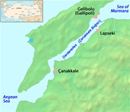 HellespontPlaceThe Hellespont, now known as the Dardanelles, is the narrow strait linking the Aegean Sea to the Sea of Marmara and separating Europe from Asia.
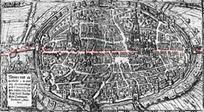 HellwegPlaceThe Hellweg was a medieval trade and military road in Westphalia running from the Rhine near Duisburg east through Essen, Dortmund, Soest and Paderborn towards the Weser.
 Helmand RiverPlaceThe Helmand is the longest river in Afghanistan, flowing about 1,150 km from the Hindu Kush south-west through desert to the Sistan basin on the Iranian border.
- Helmin WielsPersonHelmin Wiels was a Curaçao politician who founded the Pueblo Soberano party, which campaigned for Curaçao's independence and against corruption.
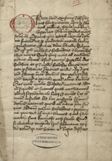 Helmold of BosauPersonHelmold of Bosau was a German priest and chronicler in Holstein.
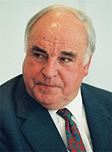 Helmut KohlPersonHelmut Kohl was a German Christian Democratic politician who was Chancellor of West Germany and then of reunified Germany from 1982 to 1998, the longest-serving…