Person
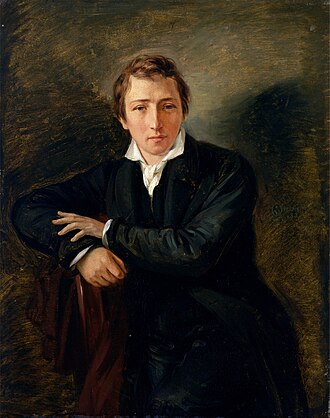
Heinrich Heine
Heinrich Heine was a German poet, writer and critic, born Harry Heine into a Jewish family in Düsseldorf, who converted to Lutheran Christianity in 1825. His early lyric poetry, collected in the Buch der Lieder of 1827, was set to music by Schubert, Mendelssohn, Robert Schumann and others; his later verse and prose are marked by satire and irony. Associated with the Young Germany movement, he settled in Paris in 1831, and in 1835 the German Diet banned his works with theirs; bedridden from 1848, he died in Paris in 1856. Nazi Germany burned and later banned his books, and a line from his play Almansor on burning books and people is engraved at the site of the 1933 Berlin book burning.
Songs in history
See also




Cite this entry
- APA
- The Epoch Institute. (2026). Heinrich Heine. In The Epoch Institute Encyclopedia. https://the-epoch-institute.org/encyclopedia/heinrich-heine
- MLA
- “Heinrich Heine.” The Epoch Institute Encyclopedia, The Epoch Institute, 2026, https://the-epoch-institute.org/encyclopedia/heinrich-heine. Accessed .
- Chicago
- The Epoch Institute. “Heinrich Heine.” The Epoch Institute Encyclopedia. 2026. https://the-epoch-institute.org/encyclopedia/heinrich-heine.
- Harvard
- The Epoch Institute (2026) ‘Heinrich Heine’, The Epoch Institute Encyclopedia. Available at: https://the-epoch-institute.org/encyclopedia/heinrich-heine (Accessed: ).
Last reviewed October 2026Random entry ↻