Inventions & Discoveries · Writing and counting
Brahmi script
Brahmi is a writing system of ancient India that appeared as a fully developed script in the 3rd century BCE; its earliest securely dated inscriptions are the rock-cut edicts of Ashoka, from 250–232 BCE. It is an abugida, marking vowels with signs attached to consonants. Its origin is much debated: most scholars derive it from, or see the influence of, a Semitic script such as Aramaic. Deciphered by James Prinsep in the 1830s, it is the ancestor of the Brahmic scripts still used across South and Southeast Asia.
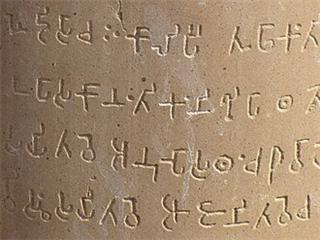
On the inventions tree
- First known
- 3rd century BCE
- Where
- India
- Credited to
- Maurya Empire
NoteMost scholars derive it from a Semitic script, usually Aramaic; earlier inscribed potsherds from Sri Lanka and Tamil Nadu are disputed.
Built onPhoenician alphabetc. 1050 BCE
Mentioned in 2 profiles
See also





Cite this entry
- APA
- The Epoch Institute. (2026). Brahmi script. In The Epoch Institute Encyclopedia. https://the-epoch-institute.org/encyclopedia/brahmi-script
- MLA
- “Brahmi script.” The Epoch Institute Encyclopedia, The Epoch Institute, 2026, https://the-epoch-institute.org/encyclopedia/brahmi-script. Accessed .
- Chicago
- The Epoch Institute. “Brahmi script.” The Epoch Institute Encyclopedia. 2026. https://the-epoch-institute.org/encyclopedia/brahmi-script.
- Harvard
- The Epoch Institute (2026) ‘Brahmi script’, The Epoch Institute Encyclopedia. Available at: https://the-epoch-institute.org/encyclopedia/brahmi-script (Accessed: ).
Last reviewed October 2026Random entry ↻