Inventions & Discoveries · Communication and computing
Coinage
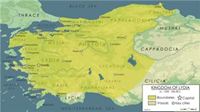
Coinage is the minting of small metal pieces for use as money, first known in the 7th century BCE in China, where a factory at Guanzhuang in Henan made shovel-shaped bronze coins between 640 and 550 BCE, and in Anatolia, where the earliest coins are mostly associated with the kingdom of Lydia. The early Lydian coins were of electrum, a natural alloy of gold and silver, and King Croesus is credited with the Croeseid, the first true gold coins of standardised purity. Coins spread rapidly in the 6th and 5th centuries BCE.
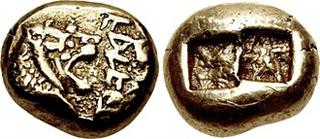
On the inventions tree
- First known
- late 7th century BCE
- Where
- Lydia (Anatolia)
- Credited to
- Kingdom of Lydia
Also arose independentlyChina (Guanzhuang) (640–550 BCE)
NoteGuanzhuang in China is the oldest securely dated minting site, and Aegina has also been proposed for the first coins.
See also





Cite this entry
- APA
- The Epoch Institute. (2026). Coinage. In The Epoch Institute Encyclopedia. https://the-epoch-institute.org/encyclopedia/coinage
- MLA
- “Coinage.” The Epoch Institute Encyclopedia, The Epoch Institute, 2026, https://the-epoch-institute.org/encyclopedia/coinage. Accessed .
- Chicago
- The Epoch Institute. “Coinage.” The Epoch Institute Encyclopedia. 2026. https://the-epoch-institute.org/encyclopedia/coinage.
- Harvard
- The Epoch Institute (2026) ‘Coinage’, The Epoch Institute Encyclopedia. Available at: https://the-epoch-institute.org/encyclopedia/coinage (Accessed: ).
Last reviewed October 2026Random entry ↻