Ancient Near East
Kingdom of Lydia
At a glance
- A western Anatolian kingdom ruled from Sardis, which under the Mermnad dynasty dominated Asia Minor west of the Halys.
- Lydia struck the world’s earliest known coins from electrum carried by the river Pactolus.
- Croesus, famed for his wealth, attacked Persia and lost his kingdom to Cyrus the Great around 546 BCE.
Rise & Fall
- c. 680 BCEGyges kills Candaules and founds the Mermnad dynasty
- c. 644 BCEGyges dies fighting the Cimmerians, who later sack Sardis
- late 7th c. BCEThe first electrum coins are struck in Lydia
- c. 600 BCEAlyattes drives out the Cimmerians and captures Smyrna
- 585 BCEAn eclipse ends the war with Media; the Halys becomes the frontier
- c. 560 BCECroesus becomes king and subdues the Greek cities of Ionia
- c. 546 BCECyrus the Great takes Sardis; Lydia becomes a Persian satrapy
Foundation

Lydia lay in western Anatolia, in the fertile valleys of the Hermus and Cayster rivers, inland from the Greek cities of the Aegean coast. Its people spoke Lydian, an Indo-European language of the Anatolian family related to Hittite and Luwian, and Homer knew the region as Maeonia. Greek tradition, preserved by Herodotus, held that a dynasty descended from Heracles ruled Lydia for twenty-two generations, about 505 years, which would place its beginnings around 1200 BCE, but this early history is legendary and archaeology at Sardis shows only gradual growth after the collapse of Hittite power. The kingdom becomes historical with Gyges, who seized the throne around 680 BCE by killing the last Heraclid king, Candaules; Herodotus tells a famous tale of how Candaules’ wife made Gyges choose between death and regicide. Gyges founded the Mermnad dynasty and turned Lydia into an expanding power. Assyrian records call him Gugu of Luddi and report that he sought the help of Ashurbanipal against the Cimmerians, nomadic invaders from beyond the Caucasus who had destroyed the Kingdom of Phrygia. He also sent rich gifts to the oracle of Apollo at Delphi, beginning the long Lydian relationship with the Greek sanctuaries.
Socioeconomy
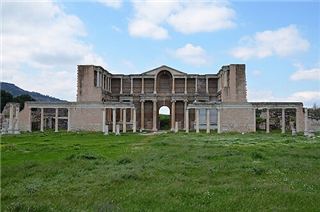
Lydia’s wealth rested on fertile farmland, on its position on routes between the Aegean and the Anatolian interior, and above all on gold. The river Pactolus, flowing through Sardis, carried electrum, a natural alloy of gold and silver, and excavations at Sardis have uncovered a sixth-century workshop where gold was separated from silver. Lydia produced the earliest known coins in the late seventh century BCE: lumps of electrum of standard weight stamped with a lion’s head, probably under Alyattes. Later, separate pure gold and silver coins were struck, traditionally credited to Croesus, although some scholars date the first of these to the early Persian period. Herodotus also claimed that the Lydians were the first retail traders. Sardis was a large city with a fortified acropolis, a lower town of mud-brick houses and a massive outer wall. Religion combined Anatolian and Greek elements: Artemis of Sardis and the mother goddess Kybebe, the later Cybele, were prominent, and the Lydian kings were generous patrons of Greek shrines. The monumental burial mounds of Bin Tepe, north of Sardis, include the tumulus of Alyattes, over 350 metres across, which Herodotus ranked among the wonders of the world.
Military
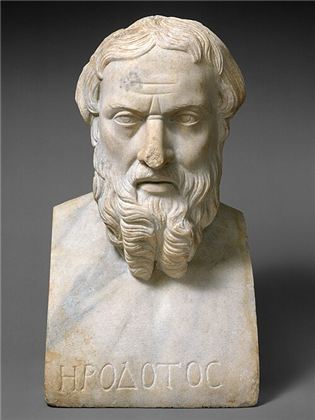
Lydia’s military reputation rested on its cavalry. Herodotus describes the Lydians of Croesus’ day as the bravest and most warlike people in Asia, fighting on horseback with long spears. The Mermnad kings used this force to expand against the Cimmerians and the Greeks. Gyges attacked Miletus and Smyrna and took the lower town of Colophon, but he died fighting the Cimmerians around 644 BCE, and under his son Ardys the invaders sacked Sardis except for its citadel. Alyattes drove the Cimmerians out of Asia Minor, waged a long war against Miletus that ended in a treaty, and captured Smyrna around 600 BCE. He then fought a five-year war with the Median king Cyaxares, which according to Herodotus ended in 585 BCE when an eclipse of the sun during a battle, said to have been predicted by Thales of Miletus, led both sides to make peace, with the river Halys as their frontier. Croesus attacked Ephesus and brought all the Greek cities of the coast under tribute. His final war with Cyrus the Great of Persia began with an indecisive battle at Pteria in Cappadocia; Cyrus then followed him to Sardis, defeated the Lydian cavalry, according to Herodotus by frightening the horses with camels, and took the city after a short siege.
Governance & Law
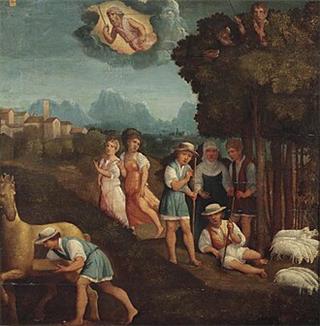
The Lydian state was a personal monarchy centred on the king and his court at Sardis. The Mermnad kings, Gyges, Ardys, Sadyattes, Alyattes and Croesus, ruled for about 135 years, and succession seems to have passed from father to son, though Croesus had to overcome a half-brother supported by a rival faction at his accession around 560 BCE. Little is known of Lydian administration, since few Lydian texts survive and most information comes from Greek authors. The core territory was governed directly from Sardis, while conquered peoples were ruled more loosely. The Greek cities of Ionia and Aeolis, once subdued, kept their own institutions but paid tribute and provided troops, and the Phrygians and other peoples west of the Halys acknowledged Lydian supremacy. Royal control of the gold supply and of coinage gave the kings unusual financial resources, which they used for monumental building, gifts to sanctuaries and diplomacy. Lydian kings married into neighbouring dynasties: Alyattes gave his daughter Aryenis to Astyages, son of the Median king, to seal the peace of 585 BCE. Croesus built a network of alliances with Amasis of Egypt, Nabonidus of Babylon and Sparta, which he hoped would protect him against the rising power of Persia.
Global & Regional Impact
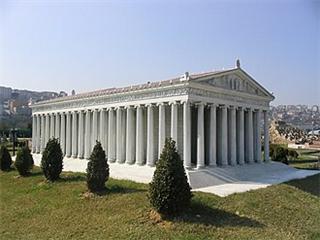
Lydia’s most lasting contribution was coinage. The idea of stamped pieces of metal of guaranteed weight spread rapidly to the Greek cities of Ionia and then across the Greek world, and after the Persian conquest the Achaemenid Empire adopted the bimetallic system of gold and silver coins associated with Croesus. Through the Greeks, coinage passed to Rome and eventually to most of the world. Lydia also stood at the meeting point of Greek and Near Eastern culture. Its kings were among the first non-Greek rulers to patronise Greek sanctuaries on a large scale: Croesus dedicated gold and silver offerings at Delphi and paid for many of the columns of the great Temple of Artemis at Ephesus, some bearing his name. The Lydian musical mode entered Greek music theory, and Greek writers credited Lydians with inventing games and luxuries. The story of Croesus, his wealth, his ambiguous oracle from Delphi and his fall, became one of the central moral tales of Greek literature, told by Herodotus and later writers, and the phrase “as rich as Croesus” survives in many languages. Sardis itself remained a major city under Persian, Hellenistic and Roman rule.
Decline & Fall
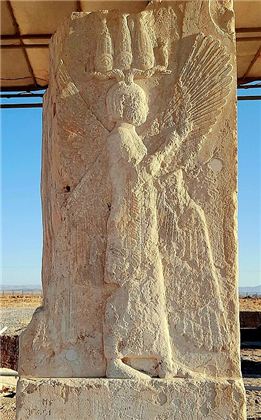
Lydia’s fall came suddenly at the height of its power. When Cyrus the Great overthrew Astyages of Media around 550 BCE, Croesus, Astyages’ brother-in-law, saw both a threat and an opportunity. Herodotus reports that he consulted the oracle at Delphi and was told that if he attacked Persia he would destroy a great empire; he crossed the Halys, fought an indecisive battle at Pteria and withdrew to Sardis for the winter, expecting to renew the war with his allies in the spring. Cyrus instead pursued him at once, defeated the Lydian army outside Sardis and took the city, traditionally after a siege of fourteen days, around 546 BCE, although the precise year is debated. Croesus was captured; Greek tradition tells of his rescue from a pyre, while a Babylonian chronicle passage once read as recording his death is now considered too damaged to identify the country concerned. Lydia became the Achaemenid satrapy of Sparda, with Sardis as the western capital of the Persian Empire and the end of the Royal Road from Susa. A revolt led by the Lydian Pactyes was soon crushed, and Lydian independence was never restored, although the language and culture survived into the Hellenistic period.
Lydia, ruled from Sardis by the Mermnad kings, dominated western Anatolia in the seventh and sixth centuries BCE, struck what were probably the world’s first coins from Pactolus electrum, bridged Greek and Near Eastern culture, and through the fall of Croesus to Cyrus in c. 546 BCE became a lasting Greek parable of wealth and fortune.
References
- Herodotus (2003) The Histories. Trans. A. de Sélincourt, rev. J. Marincola. London: Penguin.
- Pedley, J.G. (1968) Sardis in the Age of Croesus. Norman: University of Oklahoma Press.
- Hanfmann, G.M.A. (1983) Sardis from Prehistoric to Roman Times. Cambridge, MA: Harvard University Press.
- Roosevelt, C.H. (2009) The Archaeology of Lydia, from Gyges to Alexander. Cambridge: Cambridge University Press.
Connections
Open the full connections map →