Ancient Near East
Byblos
At a glance
- Byblos, on the coast of Lebanon, is one of the oldest continuously inhabited towns in the world.
- For over two thousand years it shipped cedar and resin to Egypt, absorbing Egyptian culture and religion.
- Its royal inscriptions are among the earliest in the Phoenician alphabet, ancestor of the Greek and Latin scripts.
Rise & Fall
- c. 2600 BCEByblos ships cedar and resin to the pharaohs of the Old Kingdom
- c. 1850 BCELocal rulers receive gifts from the pharaohs Amenemhat III and IV
- c. 1350 BCEKing Rib-Hadda writes dozens of Amarna letters begging Egypt for help
- c. 1075 BCEThe Egyptian envoy Wenamun bargains with King Zakar-Baal for cedar
- c. 1000 BCEThe sarcophagus of King Ahiram is inscribed in the Phoenician alphabet
- c. 870 BCEByblos pays tribute to Ashurnasirpal II of Assyria
- 539 BCEByblos passes under the Achaemenid Empire
- 332 BCEByblos submits to Alexander the Great and its king joins the siege of Tyre
Foundation
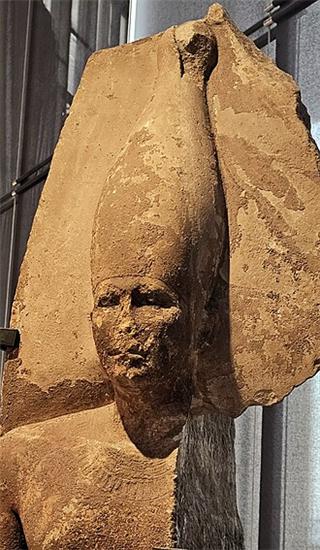
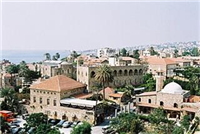
Byblos, called Gubla by its own people and in cuneiform texts, Gebal in the Hebrew Bible and Jbeil today, lies on a low headland on the coast of Lebanon about 35 kilometres north of Beirut. The site has been settled since Neolithic times, and it is among the oldest continuously inhabited towns in the world. Its fortune rested on two assets: a small natural harbour and the forests of cedar, pine and fir on the slopes of Mount Lebanon behind it, the best timber within reach of treeless Egypt and Mesopotamia. In the first half of the third millennium BCE a fishing and farming village grew into a walled town with stone houses and temples, and by about 2600 BCE it was a city with close ties to the pharaohs of the Old Kingdom of Egypt. Egyptian objects inscribed with royal names from the late Second Dynasty onwards have been found in its temples, and Egyptian texts called large seagoing vessels ‘Byblos ships’, after the voyages that brought back timber and resin. The Palermo Stone records that King Sneferu received forty ships laden with cedar wood, probably from this coast. At the centre of the city stood the temple of its goddess, the Baalat Gebal, the Lady of Byblos, whom the Egyptians identified with Hathor.
Socioeconomy
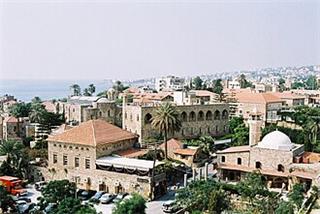
Byblos lived by exchange. It sent cedar logs, resin, oils and wine to Egypt and received gold, alabaster vessels, linen and papyrus in return; the Greeks, who obtained papyrus through the city, called the material byblos, from which come biblion, book, and ultimately the word Bible. Local farmers grew grain, olives and vines on the narrow coastal plain, while fishermen, shipbuilders, carpenters and metalworkers served the port. In the Middle Bronze Age the city’s craftsmen produced fine jewellery, weapons and bronze figurines of gods, hundreds of which, some covered in gold leaf, were buried as offerings in the Temple of the Obelisks. Religion centred on the Baalat Gebal and on male gods later identified with Adonis and with Osiris; according to Plutarch, the chest containing the body of Osiris washed ashore at Byblos. The city was also a laboratory of writing. Its scribes used Egyptian hieroglyphs and Babylonian cuneiform, and an undeciphered local system known as the Byblos syllabic script appears on stone and bronze inscriptions of the second millennium BCE. Around the end of the second millennium, inscriptions in the Phoenician alphabet appear at Byblos, among the earliest examples of the twenty-two-letter script from which the Greek and Latin alphabets descend.
Military
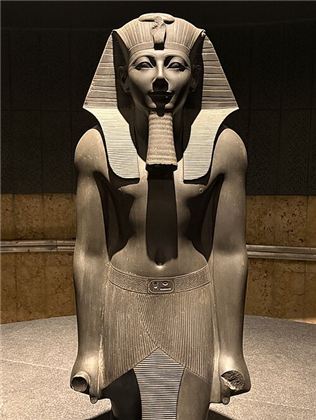
Byblos was never a great military power. Its defences were its walls, rebuilt many times, and its ability to secure the protection of stronger states, chiefly Egypt. A destruction by fire in the late third millennium BCE ended the prosperous Early Bronze Age city, though the cause is uncertain. In the Late Bronze Age, after Thutmose III’s campaigns brought the Levantine coast under Egyptian control, Byblos served as a loyal base for the pharaohs. Its vulnerability is vividly documented in the Amarna letters of the fourteenth century BCE: King Rib-Hadda wrote more than sixty letters to the pharaohs Amenhotep III and Akhenaten, pleading for archers and supplies as Abdi-Ashirta of Amurru and then his son Aziru seized neighbouring towns, cut off the city’s grain supply and turned its own people against him. Help rarely came, and Rib-Hadda was eventually driven from his city. In the Iron Age, Byblos lacked the fleets of Tyre and Sidon and generally submitted to the empires that dominated the Levant rather than resisting them. Its ships nonetheless had military value: in 332 BCE its king, Enylus, joined Alexander the Great with his squadron during the siege of Tyre after learning that Byblos had already submitted to the Macedonians.
Governance & Law

Byblos was ruled throughout its history by kings who governed the city and its small hinterland under the patronage of the Baalat Gebal, and who presented themselves as her servants. In the Middle Bronze Age local rulers such as Abishemu and his son Ipshemuabi adopted Egyptian forms, writing their names in hieroglyphs with the Egyptian title of a provincial governor and receiving gifts from the pharaohs Amenemhat III and Amenemhat IV, objects found in their rock-cut tombs. In the Late Bronze Age the king was a vassal of Egypt who reported to the pharaoh, but he also had to manage a council of leading citizens; Rib-Hadda’s letters complain that his own nobles and townspeople were ready to abandon him. The Egyptian Report of Wenamun, from about 1075 BCE, shows King Zakar-Baal receiving an envoy of the temple of Amun at Karnak and demanding payment for cedar, consulting the records of his ancestors and treating Egypt as a trading partner rather than an overlord. Iron Age inscriptions of kings such as Yehimilk, Abibaal and Elibaal record the building and restoration of temples. Under Assyrian, Babylonian and Persian rule, the kings of Byblos kept their thrones as tributaries; the Persian-period stele of King Yehawmilk shows him standing before the enthroned goddess.
Global & Regional Impact
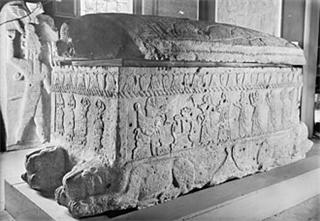
Byblos was the main point of contact between Egypt and the Levant for much of the Bronze Age, and through its harbour flowed timber, ideas and artistic styles in both directions. Egyptian influence on its temples, tombs and royal titles, and Levantine influence in Egypt, made it a channel of exchange between two worlds over more than two thousand years. Its most lasting contribution is to writing. The Ahiram sarcophagus, inscribed by Ahiram’s son Ittobaal and usually dated to around 1000 BCE, though some scholars place it earlier, carries one of the oldest substantial texts in the Phoenician alphabet, and the royal inscriptions of tenth-century Byblos are basic sources for the early alphabet that the Greeks adapted. The Greek name of the city became the word for papyrus and then for book. In later antiquity Byblos was celebrated as a centre of the cult of Adonis, and the writer Philo of Byblos, in the Roman period, claimed to translate an ancient Phoenician history by Sanchuniathon, a source on Phoenician religion. Modern excavation, begun by Ernest Renan in 1860 and continued by Pierre Montet and Maurice Dunand, uncovered layers from the Neolithic to the Crusades, and the site was made a UNESCO World Heritage Site in 1984.
Decline & Fall

Byblos declined slowly rather than collapsing. After the end of Egyptian rule in the Levant in the twelfth century BCE it survived the upheavals that destroyed cities such as Ugarit, and in the tenth century its kings were still prosperous enough to dedicate inscribed statues of the pharaohs Shoshenq I and Osorkon I to their goddess. But in the Iron Age, commercial and political leadership in Phoenicia passed to Tyre and Sidon, whose fleets and colonies spread across the Mediterranean, while Byblos remained a smaller port. From the ninth century BCE it paid tribute to the Assyrian Empire: Ashurnasirpal II received its gifts on his march to the Mediterranean, and later kings of Byblos appear in the tribute lists of Tiglath-Pileser III and Sennacherib. It passed under the Chaldean Empire and from 539 BCE under the Achaemenid Empire, when it minted its own silver coins showing warships and was home to a Persian-period fortress. In 332 BCE Byblos submitted peacefully to Alexander the Great, and its kings disappear from the record soon afterwards under Macedonian rule. The town continued under the Seleucids, the Romans, the Byzantines and the Crusaders, who built a castle there, and Jbeil remains a living town today.
For over two thousand years Byblos linked the forests of Lebanon to the Egyptian court, absorbing Egyptian culture while its scribes experimented with writing; inscriptions from the city are among the earliest in the Phoenician alphabet, and its name gave Greek the word for papyrus and, through it, the word Bible.
References
- Markoe, G.E. (2000) Phoenicians. London: British Museum Press.
- Moran, W.L. (ed. and trans.) (1992) The Amarna Letters. Baltimore: Johns Hopkins University Press.
- Aubet, M.E. (2001) The Phoenicians and the West: Politics, Colonies and Trade. 2nd edn. Cambridge: Cambridge University Press.
- Van De Mieroop, M. (2016) A History of the Ancient Near East, ca. 3000–323 BC. 3rd edn. Chichester: Wiley-Blackwell.
- Arrian, The Campaigns of Alexander. Translated by A. de Sélincourt. Harmondsworth: Penguin, 1971.
Connections
Open the full connections map →