Ancient Near East
Akkadian Empire
At a glance
- Founded by Sargon of Akkad, it is widely regarded as the world's first empire, uniting the Sumerian city-states under one ruler.
- Its governors, standard measures and written Akkadian set the template that later Mesopotamian empires followed.
- Gutian raids, palace murders and a severe drought around 2200 BCE brought it down; its capital has never been found.
Rise & Fall
- c. 2334 BCESargon of Akkad founds the empire after supplanting King Ur-Zababa of Kish
- c. 2254 BCENaram-Sin, Sargon's grandson, begins the reign that marks the empire's zenith
- c. 2240 BCEAkkadian power peaks under Naram-Sin, self-styled King of the Four Quarters
- c. 2200 BCEThe 4.2-kiloyear drought brings crop failure and famine across the Near East
- c. 2193 BCEShar-Kali-Sharri dies, leaving a chaotic succession of short-lived kings
- c. 2154 BCEThe Akkadian dynasty comes to an end
Foundation

The Akkadian Empire is widely regarded as the world's first true empire, a multi-ethnic, multilingual state governed by a centralised administration over a large territory, and its foundation by Sargon of Akkad around 2334 BCE was one of the most consequential political innovations in human history. According to tradition, Sargon began as cupbearer to King Ur-Zababa of Kish, a position that gave him access to the court and administration of one of Sumer's leading city-states. He supplanted Ur-Zababa, founded the city of Akkad as his capital (a city whose precise location has never been identified archaeologically) and then defeated Lugal-zage-si of Uruk, who had unified much of Sumer and was the most formidable opponent in the region. Over the course of what his inscriptions describe as 34 battles, Sargon brought the Sumerian city-states of southern Mesopotamia under Akkadian control, symbolically washing his weapons in the Lower Sea, the Persian Gulf, after the conquest of the south. He then extended his campaigns into Elam to the east and up the Euphrates into Syria, reaching the Cedar Forest and the Silver Mountains towards the Mediterranean, while later legend carried his armies into Anatolia. The political genius of Sargon's enterprise lay in its combination of conquest with deliberate cultural integration: he appointed his daughter Enheduanna as high priestess of the moon god Nanna at Ur, binding Sumerian religious authority to his dynasty. Enheduanna, who composed elaborate hymns to the goddess Inanna, is often described as the first named author in recorded history. Sargon placed Akkadian officials in the conquered cities and imposed an administrative coherence on what had previously been a mosaic of competing city-states.
Socioeconomy
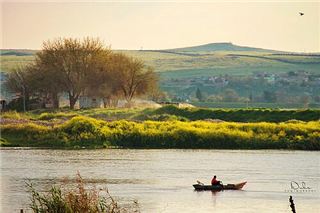
The Akkadian Empire governed one of the most economically productive regions of the ancient world, the alluvial plain of southern Mesopotamia fed by the Tigris and Euphrates, and connected it through trade networks reaching from the Indus Valley Civilisation to the Mediterranean. Sumer's agricultural surplus, generated by an elaborate canal and irrigation system developed over millennia, sustained both the urban populations of the city-states and the armies of the empire. The Akkadian kings worked to standardise weights and measures and administrative practice across their realm, easing exchange between previously autonomous cities with differing systems. The empire's position at the head of the Persian Gulf gave it control of the maritime route connecting Mesopotamia to Dilmun (Bahrain), Magan (Oman) and Meluhha (the Indus Valley), a network that brought copper, stone, timber and luxury goods to resource-poor Mesopotamia; Sargon boasted that ships from these lands moored at the quay of Akkad. Akkadian became the principal language of royal inscriptions and administration, increasingly displacing Sumerian in everyday written use. The social order preserved the existing Sumerian urban elite while layering an Akkadian imperial class over it: temple estates, merchants and farming communities continued to function much as before, now paying taxes and tribute to Akkadian governors rather than to independent city-kings. The revolts that marked the later reign of Sargon and the reigns of Rimush and Naram-Sin suggest that this accommodation was fragile and that imperial demands often exceeded what subject cities considered legitimate.
Military
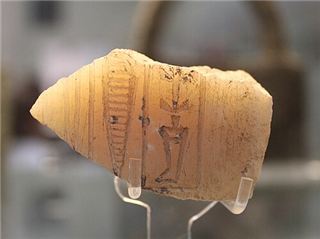
The Akkadian military represented a qualitative advance over the city-state armies of the preceding Early Dynastic period. Where Sumerian warfare had relied heavily on close-order infantry, as depicted on the Standard of Ur and the Stele of the Vultures, Sargon's army appears to have made greater use of lightly equipped troops and archers, enabling more flexible tactics. The empire maintained a permanent force rather than relying solely on seasonal levies, a prerequisite for sustained campaigning over great distances. Sargon's inscriptions record that 5,400 men ate daily in his presence, generally understood as a standing royal army that formed the core around which larger forces were assembled for major campaigns. Under Naram-Sin (r. c. 2254–2218 BCE), Sargon's grandson, Akkadian power reached its zenith. His Victory Stele, now in the Louvre, depicts him ascending a mountain over the bodies of defeated Lullubi enemies, a visual statement of personal military supremacy that influenced royal iconography for centuries. Naram-Sin's campaigns carried the empire to its greatest extent: he claimed the conquest of Armanum and Ebla in Syria and a victory over the ruler of Magan across the Gulf, and suppressed a great revolt of Sumerian and northern cities. The empire's military weakness lay in its dependence on the energy of individual rulers: Rimush and Manishtushu, Sargon's sons, are both said to have been murdered by courtiers, and in the final decades the army proved unable to defend the empire's long frontiers simultaneously against Gutian incursions, Amorite pressure and internal revolt.
Governance & Law
The Akkadian Empire developed the first known bureaucratic system designed to govern a multi-ethnic territorial state, and many of its practices, including standardised measures, appointed provincial governors and a single written language for imperial administration, became templates for later Mesopotamian empires. Sargon installed loyal Akkadian officials as governors (ensi) in the conquered Sumerian city-states, placing them alongside or above the existing local and temple authorities to secure revenue and military loyalty. The empire kept detailed written records, including economic tablets, administrative correspondence and royal inscriptions, on a scale and with a uniformity of format not seen before. Naram-Sin carried these developments furthest and added the ideological dimension of divine kingship: he took the title "King of the Four Quarters" and had his name written with the divine determinative, claiming to be the god of Akkad, a claim without clear precedent in Mesopotamia that transformed the king from servant of the gods into a god himself. The cuneiform script, inherited from Sumer, was adapted to write the Semitic Akkadian language and eventually became the administrative script of much of the ancient Near East. The fundamental problem the empire never solved was the tension between its centralising ambitions and the deep-rooted autonomy of the Sumerian city-states, whose temples and ruling families had governed themselves for centuries and repeatedly revolted against Akkadian taxation and interference. This tension produced the recurring rebellions that marked nearly every reign from Sargon's old age onward.
Global & Regional Impact

The Akkadian Empire's impact on later civilisation was enormous precisely because it established the political template of empire, centralised territorial rule over diverse populations, that later Mesopotamian states would follow. The Third Dynasty of Ur (c. 2112–2004 BCE), the Old Babylonian kingdom, the Assyrian Empire and ultimately the Achaemenid Empire all drew on administrative, ideological and cultural precedents set in the Akkadian period, and later Mesopotamian kings revered Sargon and Naram-Sin as models of kingship. The Akkadian language, promoted as the language of royal administration, later became in its Babylonian form the diplomatic lingua franca of the ancient Near East for much of the second millennium BCE, used in correspondence between Egypt and the Hittites and throughout the Amarna letters of the 14th century BCE. The concept of divine kingship introduced by Naram-Sin, though controversial and later remembered with suspicion, was revived by the kings of Ur III. Enheduanna's compositions, among the earliest attributed literary texts in history, shaped conventions of religious poetry that influenced Mesopotamian literary culture for centuries. The empire's fusion of Semitic Akkadian and Sumerian traditions produced a cultural synthesis that defined the later course of Mesopotamian civilisation: the Sumerian literary and religious tradition was preserved, elaborated and transmitted through Akkadian. The period also saw major developments in representational art, notably the naturalistic sculpted portraiture of the famous copper-alloy head from Nineveh known as the Mask of Sargon, which may represent Sargon or Naram-Sin.
Decline & Fall

The Akkadian Empire's collapse, unfolding over roughly 85 years from Naram-Sin's peak (c. 2240 BCE) to the end of the dynasty (c. 2154 BCE), was the product of intersecting military, political and environmental pressures that its institutions could not withstand. The military threat came from the Gutians, a highland people from the Zagros mountains, whose incursions into the Mesopotamian lowlands intensified under Shar-Kali-Sharri, disrupting agriculture and trade while Akkadian armies were tied down in reactive punitive campaigns. Amorite pressure from the western steppe, against which Shar-Kali-Sharri also fought, added further strain. The political dimension was the endemic dynastic instability of the Akkadian state: Rimush and Manishtushu are reported to have been murdered by courtiers, and after Shar-Kali-Sharri's death (c. 2193 BCE) the Sumerian King List records four kings in rapid succession with the famous line "Who was king? Who was not king?", signalling complete political chaos. The environmental dimension, increasingly emphasised by modern scholarship, was the 4.2-kiloyear climate event, a prolonged drought that struck much of the Near East around 2200 BCE and caused crop failures, famine and population movement. The abandonment of Tell Leilan in northern Syria, which archaeologists have linked to this climatic episode, suggests that the drought was severe enough to undermine the agricultural basis of centralised rule in the north. The city of Akkad itself declined into obscurity, and its location remains unidentified to this day, a fitting symbol for an empire whose influence vastly outlasted its physical existence.
The Akkadian Empire, widely regarded as the world's first empire, established the very concept of organised multi-ethnic territorial rule, an innovation so fundamental that the long succession of empires that followed, from the Assyrians to the Persians and beyond, operated within the political space that Sargon of Akkad first defined.
References
- Foster, B.R. (2016) The Age of Agade: Inventing Empire in Ancient Mesopotamia. London: Routledge.
- Frayne, D. (1993) Sargonic and Gutian Periods (2334–2113 BC). Toronto: University of Toronto Press.
- Kuhrt, A. (1995) The Ancient Near East c. 3000–330 BC. London: Routledge.
- Liverani, M. (2014) The Ancient Near East: History, Society and Economy. Translated by S. Tabatabai. London: Routledge.
- Nissen, H.J. (1988) The Early History of the Ancient Near East, 9000–2000 BC. Translated by E. Lutzeier. Chicago: University of Chicago Press.
- Postgate, J.N. (1992) Early Mesopotamia: Society and Economy at the Dawn of History. London: Routledge.
- Westenholz, J.G. (1997) Legends of the Kings of Akkade: The Texts. Winona Lake: Eisenbrauns.
Connections
Open the full connections map →