Ancient Near East
Ebla
At a glance
- Ebla, at Tell Mardikh near Aleppo, was the capital of a Bronze Age kingdom in northern Syria.
- Its palace archive of about 17,000 tablets and fragments records a Semitic-speaking state of the 24th century BCE.
- Destroyed around 2300 and again around 2000 BCE, it revived under Amorite kings until the Hittites destroyed it c. 1600 BCE.
Rise & Fall
- c. 2400 BCEMari’s kings press Ebla, which pays large amounts of silver and gold
- c. 2340 BCEEbla, allied with Nagar and Kish, defeats Mari
- c. 2300 BCEPalace G burns, probably at the hands of Akkad or Mari
- c. 2000 BCEThe second Ebla is destroyed; Amorites later rebuild the city
- c. 1800 BCEEbla becomes a vassal of Yamhad, centred on Aleppo
- c. 1600 BCEA Hittite king destroys Ebla
- 1968A statue of King Ibbit-Lim identifies Tell Mardikh as Ebla
- 1974–1975Italian excavators find the Palace G archive
Foundation

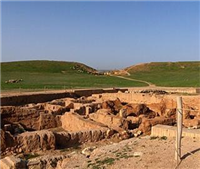
Ebla lay at Tell Mardikh, about 55 kilometres south-west of Aleppo in northern Syria, on the rolling plain between the Orontes valley and the Euphrates. A settlement existed there by about 3000 BCE, and during the first half of the third millennium it grew into a walled city with an acropolis and a lower town, part of a wider wave of urbanisation across Syria in the Early Bronze Age. By the twenty-fourth century BCE it was the capital of a kingdom that controlled many villages and towns, dealing on equal terms with Mari on the Euphrates and Nagar in the Khabur region, and in contact with Kish in Mesopotamia and even Egypt. Ebla’s ancient name was known from Mesopotamian inscriptions long before its location was found. An Italian mission from the University of Rome led by Paolo Matthiae began excavating in 1964, and in 1968 a statue dedicated by a king named Ibbit-Lim, whose inscription mentioned Ebla, identified the site. In 1974 and 1975 the excavators found the archives of Palace G, the royal palace of the twenty-fourth century, which transformed knowledge of early Syrian history by showing that a literate, centralised state had flourished there alongside the city-states of Sumer.
Socioeconomy
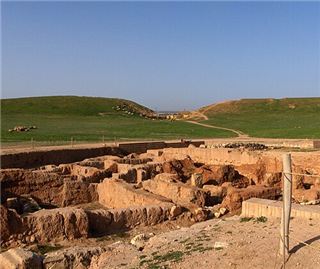
The Palace G archive, often counted at about 17,000 tablets and fragments, consists mostly of economic and administrative records from a period of perhaps forty or fifty years before the palace burned. It shows an economy based on cereals, olives and grapes and, above all, on vast flocks of sheep whose wool fed a large textile industry run by the palace. Cloth was Ebla’s main product, issued to officials and envoys, given as gifts to other courts and exchanged for metals. The archives record large quantities of silver, gold, copper and tin, and unworked lapis lazuli from distant Afghanistan was found in the palace, as were fragments of Egyptian stone vessels inscribed with the names of the pharaohs Khafre and Pepi I. The tablets were written in the Sumerian cuneiform script, used both for Sumerian words and for the local Semitic language, Eblaite, which is usually classed with Akkadian as East Semitic. The archive also contains literary texts, incantations and lexical lists, including bilingual Sumerian–Eblaite word lists among the oldest known dictionaries. Religious texts record offerings to many gods, among them Kura, the chief god of the city, the storm god Hadda, Rasap and Ishkhara. In the second millennium Ebla’s Amorite population worshipped Ishtar in a great temple.
Military

Ebla’s rise brought it into conflict with Mari, its chief rival for control of the routes between Syria and Mesopotamia. Texts from the archive, including a long letter from Enna-Dagan of Mari, record campaigns in which Mari’s kings, among them Iblul-Il, conquered towns in Ebla’s sphere, and for a time Ebla delivered large payments of silver and gold to Mari. In the last decades of the archive Ebla turned the tables: in alliance with Nagar and Kish it defeated Mari in a battle apparently fought near Terqa on the Euphrates, an event recorded in the tablets. Ebla’s armies were raised from its towns and villages and led by the king and senior officials, but the texts say little about their organisation. The palace was destroyed by fire around 2300 BCE. Sargon of Akkad listed Ebla among lands given to him by the god Dagan, and Naram-Sin later boasted of conquering Ebla, so either may have been responsible, though some scholars argue that Mari took revenge first. In the second millennium the rebuilt city was protected by massive earthen ramparts with stone-built gates, enclosing an area of about 56 hectares. These defences could not save it from a Hittite attack around 1600 BCE, probably by Mursili I or his predecessor Hattusili I.
Governance & Law
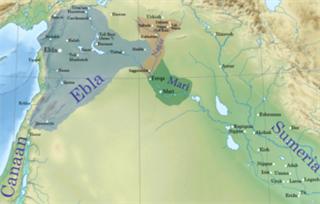
In the archive period Ebla was ruled by a king, called malikum in Eblaite, who presided over the palace, the main economic institution of the state. The names of several kings are known, including Igrish-Halam, Irkab-Damu and Ishar-Damu, the last king before the palace burned. Alongside the king stood a group of elders and a senior official often called the vizier. Three successive holders of this office, Arrukum, Ibrium and Ibrium’s son Ibbi-Zikir, appear so prominently in the tablets that they seem at times to have directed the administration and led military campaigns. The queen and the king’s mother also held important positions. Provincial towns were governed by local lords under the palace’s authority, and many smaller centres paid dues in goods or labour. The archives include what is probably one of the oldest known international treaties, between Ebla and a state called Abarsal, setting out rules on boundaries, trade and the treatment of envoys and fugitives. Ebla exchanged messengers and gifts with Mari, Nagar, Kish and other courts, a diplomatic system centuries older than the better-known one of the Amarna age. In the second millennium Ebla was ruled by Amorite kings such as Ibbit-Lim, and by the eighteenth century it had become a vassal of the Amorite kingdom of Yamhad, centred on Aleppo.
Global & Regional Impact
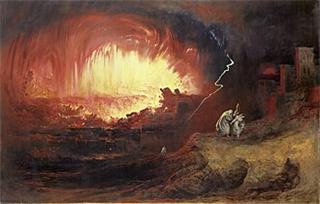
Ebla’s discovery changed the picture of the early Near East. Before 1974, historians saw third-millennium Syria largely as a periphery of Mesopotamia; the archive showed a literate state with its own language, gods, institutions and diplomacy, which had adopted cuneiform writing and Sumerian scholarly traditions and adapted them to its own needs. The tablets provide the oldest substantial body of texts in a Semitic language other than Akkadian, and they illuminate the trade in textiles and metals that linked the Mediterranean, Anatolia, Mesopotamia and Iran in the Early Bronze Age. Ebla’s bilingual word lists have helped scholars understand both Sumerian and early Semitic vocabulary. The early publicity surrounding the find also produced controversy: claims that the tablets mentioned biblical cities such as Sodom and Gomorrah or biblical figures were widely reported in the 1970s but have since been rejected by most specialists. The second-millennium city, with its ramparts, palaces, temples and royal tombs, is a key site for understanding Amorite urban culture in Syria, and finds in the royal tombs, including a ceremonial mace bearing the name of an Egyptian pharaoh of the Thirteenth Dynasty, show continuing contacts with Egypt. Work at the site was halted by the Syrian civil war in 2011.
Decline & Fall
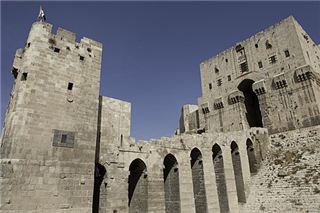
Ebla was destroyed and rebuilt more than once before it finally disappeared. The burning of Palace G around 2300 BCE ended the great kingdom of the archive period, whether the attacker was Akkad or Mari. The fire baked the clay tablets and preserved them, which is why the archive survived. The city was soon reoccupied, and a second Ebla existed in the last centuries of the third millennium; texts from the Third Dynasty of Ur mention messengers from Ebla, but this kingdom left far fewer records and was itself destroyed around 2000 BCE. Amorite settlers then rebuilt the city on a larger scale, with new ramparts, palaces and temples, and this third Ebla prospered in the early second millennium. However, it never regained its former independence and leadership: by the eighteenth century BCE it was a vassal of Yamhad, whose kings in Aleppo dominated northern Syria. When the Hittite kings of Anatolia campaigned against Yamhad in the late seventeenth and early sixteenth centuries BCE, Ebla was destroyed, around 1600 BCE. A Hurrian–Hittite poem known as the Song of Release appears to describe its fall. Only small villages occupied the mound afterwards, and Ebla dropped out of history until its rediscovery in the twentieth century.
Ebla was one of the earliest literate states outside Mesopotamia; the archive of its burned palace revealed a Semitic-speaking kingdom of the twenty-fourth century BCE with its own textile economy, treaties and diplomacy, and overturned the idea that early Bronze Age Syria was merely a periphery of Sumer.
References
- Matthiae, P. (2021) Ebla: Archaeology and History. London: Routledge.
- Pettinato, G. (1991) Ebla: A New Look at History. Baltimore: Johns Hopkins University Press.
- Akkermans, P.M.M.G. and Schwartz, G.M. (2003) The Archaeology of Syria: From Complex Hunter-Gatherers to Early Urban Societies (c. 16,000–300 BC). Cambridge: Cambridge University Press.
- Van De Mieroop, M. (2016) A History of the Ancient Near East, ca. 3000–323 BC. 3rd edn. Chichester: Wiley-Blackwell.
Connections
Open the full connections map →