Inventions & Discoveries · Tools and materials
Copper smelting
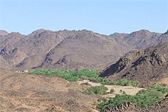
Copper smelting is the production of copper from its ores at high temperature; the world's oldest securely dated evidence for it, from c. 5000 BCE, was found at Belovode on Rudnik mountain in Serbia. The Chalcolithic, or Copper Age, between the Neolithic and the Bronze Age, was characterised by the increasing use of smelted copper, although stone tools still predominated. Andean civilisations appear to have invented copper smelting independently, and it developed independently in the Aïr Mountains of Niger between 3000 and 2500 BCE.
On the inventions tree
- First known
- c. 5000 BCE
- Where
- Belovode, Serbia
Also arose independentlythe Andes; the Aïr Mountains, Niger (3000–2500 BCE)
NoteA copper axe from Prokuplje in Serbia may be older, c. 5500 BCE, and smelting may have begun separately in Asia and in Europe.
See also






Cite this entry
- APA
- The Epoch Institute. (2026). Copper smelting. In The Epoch Institute Encyclopedia. https://the-epoch-institute.org/encyclopedia/copper-smelting
- MLA
- “Copper smelting.” The Epoch Institute Encyclopedia, The Epoch Institute, 2026, https://the-epoch-institute.org/encyclopedia/copper-smelting. Accessed .
- Chicago
- The Epoch Institute. “Copper smelting.” The Epoch Institute Encyclopedia. 2026. https://the-epoch-institute.org/encyclopedia/copper-smelting.
- Harvard
- The Epoch Institute (2026) ‘Copper smelting’, The Epoch Institute Encyclopedia. Available at: https://the-epoch-institute.org/encyclopedia/copper-smelting (Accessed: ).
Last reviewed October 2026Random entry ↻