Inventions & Discoveries · Chemistry
Egyptian blue
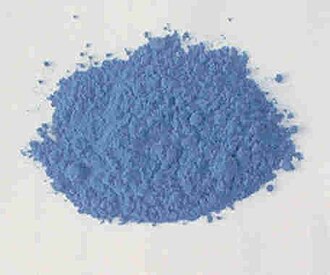
Egyptian blue, a calcium copper silicate, is a pigment made by heating silica, lime, a copper compound and an alkali, and is considered the first synthetic pigment. The earliest evidence of its use is on an alabaster bowl of the late pre-dynastic period, Naqada III, about 3250 BCE, excavated at Hierakonpolis. Egyptians made it to imitate turquoise and lapis lazuli and painted it on tombs, wall paintings, furnishings and statues; it is also found in the Near East, the Eastern Mediterranean and the Roman Empire. Vitruvius described how it was made in the first century BCE, but its use died out in the fourth century CE and the method was forgotten until modern analysis.
On the inventions tree
- First known
- c. 3250 BCE
- Where
- Hierakonpolis, Egypt
NoteThe pigment is also said to have been first synthesised in the Fourth Dynasty. Whether its presence beyond Egypt reflects its spread or parallel invention is unclear.
See also





Cite this entry
- APA
- The Epoch Institute. (2026). Egyptian blue. In The Epoch Institute Encyclopedia. https://the-epoch-institute.org/encyclopedia/egyptian-blue
- MLA
- “Egyptian blue.” The Epoch Institute Encyclopedia, The Epoch Institute, 2026, https://the-epoch-institute.org/encyclopedia/egyptian-blue. Accessed .
- Chicago
- The Epoch Institute. “Egyptian blue.” The Epoch Institute Encyclopedia. 2026. https://the-epoch-institute.org/encyclopedia/egyptian-blue.
- Harvard
- The Epoch Institute (2026) ‘Egyptian blue’, The Epoch Institute Encyclopedia. Available at: https://the-epoch-institute.org/encyclopedia/egyptian-blue (Accessed: ).
Last reviewed October 2026Random entry ↻