Work / monument · artifact
Iguvine Tablets
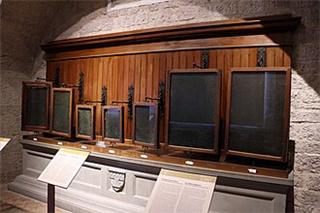
The Iguvine Tablets are seven bronze tablets found at Gubbio, ancient Iguvium, in Umbria in 1444. Written in the Umbrian language, partly in the native Umbrian alphabet and partly in Latin script, between the 3rd and 1st centuries BCE, they record the rites of the Atiedian Brethren, including the purification of the city's citadel and people. They are the longest surviving text in any ancient Italic language other than Latin and a key source for Italic religion.
Mentioned in 1 state history
See also







Cite this entry
- APA
- The Epoch Institute. (2026). Iguvine Tablets. In The Epoch Institute Encyclopedia. https://the-epoch-institute.org/encyclopedia/iguvine-tablets
- MLA
- “Iguvine Tablets.” The Epoch Institute Encyclopedia, The Epoch Institute, 2026, https://the-epoch-institute.org/encyclopedia/iguvine-tablets. Accessed .
- Chicago
- The Epoch Institute. “Iguvine Tablets.” The Epoch Institute Encyclopedia. 2026. https://the-epoch-institute.org/encyclopedia/iguvine-tablets.
- Harvard
- The Epoch Institute (2026) ‘Iguvine Tablets’, The Epoch Institute Encyclopedia. Available at: https://the-epoch-institute.org/encyclopedia/iguvine-tablets (Accessed: ).
Last reviewed October 2026Random entry ↻