Work / monument · text
Manusmriti
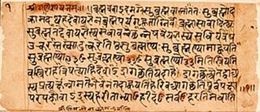
The Manusmriti, also known as the Manava Dharmashastra or the Laws of Manu, is a major legal text among the Dharmashastras of Hinduism, a Sanskrit work in verse that most scholars date to between 200 BCE and 200 CE. It presents itself as a discourse by Manu and Bhrigu on duties, laws, conduct, gender norms and virtues, and is best known for its different rules for the four varnas. Its influence reached Hindu kingdoms in what are now Cambodia and Indonesia, and it was used to construct the Hindu law code of the East India Company's enclaves. In modern times it is controversial for its treatment of women and lower castes: B. R. Ambedkar burned copies in 1927 to protest caste discrimination.
Mentioned in 3 profiles
See also



Cite this entry
- APA
- The Epoch Institute. (2026). Manusmriti. In The Epoch Institute Encyclopedia. https://the-epoch-institute.org/encyclopedia/manusmriti
- MLA
- “Manusmriti.” The Epoch Institute Encyclopedia, The Epoch Institute, 2026, https://the-epoch-institute.org/encyclopedia/manusmriti. Accessed .
- Chicago
- The Epoch Institute. “Manusmriti.” The Epoch Institute Encyclopedia. 2026. https://the-epoch-institute.org/encyclopedia/manusmriti.
- Harvard
- The Epoch Institute (2026) ‘Manusmriti’, The Epoch Institute Encyclopedia. Available at: https://the-epoch-institute.org/encyclopedia/manusmriti (Accessed: ).
Last reviewed October 2026Random entry ↻