Inventions & Discoveries · Tools and materials
Screw
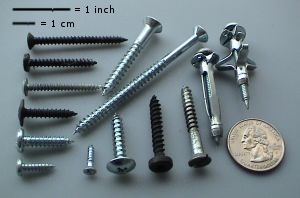
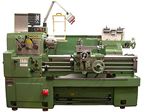
A screw is a helically threaded fastener tightened or released by twisting its head, and one of the six classical simple machines. It was one of the last simple machines to be invented, first appearing in Mesopotamia in the Neo-Assyrian period (911–609 BCE) and later in Ancient Egypt and Greece, where Archytas of Tarentum described it. By the 1st century BCE wooden screws drove the presses that pressed olive oil and grape juice around the Mediterranean. Metal screws became common fasteners only from the 1760s, when Job and William Wyatt patented a screw machine, and Jesse Ramsden made the first satisfactory screw-cutting lathe in 1777.
On the inventions tree
- First known
- 911–609 BCE
- Where
- Mesopotamia
- Credited to
- Assyrian Empire
See also






Cite this entry
- APA
- The Epoch Institute. (2026). Screw. In The Epoch Institute Encyclopedia. https://the-epoch-institute.org/encyclopedia/screw
- MLA
- “Screw.” The Epoch Institute Encyclopedia, The Epoch Institute, 2026, https://the-epoch-institute.org/encyclopedia/screw. Accessed .
- Chicago
- The Epoch Institute. “Screw.” The Epoch Institute Encyclopedia. 2026. https://the-epoch-institute.org/encyclopedia/screw.
- Harvard
- The Epoch Institute (2026) ‘Screw’, The Epoch Institute Encyclopedia. Available at: https://the-epoch-institute.org/encyclopedia/screw (Accessed: ).
Last reviewed October 2026Random entry ↻