
Ideology · Europe
Feminism
At a glance
- Feminism holds that modern societies are patriarchal, and since the late 18th century its movements have campaigned for women’s right to vote, hold office, work, earn equal pay, own property and receive education.
- Its Western history is told in waves: suffrage movements in the 19th and early 20th centuries, the women’s liberation movement from the 1960s, a third wave from about 1992 and a fourth, of social media, from about 2012.
- Liberal, socialist and radical feminism, the “Big Three”, have been joined by Black, postcolonial, intersectional and other feminisms, born largely of the criticism that the movement spoke for white, middle-class women.
Timeline
- 1792Mary Wollstonecraft publishes A Vindication of the Rights of Woman, arguing that women as much as men need equal rights
- 1893The self-governing colony of New Zealand grants women the right to vote
- 1918The Representation of the People Act gives the vote to British women over 30 who own property
- 1919The Nineteenth Amendment grants American women the vote in all states, closing the first wave in the United States
- 1949Simone de Beauvoir publishes The Second Sex
- 1963Betty Friedan’s The Feminine Mystique sparks the beginning of second-wave feminism in the United States
- 1992Rebecca Walker’s article “Becoming the Third Wave” gives the third wave its name
- 2017Time names activists of the #MeToo movement, “the silence breakers”, its Person of the Year
Origins

Feminism originated in late 18th-century Europe. Mary Wollstonecraft is seen by many as its founder because of her 1792 book A Vindication of the Rights of Woman, in which she argues that class and private property are the basis of discrimination against women and that women as much as men need equal rights. In the United States the early campaigners Lucretia Mott, Elizabeth Cady Stanton and Susan B. Anthony, all opponents of slavery first, drew on the Quaker theology of spiritual equality, which holds men and women equal under God, and on earlier writers such as Judith Sargent Murray, John Neal, Sarah Moore Grimké and Margaret Fuller.
The name came later. Charles Fourier is credited with coining “féminisme” in 1837, but no trace of the word has been found in his works. It first appeared in a French medical thesis of 1871, and in 1872 Alexandre Dumas fils used “féministe” for men who supported women’s rights; both uses were hostile, aimed at a supposed “confusion of the sexes”. The concepts reached the Netherlands in 1872, Great Britain in the 1890s and the United States in 1910.
Historians disagree on how far back the label reaches. Most Western feminist historians count every movement for women’s rights as feminist, even where it did not use the word; others keep the term for the modern movement and its descendants and call earlier ones “protofeminist”. Renaissance humanism played a part in protofeminism by making educated women popular figures.
Core Ideas
Feminism holds that modern societies are patriarchal, prioritising the male point of view, and that women are treated unjustly in them. In feminist theory patriarchy is a social system organised around male authority, in which fathers hold authority over women, children and property; most feminists see it as a social construction that can be overcome by revealing and analysing its workings. Carole Pateman argues that the patriarchal distinction “between masculinity and femininity is the political difference between freedom and subjection.” Feminists seek to break down gender stereotypes and traditional roles and to widen women’s opportunities in education, work and private life, and some argue that traditional roles harm men too.
Carol Hanisch’s slogan “The Personal is Political” summed up the second wave’s view that women’s private lives reflect sexist power structures. Many modern feminists challenge the view of gender as biologically intrinsic: Anne Fausto-Sterling and Cordelia Fine question the science of innate differences between the sexes, and post-structural feminists argue that gender is created through discourse. Difference feminists, by contrast, hold that there are important psychological differences between the sexes.
On sexuality feminists differ widely. Radical feminists such as Catharine MacKinnon argue that female sexuality is largely controlled and defined by men, while individualist feminists such as Wendy McElroy hold that each woman has the right to define for herself what is degrading.
Spread & Variants
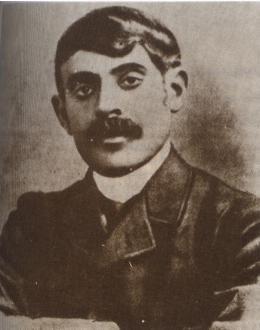
First-wave feminism, in the 19th and early 20th centuries, sought equal rights in contract, marriage, parenting and property, and Britain’s Married Women’s Property Act 1870 became a model across its territories. Activism then turned to the vote, won first in New Zealand in 1893, South Australia in 1894 and Australia in 1902. In Germany Clara Zetkin built the social-democratic women’s movement; in 1899 Qasim Amin, called the “father” of Arab feminism, wrote The Liberation of Women; in 1923 Hoda Shaarawi founded the Egyptian Feminist Union; and the Iranian Constitutional Revolution of 1905 set off an Iranian women’s movement.
The second wave, the women’s liberation movement, began in the 1960s and campaigned for equality beyond suffrage. A third wave, identified around 1992 and traced to the riot grrrl subculture and to Anita Hill’s testimony of 1991, stressed individuality and diversity; a fourth, from about 2012, has used social media against harassment, violence against women and rape culture.
The schools multiplied. Liberal feminism seeks reform within liberal democracy; Marxist feminism sees capitalism as the root of women’s oppression, and socialist feminism its economic and cultural sources together; radical feminism calls for reordering society to end male supremacy. Since the 1960s Black, Chicana, postcolonial and indigenous feminisms have followed, with ecofeminism and Islamic, Christian, Jewish and Buddhist feminisms.
In Power
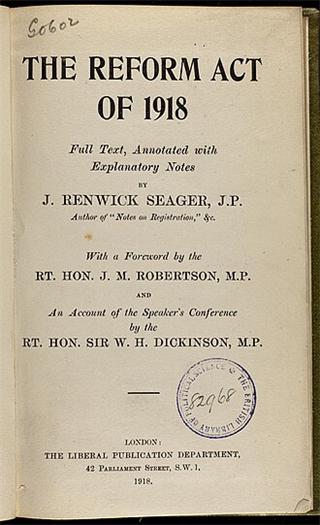
The vote came country by country. In Britain the Representation of the People Act 1918 enfranchised women over 30 who owned property, and in 1928 the vote was extended to all women over 21. Elsewhere it came late: France in 1944, Switzerland in federal elections in 1971, the canton of Appenzell Innerrhoden only in 1991 on the order of the Federal Supreme Court, and Liechtenstein in 1984 after three referendums had failed. Married women in France could not work without their husbands’ permission until 1965, and the criminalisation of marital rape, first sought in the late 19th century, came in most Western countries a century later.
Some states took up feminist aims on their own terms. In 1956 Gamal Abdel Nasser of Egypt began a “state feminism” that outlawed discrimination by gender and gave women the vote but blocked feminist leaders’ political activism. In 1963 Mohammad Reza Shah’s White Revolution gave Iranian women the vote, and during the revolution of 1979 many of the rights the women’s movement had gained, such as the Family Protection Law, were systematically abolished. The Chinese Communist Party claimed that the revolution had achieved women’s liberation, and the Nordic countries developed a state feminism of their own.
In the United States the National Organization for Women, founded in 1966, campaigned for the Equal Rights Amendment, which did not pass, and Roe v. Wade enunciated a woman’s right to choose. The United Nations adopted CEDAW, described as an international bill of rights for women.
Critiques & Debates
Much criticism has come from within feminism. From the late 1960s non-white women argued that the movement was predominantly white, straight and middle class and unconcerned with race and sexuality; these criticisms produced theories of the intersections of racism, classism and sexism and new feminisms such as Black and Chicana feminism. White feminism and trans-exclusionary radical feminism, also called gender-critical feminism, have been criticised for taking account of only narrow perspectives; the gender-critical view that trans women are not women has been described as transphobic by many other feminists, while NOW has affirmed that “trans women are women”.
The feminist sex wars of the late 1970s and 1980s pitted anti-pornography feminism against sex-positive feminism, and views of the sex industry still range from condemnation to support. Writers who call themselves feminists, among them Camille Paglia, Christina Hoff Sommers and Daphne Patai, argue that some feminists promote misandry; a 2023 meta-analysis in Psychology of Women Quarterly found feminists’ views of men no different from others’ and called the stereotype “the misandry myth”. Susan Haack and Meera Nanda have criticised feminist epistemology for reinforcing stereotypes of women’s thinking.
Anti-feminists opposed women’s suffrage in the 19th century, and later their higher education, work, unions, jury service and birth control, often in the name of traditional values or religious belief. Hitler and Mussolini declared themselves opposed to feminism.
Legacy
Feminist campaigns changed Western society: women’s suffrage, greater access to education, more equal pay, the right to initiate divorce, decisions on pregnancy including contraception and abortion, and the right to own property. Campaigning also changed attitudes to child sexual abuse, placing the responsibility on the adult men. Proponents of gender-neutral language argue that gender-specific usage often implies male superiority, and Merriam-Webster chose “feminism” as its Word of the Year for 2017.
Feminist theory has reached anthropology, sociology, economics, literary criticism, art history, psychoanalysis, philosophy, law and theology. Elaine Showalter traced feminist literary criticism through three phases, and Virago Press began in 1975 to reissue long-out-of-print novels by women. Jeremy Strick called the feminist art movement “the most influential international movement of any during the postwar period”. Feminist jurisprudence studies the law’s biases against women, and feminist theology seeks a larger place for women among clergy and religious authorities.
Surveys show a gap between holding feminist beliefs and taking the name. In a 2014 Ipsos poll of 15 developed countries 53 percent called themselves feminists and 87 percent agreed that women should be treated equally; in a 2016 Survation poll for the Fawcett Society 7 percent of Britons used the label while 83 percent supported equality of opportunity for women.
Feminism is a range of movements and ideologies, originating in late 18th-century Europe, which hold that societies are patriarchal and seek the equality of the sexes. Through waves of campaigning from the suffrage movements to #MeToo, and schools from liberal and radical to intersectional feminism, it is credited in the West with winning women the vote, property rights and reproductive rights.
Test yourself
5 questions on this page, from its key events and facts.
The questions open here once the page has loaded.
References
- Dale Spender, Mothers of the Novel (1986)
- Jane Spencer, The Rise of the Woman Novelist (1986)
- Anne Fausto-Sterling, Myths of Gender
- Cordelia Fine, Delusions of Gender
- Joan Rothschild, Design and Feminism: Re-Visioning Spaces, Places, and Everyday Things