
Ideology · Europe
Socialism
At a glance
- The word first appeared in the 1820s and 1830s: Robert Owen’s Co-Operative Magazine spoke of socialists in 1827, and Pierre Leroux claimed to have introduced socialism in the Parisian journal Le Globe in 1832.
- By the early 1920s the international socialist movement had divided into its two dominant tendencies, communism and social democracy, and socialism had become the most influential secular movement of the 20th century.
- Its forms differ over markets and planning and over who owns and runs enterprises, from Soviet central planning and Yugoslav self-management to the Nordic mixed economies and China’s socialist market economy.
Timeline
- 1827Robert Owen’s Co-Operative Magazine and Monthly Herald uses the term socialists for those who favour the common ownership of capital
- 1832Pierre Leroux, a follower of Saint-Simon, later claimed to have first used the word socialism in the Parisian journal Le Globe this year
- 1848The Communist Manifesto of Marx and Engels appears; Engels later recalled that socialism was then respectable in Europe while communism was not
- 1872The anarchists are expelled from the First International and go on to found the Anarchist St. Imier International
- 1899The Australian Labor Party forms the first socialist government in the world, in the Colony of Queensland, for one week
- 1918The Russian Social Democratic Labour Party renames itself the All-Russian Communist Party, setting communist apart from socialist
- 1947Britain nationalises its coal mines under Clement Attlee’s Labour government, creating a coal board to run the industry
- 1991The Soviet Union is dissolved, after the Revolutions of 1989 across Eastern Europe
Origins
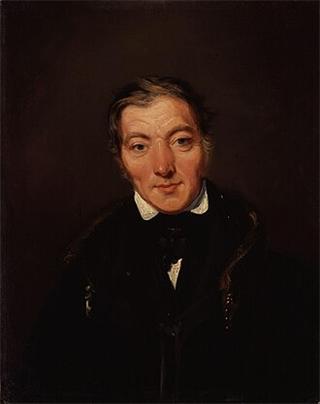
According to Andrew Vincent, the word socialism has its root in the Latin sociare, to combine or to share. Its history begins with the Age of Enlightenment and the French Revolution of 1789, though it has precedents in earlier movements, and early socialist thought drew on sources as varied as civic republicanism, Enlightenment rationalism, romanticism, Christianity, natural rights theory, utilitarianism, liberal political economy and positivism.
The first modern currents, later called utopian socialism, are associated with Henri de Saint-Simon, Charles Fourier and Robert Owen. They condemned liberal individualism for failing to address the poverty, oppression and vast inequality of the Industrial Revolution, and offered shared ownership of resources instead. Saint-Simon proposed economic planning and scientific administration; Owen proposed cooperatives, and his Co-Operative Magazine and Monthly Herald used the word socialists as early as 1827. Pierre Leroux, a follower of Saint-Simon, claimed to have first used socialism in the journal Le Globe in 1832.
By the 1860s the term had settled, replacing associationist, co-operative, mutualist and collectivist. Marx and Engels wrote The Communist Manifesto in 1847–48, just before the Revolutions of 1848, expressing what they termed scientific socialism, and by the late 19th century socialism had come to mean anti-capitalism and a post-capitalist system based on some form of social ownership.
Core Ideas
There is no single definition of socialism. In his Dictionary of Socialism (1924) Angelo S. Rappoport analysed forty definitions and found common elements: a criticism of private ownership and control of capital as the cause of poverty, low wages, unemployment and inequality; the view that some form of collective control over the means of production, distribution and exchange is the solution; and the aim of a society based on social justice. Michael Freeden finds five shared themes: society is more than a collection of individuals, human welfare is a desirable goal, humans are by nature active and productive, people are equal, and history can progress if people work for change.
Many socialists hold that values and economic practices are social creations, not immutable natural law, so their critique is aimed at material conditions and social systems rather than human avarice. They argue that capital accumulation produces waste, crises and inequality, and that production should serve use rather than profit. For orthodox Marxists socialism is the lower stage of communism, run on the principle “to each according to his contribution”.
Socialists differ on means and on the state. Ferdinand Lassalle saw the state as an instrument of justice; anarchists and libertarian socialists reject it. Revolutionaries call for a social revolution, reformists for elected governments that reform capitalism.
Spread & Variants
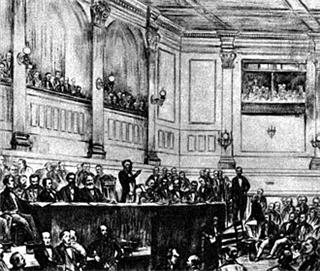
In the last third of the 19th century democratic socialist parties, drawing mainly on Marxism, arose across Europe, while the split between authoritarian and libertarian socialists went back to the First International and its expulsion of the anarchists in 1872. After the Bolshevik Revolution, Lenin used socialism for a stage between capitalism and communism, and in 1918 the Russian party renamed itself the All-Russian Communist Party. By the early 1920s communism and social democracy were the two dominant tendencies of the movement.
Many variants followed. Michel Aflaq, principal founder of Ba’athism, coined Arab socialism, joining socialism to Arab nationalism, and his thought was carried further in Syria, Egypt and Iraq. African socialism, resting on the idea that traditional African communities inclined toward socialist principles, was adopted by about 35 of the 50 to 53 African states of the time between the 1950s and the mid-1980s. Christian and Islamic socialism, guild socialism, syndicalism, socialist feminism and eco-socialism, which credits William Morris with its early principles, each took the ideas their own way.
By 1968 the Vietnam War had given rise to the New Left, critical of both the Soviet Union and social democracy. In 1990 the Workers’ Party of Brazil launched the São Paulo Forum, whose members were associated with the pink tide of left-wing governments in Latin America; in Venezuela Hugo Chávez proclaimed “Socialism of the 21st century”.
In Power
In the first half of the 20th century the Soviet Union, the world’s first nominally socialist state, and the parties of the Third International came to represent socialism as centrally planned economies run by a state that owned all the means of production, joined to single-party rule; other socialists condemned their lack of democracy. These states secured full employment, universal healthcare and education and subsidised housing, and scholars largely agree that income inequality was considerably lower than in other systems at similar levels of development. Under Stalin, however, literary, religious and national groups were rigorously repressed and socialist realism was imposed on the arts. The People’s Republic of China, founded in 1949, pursued land redistribution and the Anti-Rightist Movement, followed by the disastrous Great Leap Forward.
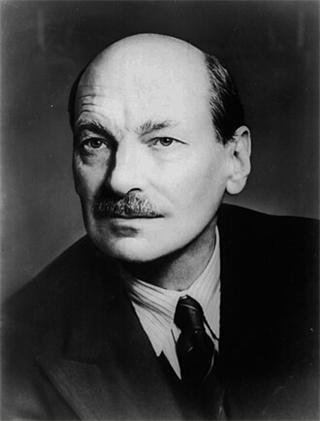
Elsewhere reformist social democrats and democratic socialists came to power through the ballot box. Clement Attlee’s Labour government from 1945 wanted a mixed economy and nationalised the coal mines in 1947, with compensation for their owners, and socialist governments built the mixed economy and welfare state represented by the Nordic model. Yugoslavia replaced Soviet-type planning with self-managed firms after reforms in 1953, and Salvador Allende’s government in Chile experimented with Project Cybersyn.
After the revolutions of 1989 a neoliberal consensus replaced the social democratic one in the advanced capitalist world, and many socialist parties embraced the Third Way.
Critiques & Debates
Because socialism takes so many forms, most criticism is aimed at one of them, and socialists of one school criticise the others. Erik Olin Wright summed up the divide: the Right condemned socialism for violating rights to private property and unleashing monstrous forms of state oppression, while the Left saw in it new vistas of equality and freedom. The Austrian School raised the economic calculation problem, doubting that a planned economy could allocate resources, and economic liberals hold private ownership and market exchange to be moral rights central to freedom. Other critics argue that equal shares remove the material incentive to work; Peter Self held that an equal society would require strong coercion, and Milton Friedman that without private economic activity political leaders would take coercive powers.
Many on the political right point to the mass killings under communist regimes as an indictment of socialism; supporters reply that they were aberrations of particular authoritarian regimes, and point to killings, famines and excess deaths under capitalism, colonialism and anti-communist governments.
The movement has long argued with itself. Rosa Luxemburg and Eduard Bernstein called Lenin’s idea of revolution elitist; Hal Draper set a socialism from below against socialism from above; Luxemburg held that reforms strengthen capitalism, while André Gorz proposed “non-reformist reforms”.
Legacy
Many socialists took up the causes of other movements, such as feminism, environmentalism and progressivism. Socialists were early advocates of LGBT rights: Charles Fourier argued that suppressing the passions harms society, Edward Carpenter campaigned for homosexual rights, and the Mattachine Society, the first sustained gay rights group in the United States, reflected a strong Marxist influence in its early days.
After 1989 many socialist parties lost ground. The fall of the Greek party PASOK, from 43.9% of the vote in 2009 to 4.7% in 2015, gave its name, Pasokification, to the loss of large parts of their electoral base, and in 2015 the share of votes for such parties in Europe was at its lowest in seventy years. More radical left parties rose in some countries, among them Podemos, Syriza, Die Linke and La France Insoumise, and in the 2010s Jeremy Corbyn in the United Kingdom and Bernie Sanders in the United States led left-wing revivals within established parties, amid growing inequality and discontent after the 2008 financial crisis.
Polls show wide support: a 2018 Ipsos poll found that 50% of respondents worldwide agreed that socialist values were of great value for societal progress, from 84% in China to 21% in Japan. China’s economy is formally a socialist market economy, which many describe as a form of state capitalism.
Socialism is a family of ideas and movements that call for social ownership of the means of production. Rooted in the Enlightenment and the early industrial age, it divided in the 20th century into communism and social democracy, shaping planned economies, mixed economies and welfare states, and it has seen a revival since the 2010s.
Test yourself
5 questions on this page, from its key events and facts.
The questions open here once the page has loaded.
References
- Angelo S. Rappoport, Dictionary of Socialism (1924)
- Bhikhu Parekh, The Concepts of Socialism (1975)
- Michael Freeden, Ideologies and Political Theory (1996)
- Baruch Knei-Paz, The Social and Political Thought of Leon Trotsky
- G. D. H. Cole, “Socialism”, Encyclopædia Britannica, 12th ed. (1922)