
Ideology · Europe
Social democracy
At a glance
- Engels first used the term social democracy in 1844; until 1917 it covered socialists of many kinds, and after the Russian Revolution it came to mean reformist socialists opposed both to revolution and to the Soviet model.
- Eduard Bernstein’s revision of Marx held that socialism could be reached through cooperation across classes and gradual legislative reform; his ideas, unpopular at first, became mainstream after the First World War.
- From the 1940s to the 1970s Keynesian economics, agreements between capital and labour and the welfare state defined social democracy in power, above all in Sweden and the Nordic countries.
Timeline
- 1844Friedrich Engels coins the term social democracy in his article “The Condition of England”
- 1869Marx’s socialism becomes the basis of the Social Democratic Workers’ Party of Germany, the first social democratic party in Europe
- 1883Otto von Bismarck begins the social programmes that lay the ground for the first modern welfare state in Germany
- 1919In the German Revolution the Social Democrats defend what becomes the Weimar Republic against Communists seeking a soviet republic
- 1923Reformist socialists found the Labour and Socialist International, a rival to the Bolsheviks’ Comintern
- 1956Anthony Crosland’s The Future of Socialism argues that traditional capitalism has been reformed almost out of existence
- 1990sTony Blair’s New Labour revises Clause IV, and the Third Way spreads among social democratic parties
- 2013Most current and former member parties of the Socialist International found the Progressive Alliance
Origins
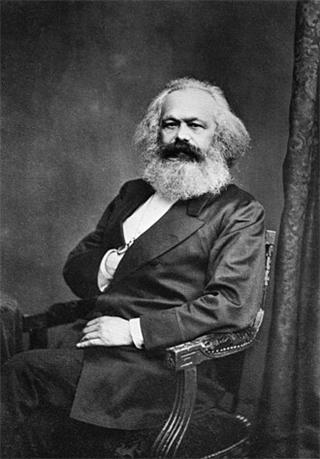
Social democracy grew out of the 19th-century labour movement. Friedrich Engels coined the term in 1844, in the second chapter of his article “The Condition of England”, describing the future of the English political system. The tradition drew on both the reformist socialism of Ferdinand Lassalle and the revolutionary socialism of Marx and Engels, and August Bebel, Wilhelm Liebknecht and Carl Wilhelm Tölcke are counted among its founders in Germany. By 1868–1869 Marx’s socialism had become the official basis of the first social democratic party in Europe, the Social Democratic Workers’ Party of Germany.
In the 19th century social democrat was a catch-all name for international socialists who followed Lassalle or Marx, as against the utopian socialists, and it covered revolutionary and non-revolutionary currents alike, though not anarchism. Parties of the name included the General German Workers’ Association and the Social Democratic Workers’ Party, which merged to form the Social Democratic Party of Germany, the Social Democratic Federation in Britain and the Russian Social Democratic Labour Party.
In the early 20th century Eduard Bernstein, influenced by the gradualism of the Fabian movement in Britain, rejected orthodox Marxist ideas of the inevitable progress of history and the need for revolution: socialism, he argued, should rest on ethical arguments and come through gradual legislative reform. His party held that reform could only be a means to revolution, and Karl Kautsky attacked him, but Bernstein’s influence grew after the First World War.
Core Ideas
In one summary, social democracy rests on three features: parliamentary democracy, an economy partly regulated by the state, and social support for those in need. It holds that representative democracy under the rule of law is the only acceptable form of government, and it seeks to extend democratic decision-making into the economy through collective bargaining and co-determination rights for workers. It rejects an either/or choice between capitalism and socialism, holding that a progressive evolution of capitalism will gradually turn it into a socialist economy.
Its common aims are to curb inequality, end the oppression of underprivileged groups, eradicate poverty and provide universally accessible public services such as child care, education, elderly care, health care and workers’ compensation, with income redistributed to pay for them. Social democrats advocate freedom from discrimination by ability, age, ethnicity, gender, language, race, religion, sexual orientation and social class. Where conservatives and liberals also came to accept the welfare state, socialists see in it not merely benefits but the foundation for emancipation and self-determination.
Bernstein foresaw a long coexistence of democracy with a mixed economy of public, cooperative and private enterprise, with state ownership only where the state could manage best. Attitudes to socialism vary: some social democrats keep it as a long-term goal, others treat it as an ethical ideal to guide reforms within capitalism.
Spread & Variants

The Russian Revolution divided the movement. Those who supported the October Revolution renamed themselves Communists, while those opposed to the Bolsheviks kept the Social Democrat name. In the German Revolution of 1919 the Communists wanted a soviet republic and the Social Democrats defended what became the Weimar Republic, and social democracy went from a “Marxist revolutionary” doctrine to “moderate parliamentary socialism”. The Bolsheviks founded the Comintern in 1919, and the reformists answered with the Labour and Socialist International in 1923.
In the 1920s and 1930s social democracy became dominant in the socialist movement. Under figures such as Carlo Rosselli in Italy, social democrats began to break with orthodox Marxism, embracing liberal socialism and Keynesianism. By the post-war period most European social democrats had abandoned their tie to orthodox Marxism; according to Michael Harrington, this was because they saw Stalin’s Soviet Union as having usurped and distorted its legacy. The Socialist International denounced the communist movement as falsely claiming a share in the socialist tradition. In Britain the Gaitskellites joined a consensus with the Conservatives known as Butskellism, and in Uruguay social democratic roots appeared under José Batlle y Ordóñez in the early 20th century.
In the 1990s many parties adopted the Third Way, an attempt to combine social democratic values with economic liberalism, embraced most notably by Bill Clinton’s New Democrats and Tony Blair’s New Labour; some analysts call it neoliberal.
In Power
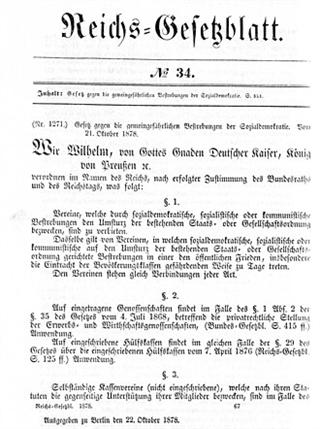
Social democratic policies were first adopted by an opponent. In the 1880s and 1890s the conservative German chancellor Otto von Bismarck put in place welfare measures first proposed by the Social Democrats, after trying to curb them with his Anti-Socialist Laws, and laid the ground for the first modern welfare state. Similar policies followed in France, in Britain with the Liberal welfare reforms, and in the United States in the Progressive Era and Franklin D. Roosevelt’s New Deal.
After the Great Depression, Keynesian and mixed-economy policies spread, and the post-war consensus brought a boom of high growth and full employment until the 1970s. In Britain the Liberal William Beveridge’s report shaped Labour’s National Health Service and welfare state; in 1956 Anthony Crosland claimed that capitalism had been abolished, a claim Aneurin Bevan disputed. Social corporatism, a partnership of capital and labour bargaining under the state, began in Norway and Sweden in the 1930s and was consolidated in the 1960s and 1970s; from the 1940s to the 1970s Keynesian policy, industrial agreements and the welfare state defined social democracy in power, above all for the Swedish Social Democrats. In the 1980s François Mitterrand’s government tried to nationalise all French banks.
With the crises and stagflation of the 1970s the social democratic welfare state was put in doubt, and public ownership fell below 5% of capital formation in the 1990s. In the Great Recession European social democratic parties increasingly adopted austerity.
Critiques & Debates
Other socialists argue that social democracy strengthens the capitalist system it once meant to replace. The democratic socialist philosopher David Schweickart holds that capitalism can never be sufficiently humanised and that contradictions suppressed in one place emerge in another: push unemployment too low and inflation follows. Marxian socialists argue that welfare policies cannot cure the cycles, exploitation and alienation of capitalism and only legitimise and prolong it, and Jonas Hinnfors argues that in abandoning Marxism social democracy abandoned socialism and became a liberal capitalist movement. Franklin Delano Roosevelt III and David Belkin note that it leaves in place a property-owning class with an interest in reversing its reforms, and John Roemer and Pranab Bardhan that its heavy redistribution depends on a strong labour movement.
Critics on left and right have argued that reformist socialists in office must govern by capitalist logic. Joseph Schumpeter wrote in Capitalism, Socialism and Democracy (1942) that socialists would have to “administer” capitalism, and Irving Kristol called democratic socialism “an inherently unstable compound”. Stalin coined the term social fascism for social democracy in the 1930s, a line the Communist International adopted.
Within the movement, opponents of the Third Way have accused figures such as Anthony Giddens of being anti-socialist in practice, while Michael Harrington described a “social democratic compromise” that put human need above the imperatives of profit.
Legacy
Social democratic ideas have influenced the policies of most Western states since the Second World War, and in the 21st century the term is often defined by the welfare states and collective bargaining of Northern and Western Europe, or used as a synonym for the Nordic model. The United Nations World Happiness Report finds the happiest nations concentrated in social democratic countries, especially in Northern Europe, and the Nordic countries rank highest on measures such as economic equality, public health, life expectancy and human development.
The neoliberal paradigm of the 1980s, accepted by Third Way social democrats too, caused much controversy in the movement, and after the Great Recession the decline known as Pasokification struck many of its parties. Politicians who rejected the Third Way, among them Bernie Sanders in the United States and Jeremy Corbyn in Britain, rose in its wake. In the United States, where the legacy of slavery divided the working class and no major socialist party took hold, the Democratic Socialists of America grew to over 120,000 members by July 2026, the largest socialist organisation in American history, and Zohran Mamdani won the 2025 New York City mayoral election.
Today the Social Democratic Party of Germany and the Swedish Social Democratic Party describe their goal as democratic socialism, with social democracy as their principle of action, and most European social democratic parties belong to the Party of European Socialists.
Social democracy is a centre-left ideology that seeks social equality through gradual, democratic reform within a regulated, mostly capitalist economy. Born in the 19th-century labour movement, it parted from communism after 1917 and built the welfare states of post-war Europe; since the 1970s it has contended with neoliberalism, the Third Way and electoral decline.
Test yourself
5 questions on this page, from its key events and facts.
The questions open here once the page has loaded.
References
- Richard T. Ely, French and German Socialism in Modern Times (1883)
- Anthony Crosland, The Future of Socialism (1956)
- Anthony Crosland, Socialism Now (1974)
- Joseph Schumpeter, Capitalism, Socialism and Democracy (1942)
- Robin Archer, Economic Democracy: The Politics of a Feasible Socialism (1995)
- Vít Hloušek and Lubomír Kopeček, Origin, Ideology and Transformation of Political Parties: East-Central and Western Europe Compared