
Ideology · Europe
Anarchism
At a glance
- Pierre-Joseph Proudhon was the first political philosopher to call himself an anarchist and give the word a positive meaning; in early English usage it had stood for disorder.
- Expelled from the First International by the Marxists at the Hague Congress of 1872, the anarchists formed their own St. Imier International; Bakunin predicted that revolutionaries who took power on Marx’s terms would become the workers’ new tyrants.
- In the Spanish Revolution of 1936 an anarchist-inspired movement took control of Barcelona and collectivised the land across rural Spain; the end of the Spanish Civil War closed the classical era of anarchism.
Timeline
- 1840Pierre-Joseph Proudhon publishes What Is Property?, describing his goal as a synthesis of communism and property
- 1871Anarchists take part in the Paris Commune, which becomes an inspiration for the anarcho-communists
- 1872The Bakuninists are expelled from the First International at the Hague Congress and found the St. Imier International
- 1889Fernando Tarrida del Mármol calls for an anarchism without adjectives, uniting the rival schools
- 1903The United States passes the Immigration Act of 1903, also called the Anarchist Exclusion Act
- 1917Anarchists take part in the Russian Revolution against the White movement, above all in the Makhnovshchina
- 1936In the Spanish Revolution anarchists and syndicalists of the CNT and FAI take control of Barcelona and collectivise land
- 1999Anarchists, leading networks of the anti-globalisation movement, take part in the confrontations at the Seattle WTO conference
Origins
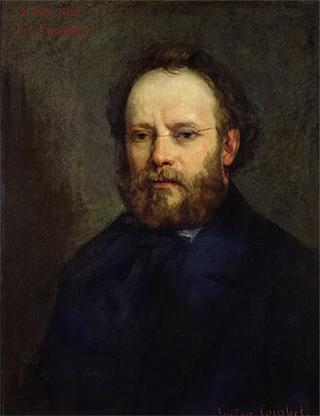
The word comes from the Ancient Greek anarkhia, “without a ruler”; early English usages stressed disorder, and factions of the French Revolution called their opponents anarchists. Precursors are found in China and Greece. The Taoist philosophers Zhuang Zhou and Laozi discussed the legitimacy of the state; Socrates insisted on the right of individual freedom of conscience, the Cynics dismissed human law, and the Stoics favoured a society of friendly relations without a state. In the Sasanian Empire Mazdak called for an egalitarian society and the abolition of monarchy and was soon executed by Kavad I.
Modern anarchism emerged from the Enlightenment. The Renaissance and the Reformation had revived anti-authoritarian secularism in Europe, and the revolutions of the 1790s and of 1848 spurred the ideas of what became classical anarchism. During the French Revolution groups such as the Enragés and the sans-culottes voiced anti-state and federalist feeling. In England William Godwin espoused a philosophical anarchism that morally delegitimised the state, and Max Stirner’s thinking paved the way to individualism.
Pierre-Joseph Proudhon was the first political philosopher to call himself an anarchist and give the word a positive meaning. In What Is Property? (1840) he described his goal as a “third form of society, the synthesis of communism and property”, and his mutualism found fertile soil in France. Historians place the birth of the anarchist movement between Proudhon and the Saint-Imier Congress of 1872.
Core Ideas
Anarchism seeks to abolish all institutions that perpetuate authority, coercion or hierarchy, above all the state and capitalism, and to replace them with stateless societies of voluntary associations based on free association and reciprocity. Defining it is not easy, and scholars and anarchists debate the matter; its main elements are the will for a non-coercive society, the rejection of the state, the belief that human nature allows people to live in such a society, and a view of how to reach it. It is described as the libertarian wing of the socialist movement.
Objection to the state is a sine qua non of anarchism. Many anarchists see the state as a tool of domination that takes decisions for a small elite and corrupts even altruistic officials; Bakunin defined it as “coercion, domination by means of coercion”. Their opposition extends to economic class systems, autocratic religions, patriarchy, white supremacy and imperialism.
The schools fall into two main traditions. Individualist anarchism, drawing on Godwin, Stirner and Henry David Thoreau, puts the individual first; social anarchism seeks freedom through equality and social ownership. Proudhon’s mutualism called for free contract, federation and a bank of the people; Bakunin’s collectivism for collective ownership and pay by time worked; Kropotkin’s anarcho-communism for distribution according to need; anarcho-syndicalism for unions of workers to run society. They share autonomy, mutual aid, anti-authoritarianism and decentralisation.
Spread & Variants
Mikhail Bakunin entered the International Workingmen’s Association, formed in 1864, where his faction and Proudhon’s mutualists opposed state socialism. After bitter disputes the Marxists expelled the Bakuninists at the Hague Congress of 1872, and the anarchists formed the St. Imier International; they were expelled from the Second International too, in 1896. Under Peter Kropotkin’s influence anarcho-communism, inspired by the Paris Commune of 1871, became the dominant view by the late 19th century, and in 1889 Fernando Tarrida del Mármol called for an “anarchism without adjectives” to unite the schools.
A wave of globalisation from 1880 to 1914 carried anarchism around the world. Students brought anarcho-communism to China, Tokyo drew rebellious youth from across East Asia, and in Argentina anarcho-syndicalism became the most prominent left-wing ideology. Anarchists took part in the Strandzha Commune and the Krusevo Republic of 1903 in Macedonia and in the Mexican Revolution of 1910. This classical era, the golden age of anarchism, lasted until the end of the Spanish Civil War.
By the end of the Second World War the movement had been severely weakened, but it revived in the 1960s in the anti-nuclear, environmental and peace movements, the counterculture and the New Left, and later in punk, anarcha-feminism and black anarchism. Around the turn of the 21st century it grew within the anti-globalisation movement, whose leading activist networks were anarchist in orientation.
In Power

Anarchists have taken part in several revolutions, most notably the Paris Commune, the Russian Civil War and the Spanish Civil War. In the Russian Revolution they fought the White movement, above all in the Makhnovshchina in Ukraine. Once the Bolshevik government was secure it harshly suppressed them, including during the Kronstadt rebellion, and crushed the anarchist movement in Ukraine as well, while many workers turned to the Communist parties.
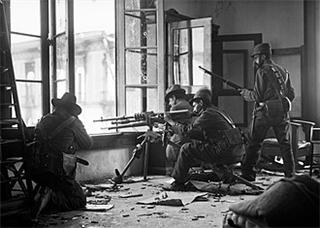
In Spain a long anarchist tradition gave the CNT and FAI a pivotal role in the civil war of 1936–39. In answer to the army rebellion, an anarchist-inspired movement of peasants and workers, backed by armed militias, took control of Barcelona and of large areas of rural Spain, where they collectivised the land. The Soviet Union gave some limited help, but as Stalin asserted Soviet control of the Republican government, communists and other leftists fought each other in the May Days, which ended in another defeat of the anarchists at communist hands.
Classical anarchism also had a violent side. A minority practised propaganda of the deed, revolutionary violence meant as the spark of revolution; most attacks came in the late 1870s, early 1880s and 1890s, and some assassination attempts on heads of state succeeded. Many anarchists distanced themselves from these terrorist acts, but infamy came upon the movement, and the United States tried to bar anarchists with the Immigration Act of 1903. Emma Goldman and Errico Malatesta held violence to be a reaction to state violence, a necessary evil.
Critiques & Debates
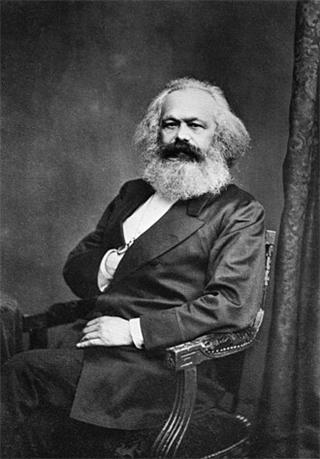
Karl Marx criticised anarchism as a movement of the “petty bourgeois”, of ruined craftsmen and artisans who refused factory discipline, party leadership and state control, and Friedrich Engels judged its anti-authoritarianism counter-revolutionary, since in his view a revolution is by itself authoritarian. John Molyneux, in the pamphlet Anarchism: A Marxist Criticism, argues that “anarchism cannot win”, and other Marxists call it utopian for needing every individual to hold anarchist values.
Others question its premises. Joseph Raz argued that accepting authority means believing that following it brings more success, and academics have called anarchism’s view of human nature naive, its rejection of the state overly simplistic and its commitment to revolution unrealistic. Bertrand Russell held that tariffs, sanitary regulation and a just system of distribution could hardly be managed without central government, and Robert Nozick argued in Anarchy, State, and Utopia that a minimal “night-watchman state” would arise from anarchy by an invisible hand. Andrew G. Fiala lists the charges that anarchism is bound up with violence, unfeasible, self-contradictory and, in its philosophical form, ineffective.
Anarchists answer that people in a state of nature would not simply be at war, that the harms of the state outweigh its benefits, and that their major thinkers advocated federalism against the charge that only small units can govern themselves. They also dispute violence among themselves: anarcho-pacifists reject it, while Alfredo Bonanno has revived the debate.
Legacy
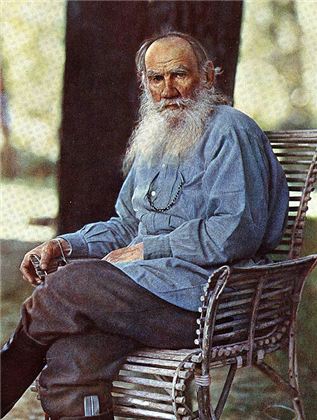
Many facets of human civilisation have been influenced by anarchist theory, critique and practice. Francisco Ferrer’s Escuela Moderna, founded in Barcelona in 1901, rejected both state and church; it closed after constant harassment by the state and Ferrer was arrested, but it inspired modern schools around the world, as did Leo Tolstoy’s school and A. S. Neill’s Summerhill, founded in 1921. Respect for the child’s autonomy and teaching by reason rather than indoctrination have spread to mainstream schools. In the arts anarchism was close to the futurists and surrealists and to the painter Camille Pissarro, and later to punk bands such as Crass and the Sex Pistols. The free love current of 1890 to 1920 survives in support for polyamory and relationship anarchy.
Since the late 20th century the movement has been resurgent within anti-capitalist, anti-war and anti-globalisation movements. Its activists pioneered affinity groups, security culture and decentralised technologies such as the Internet, and black blocs became known for clashes with the police. Many contemporary anarchists prefer to build alternatives, such as Food Not Bombs and self-managed social centres, and speak of a “small-a anarchism” drawn from their own experience rather than the classical thinkers.
Anarchist ideas influenced the Zapatistas in Mexico and Rojava, the Democratic Federation of Northern Syria, and scholars in anthropology and history have turned to the movement.
Anarchism is a political philosophy and movement that seeks to replace the state, capitalism and all coercive hierarchy with voluntary associations. Taking shape in 19th-century Europe with Proudhon, Bakunin and Kropotkin, it flourished until the Spanish Civil War, was suppressed by the Bolsheviks and defeated by the communists in Spain, and has revived since the 1960s in protest movements.
Test yourself
5 questions on this page, from its key events and facts.
The questions open here once the page has loaded.
References
- Pierre-Joseph Proudhon, What Is Property? (1840)
- William Godwin, Political Justice
- Robert Nozick, Anarchy, State, and Utopia
- John Molyneux, Anarchism: A Marxist Criticism (Socialist Workers Party pamphlet)
- Chris Robé, Breaking the Spell: A History of Anarchist Filmmakers, Videotape Guerrillas, and Digital Ninjas