
Ideology · Europe
Imperialism
At a glance
- The word imperialism took its present sense in English in the late 1870s, but the extension of power over foreign nations is as old as history; its most intense modern phase, the Age of Imperialism, is commonly said to have ended in 1914.
- Its advocates justified it as a civilizing mission backed by theories of race, while imperial rule brought atrocities such as those of the Congo Free State, the Herero and Namaqua genocide and the ethnic cleansing of the Circassians.
- Hobson and Lenin explained imperialism as a product of capitalism; after World War II, movements in the colonies, Pan-Africanism among them, won independence and ended most of the European empires.
Timeline
- 1830France seizes Algiers, beginning its second colonial empire
- 1870sThe term imperialism is applied to the British Empire, introduced in its present sense by opponents of Benjamin Disraeli
- 1902John A. Hobson publishes Imperialism: A Study, arguing that empire drained money needed at home
- 1908After scandal upon scandal over atrocities in the Congo Free State, Belgium is forced to take it over from King Leopold II
- 1916Lenin’s Imperialism, the Highest Stage of Capitalism portrays imperialism as monopoly capitalism on a world scale
- 1947India becomes independent, with partition, as decolonization movements arise across the British Empire
- 1962France grants Algeria independence, ending most of its second colonial empire
- 1978Edward Said’s Orientalism describes Western knowledge of the East as a justification of empire
Origins
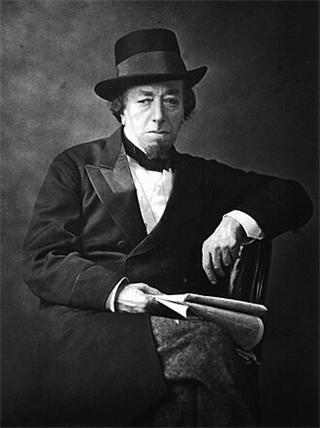
The word imperialism comes from the Latin imperium, “to command” or “to rule”. Coined in the 19th century for Napoleon III’s attempts to gain political support by invasion, it was introduced into English in its present sense in the late 1870s by opponents of the imperial policies of the British Prime Minister Benjamin Disraeli, and supporters such as Joseph Chamberlain quickly took it up. By the 1880s it had a positive connotation in the West, and by the end of the century it described the conduct of empires at all times and places. For some it meant idealism and philanthropy; others saw political self-interest or capitalist greed.
Empire itself is far older: imperialism has been present since the beginning of history. In ancient China, Tianxia placed the imperial court at the centre of a divinely ordered world that reached out to the fringe “barbarians”, and Rome drew local elites into its culture. England’s ambitions showed in the Tudor conquest of Ireland from the 1530s and the East India Company, established in 1599. The Age of Imperialism, whose beginning is dated between 1760 and 1870 and whose end commonly to 1914, saw European nations, helped by industrialization, railways, the telegraph and, by the 1880s, the machine gun, intensify colonizing and annexation; in the late 19th century the United States and Japan joined them.
Core Ideas
Imperialism is the maintaining and extending of power over foreign nations by hard power, military and economic, and by soft power, diplomatic and cultural. Its advocates justified it in several ways. Social Darwinism and theories of race gave it a supposedly rational basis: in 1883 Jules Ferry declared that “Superior races have a right, because they have a duty. They have the duty to civilize the inferior races.” The civilizing mission and the White Man’s Burden set “primitive” peoples against “advanced” ones. Environmental determinism held that temperate climates produced hard-working, moral people and tropical ones laziness and degeneracy, so that tropical peoples needed European guidance.
The political geographers Friedrich Ratzel, who held expansion necessary for a state’s survival, and Halford Mackinder supported empire, and British settlement in Australia was arguably premised on terra nullius, as its settlers considered the land unused by its original inhabitants. Edward Said argued in Orientalism (1978) that Western scholarship built an imagined East, irrational and backward, as the ideological justification of Western imperialism, and the blank spaces of 19th-century maps of Africa gave the powers an incentive to fill them. John Gallagher and Ronald Robinson held that British leaders sought empire “informally if possible and formally if necessary”, through trade and capital rather than rule.
Spread & Variants
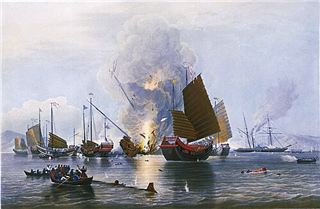
Britain built the largest empire the world has seen. Its “First” empire, based on mercantilism in North America, the Caribbean and India, was checked by the loss of the American colonies in 1776; it turned to India, Australia, Asia, Africa and the Pacific, and after 1815 enjoyed a century of almost unchallenged dominance, the Pax Britannica, which was still an almost uninterrupted series of colonial wars, from the Anglo-Burmese and Opium Wars to the Scramble for Africa. France seized Algiers in 1830 and after 1850 rebuilt a worldwide empire in North and West Africa and Indochina, which at its height in the 1920s covered over 11,500,000 km², with 110 million people on the eve of World War II.
Germany began a colonial empire in Africa and the South Pacific in 1883–84, and Italy’s empire began with the purchase of Assab Bay in 1869 by an Italian navigation company. Japan, under the motto “Enrich the state, strengthen the military”, annexed the Ryukyu Islands in 1879, took Taiwan after the First Sino-Japanese War, annexed Korea in 1910, took Manchuria in 1931 and by 1942 had conquered much of East Asia and the Pacific. The United States, once opposed to imperialism, took territory from Mexico and occupied the Philippines, where war broke out in 1899. Russia expanded across Siberia and the Caucasus, and critics argue that the Soviet Union, though it declared itself anti-imperialist, carried on the old Russian tradition of expansion and control.
In Power
Imperial rule rested on force and extraction. The British exploited the political weakness of the Mughal state in India, and the economist Utsa Patnaik estimates the wealth transferred out of India between 1765 and 1938 at $45 trillion. In the Congo Free State, run by King Leopold II as a private rubber enterprise, scandal after scandal over atrocities forced Belgium to take it over in 1908. In German South West Africa Germany committed the Herero and Namaqua genocide, the first genocide of the 20th century. Russia’s conquest of Siberia brought the slaughter of indigenous peoples, among them the Daur, Koryaks, Itelmens, Mansi and Chukchi, and its war against the Circassians their ethnic cleansing. Spain institutionalized compulsory labour and slavery in its colonies, and the treatment of indigenous peoples in the westward expansion of the United States has been called “internal colonialism”.
Empires also built roads and infrastructure and brought new technologies, and Stephen Howe credits the great empires with stability, security and legal order for their subjects. Their profits were uneven: Britain gained from India but not from most of its empire, and Germany and Italy got little from theirs. The colonized resisted: the Philippines cost the United States much more than expected because of military action against rebels, the Irish War of Independence of 1919–1921 created the Irish Free State, and after 1945 anti-colonial movements fought France in Vietnam and Algeria.
Critiques & Debates
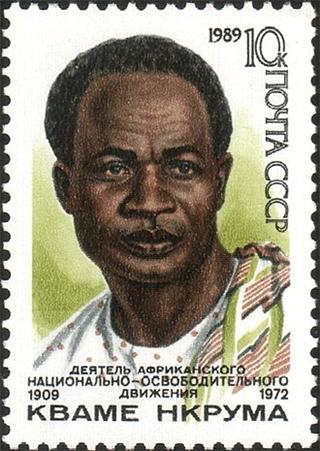
Criticism grew with empire itself. John A. Hobson’s Imperialism: A Study (1902) argued that financing overseas empires drained money needed at home and held down domestic wages, and that social reform could cure imperialism by removing its economic foundation. Vladimir Lenin built on Hobson in Imperialism, the Highest Stage of Capitalism (1916), portraying imperialism as monopoly capitalism on a world scale that made imperialist wars inevitable; the treatise remained a standard textbook until the Soviet collapse. Joseph Schumpeter and Hannah Arendt defined imperialism as expansion for the sake of expansion. In 1965 Kwame Nkrumah called neocolonialism “the last stage of imperialism”, and Walter Rodney, in How Europe Underdeveloped Africa (1972), described a world divided into exploiters and exploited.
Others disputed these theories. By the 1970s David Fieldhouse, David Landes and Oron Hale argued that modern imperialism was chiefly a political product of national mass hysteria rather than of capitalists, and Fieldhouse wrote that no empire had any definable function, economic or otherwise. Kenneth Waltz traced it to great power itself: “Weakness invites control; strength tempts one to exercise it.” Scholars also disagree on how imperialism differs from colonialism. In 1898 Americans founded the Anti-Imperialist League against the annexation of the Philippines and Cuba, and the former general Smedley Butler denounced American foreign policy as a “racket”.
Legacy
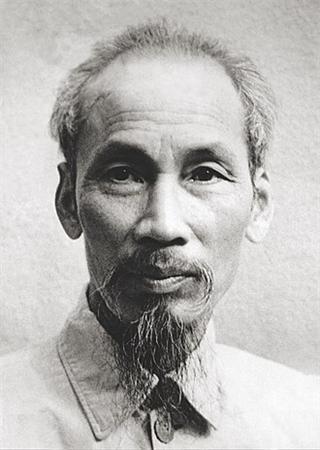
Anti-imperialism gained wide currency after World War II, as political movements in the colonies of the European powers promoted national sovereignty. Pan-Africanism, which sought to unite Africans divided by imperial rule and whose conferences, among them the Pan African Conference of 1900, gave Africans a voice in ending colonial rule, helped end colonialism in Africa. Ho Chi Minh and other young radicals in Paris had formed the French Communist Party in 1920. India became independent, with partition, in 1947; France fought and lost a war in Vietnam in the 1950s and granted Algeria independence in 1962; Somalia’s independence in 1960 ended Italy’s colonial experiment, and most of Portugal’s African colonies became independent in the 1970s.
The word lives on, often as a pejorative in international propaganda. Since the 2010s Russia under Vladimir Putin has been described as neo-imperialist, for the 2008 invasion of Georgia, the 2014 annexation of Crimea and the 2022 invasion of Ukraine, and it is accused of neo-colonialism in Africa. Scholars have widened the term to cultural imperialism, the soft power that changes how a people sees its own life, and to a world system reaching back centuries, in some accounts to the Crusades. The rhetoric of racial superiority still leaves traces, as in the prizing of “whiteness” throughout Latin America.
Imperialism is the maintaining and extending of power over foreign nations. Named in the 19th century, it drove the European empires, joined by the United States and Japan, to conquer and rule much of the world, justified by a civilizing mission and theories of race and enforced with great violence. Critics from Hobson and Lenin to Said analysed it, and decolonization after 1945 ended most of its empires.
Test yourself
5 questions on this page, from its key events and facts.
The questions open here once the page has loaded.
References
- V. I. Lenin, Imperialism: The Highest Stage of Capitalism (International Publishers, 1997)
- Rosa Luxemburg, The Accumulation of Capital: A Contribution to an Economic Explanation of Imperialism
- Douglas E. Streusand, Islamic Gunpowder Empires: Ottomans, Safavids, and Mughals (Westview Press, 2011)
- David Morgan, The Mongols (Blackwell Publishing, 2007)
- Burton Stein, A History of India (John Wiley & Sons, 2010)