
Ideology · Islamic Caliphates & Middle East
Pan-Arabism
At a glance
- Pan-Arabism holds that the Arabic-speaking peoples from the Maghreb to the Persian Gulf are one people, a view Jurji Zaydan grounded in their common language rather than religion, race or territory.
- Every attempt at a pan-Arab state failed: the United Arab Republic of Egypt and Syria, the first actual merger of two independent Arab countries, lasted only from 1958 to 1961.
- Its decline is put down to pan-Islamism, sectarian and social divisions, rivalry among Arab leaders and, to a lesser extent, defeat by Israel, above all in the Six-Day War of 1967.
Timeline
- 1915The Hussein–McMahon Correspondence begins: Britain will support Arab independence if the Mashreq Arabs revolt against the Ottomans
- 1916The Sykes–Picot Agreement divides parts of the Mashreq between Britain and France instead of forming an independent Arab state
- 1945The League of Arab States is founded
- 1958Egypt and Syria merge as the United Arab Republic under Nasser
- 1961Syrian army officers carry out a coup and take Syria out of the United Arab Republic
- 1967Israel’s victory in the Six-Day War damages pan-Arabism’s credibility
- 1989The Arab Maghreb Union is formed in place of a proposed Algeria–Libya union
- 2024The fall of the Assad regime ends Ba’athist rule in Syria, which had espoused pan-Arabism
Origins
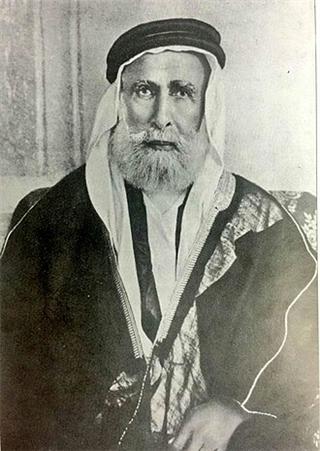
The origins of pan-Arabism are often traced to the Nahda, the Arab awakening that flourished in the Arab regions of the Ottoman Empire in the late 19th century. Jurji Zaydan (1861–1914), a Levantine Christian émigré in Egypt, laid much of its intellectual foundation: his articles of the early 20th century argued that the Arabic-speaking regions from the Maghreb to the Persian Gulf were one people with a shared national consciousness, and his historical novels popularised a secular history of the pre-Islamic and Islamic periods that all Arabs could claim as their own.
As a political project it was first pressed by Sharif Hussein ibn Ali of Mecca, who sought a unified Arab state in the Mashreq. In the Hussein–McMahon Correspondence of 1915 and 1916 Britain agreed to support Arab independence if the Arabs revolted successfully against the Ottomans, but the Sykes–Picot Agreement of 1916 divided parts of the region between Britain and France. When the Ottoman Empire surrendered in 1918, Britain did not keep to the letter of its arrangements with Hussein, and the two powers took guardianship of Mesopotamia, Lebanon, Palestine and what became Syria, and Hussein, King of the Hijaz alone, lost his kingdom to the Saudis.
A more formal ideology was set out in the 1930s by Syrian thinkers: Constantin Zureiq, Sati’ al-Husri, Zaki al-Arsuzi and Michel Aflaq. It has been said that Arsuzi was fascinated with the Nazi idea of “racial purity” and that he influenced Aflaq.
Core Ideas

Pan-Arabism, in Arabic al-waḥda al-ʿarabiyya, “Arab unity”, espouses the unification of all Arab people in a single nation-state made up of the Arab countries of West Asia and North Africa, from the Atlantic Ocean to the Arabian Sea. It is closely connected with Arab nationalism, the view that the Arabs constitute a single nation. In Zaydan’s formulation the linguistic bond among Arabic speakers outweighed religious, racial and particular territorial bonds, and he had a critical influence on the acceptance of a modernised Quranic Arabic, Modern Standard Arabic, as the written and official language of the whole Arab world in place of the local dialects.
Michel Aflaq, for long the chief ideologist of the Arab Ba’ath (Renaissance) Party that he and al-Arsuzi helped found, combined elements of Marxist thought with a nationalism that recalled 19th-century European romantic nationalism. Advocates of pan-Arabism have often espoused Arab socialism and strongly opposed Western political involvement in the Arab world, and the ideology sought to strengthen Arab states against outside forces through alliances such as the Arab League.
Spread & Variants

Pan-Arabism began at the time of the First World War, but Egypt, the most populous Arab country, took little interest in it before the 1950s: in the 1930s and 1940s Egyptian nationalism, not pan-Arabism, was the mode of its political activists. James Jankowski wrote of an “absence of an Arab component in early Egyptian nationalism”. Abdullah I of Jordan dreamed of a Greater Syria uniting Syria, Palestine and Jordan under himself; the plan was unpopular among most Arabs, and distrust of his ambitions was one of the principal reasons for founding the Arab League in 1945. The vision was dropped after his assassination in 1951.
The British Foreign Minister Anthony Eden called for Arab unity in the 1940s, followed by proposals from pro-British leaders such as Abdullah and Nuri al-Said of Iraq, but the Egyptian proposals for a broader grouping of independent Arab states prevailed. Only under Gamal Abdel Nasser did Arab nationalism, with Arab socialism, become Egypt’s state policy, usually set against Zionism in neighbouring Israel. After the Suez Crisis Nasser gained great popularity among the masses of the Arab world, and pan-Arabism reached its height with Nasserism and Ba’athism in the 1950s and 1960s.
In Power
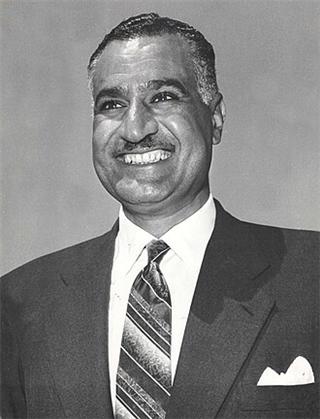
Pan-Arabism’s record in power is a series of attempted unions, all of which ultimately failed. The United Arab Republic of 1958 was the first actual merger of two independent Arab countries. It was formed hastily under Nasser on the initiative of Syrian leaders who feared a takeover by communists or “reactionaries”, and it was a unitary state, which critics saw as little more than the annexation of a small country by a larger one. In 1961 Syrian army officers staged a coup and withdrew. The Hashemite Arab Federation of Jordan and Iraq, founded the same year, collapsed after six months amid tensions with the UAR and the 14 July Revolution, and the United Arab States, a confederation of the UAR with the Mutawakkilite Kingdom of Yemen, dissolved in 1961. In 1963 Egypt, Syria and Iraq agreed on a federal union that never came about.
Muammar Gaddafi of Libya pressed two more projects, the Federation of Arab Republics, which lasted five years, and an Arab Islamic Republic with Tunisia that never emerged; talks with Algeria in 1988 led instead to the Arab Maghreb Union of 1989. The governments of Iraq and Syria were led by rival factions of the Ba’ath Party, which espoused pan-Arabism until the fall of the Assad regime in 2024. The rare lasting unions are the forcible unification of much of the Arabian Peninsula by the Saudi rulers of Najd in the 1920s, the United Arab Emirates and the unification of North and South Yemen.
Critiques & Debates
Religious scholars and sheikhs across the Arab countries, especially in the Persian Gulf, held that pan-Arabism contradicted pan-Islamism, the ideal of a united Islamic community, the ummah: by promoting only Arab unity and ideals, not Islamic ones, it separated itself from the ummah. The religious conservatism of these societies helped pan-Islamism prevail. Sectarian and social differences, the Sunni–Shia divide and the clash between secular states such as Lebanon and Syria and religious Saudi Arabia, raised doubts about whether the project was viable at all.
Rival leaders competed to be the voice of the Arab world. The United Arab Republic, meant as the spearhead of pan-Arabism, did not receive the expected praise from other Arab states, especially in the Gulf, and its critics called it an annexation. Abdullah’s Greater Syria had bred distrust of a similar kind. To a lesser extent, the defeats by Israel, and above all the Six-Day War of 1967, together with the failure of Egypt and Syria to generate economic growth, damaged the ideology’s credibility.
Legacy
“By the mid-1970s,” according to The Continuum Political Encyclopedia of the Middle East, “the idea of Arab unity became less and less apparent in Arab politics, though it remained a wishful goal among the masses.” By the late 1980s pan-Arabism was being eclipsed by nationalist and Islamist ideologies. Although it had lost its appeal by the 1990s, it continued to exercise an intellectual hegemony throughout the Arab world.
Something of the founders’ project outlasted the politics: Modern Standard Arabic, which Zaydan helped establish, is the written and official language throughout the Arab world, and the League of Arab States, founded in 1945, grew out of the same search for unity. Ba’athist rule carried the ideology into the 21st century in Syria until the fall of the Assad regime in 2024.
Pan-Arabism is the ideology of uniting all Arabs in one state, born in the Ottoman Arab lands in the late 19th century and first pressed as a political project by Sharif Hussein of Mecca. It reached its height under Nasser and the Ba’ath parties in the 1950s and 1960s, but every attempted union, above all the United Arab Republic of 1958 to 1961, failed, and from the late 1980s it was eclipsed by nationalism and Islamism.
Test yourself
5 questions on this page, from its key events and facts.
The questions open here once the page has loaded.
References
- Martin Kramer, Arab Nationalism: Mistaken Identity
- A. Dawisha, Arab Nationalism in the Twentieth Century
- Nissim Rejwan, Pan-Arabism on the March?: Israel Weighs the New Challenge
- The Continuum Political Encyclopedia of the Middle East