
Ideology · Europe
Nationalism
At a glance
- Nationalism holds that the nation and the state should be congruent: that a nation should govern itself, free from outside interference, and is the only rightful source of political power.
- Scholars frequently date its beginning to the late 18th century, with the American Declaration of Independence or the French Revolution; most now see nations as socially constructed, “imagined communities” in Benedict Anderson’s phrase, not as having always existed.
- It has been a feature of movements for freedom, from Italian unification to the independence of Africa and Asia, and it has also been used to suppress minorities and start wars, and is frequently cited as a cause of both world wars.
Timeline
- 1772Johann Gottfried Herder’s Treatise on the Origin of Language stresses a common language and gives nationalism its name
- 1793Revolutionary France declares the levée en masse, putting all the French in permanent requisition for army service
- 1808A series of revolts begins that by 1826 costs Spain all its American colonies but Cuba and Puerto Rico
- 1861The Risorgimento unites the states of the Italian peninsula in the Kingdom of Italy
- 1882Ernest Renan’s lecture What is a Nation? defines the nation as a daily plebiscite of its people’s will
- 1914Serb revolutionaries in Bosnia assassinate Archduke Ferdinand, and Austria-Hungary’s attack on Serbia ignites the First World War
- 1947Against Gandhi’s composite nationalism, the Indian subcontinent is partitioned along religious lines into Pakistan and India
- 1948White Afrikaner nationalists take control of South Africa and impose apartheid, which lasts until 1994
Origins
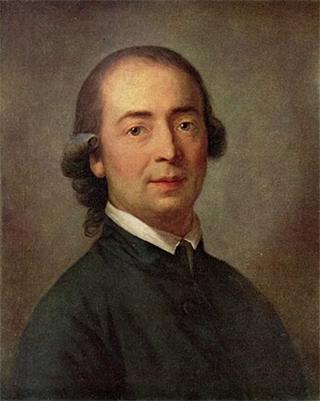
The English word nationalism dates to around 1798, gained prominence in the 19th century and took on negative connotations after 1914. Scholars frequently place the beginning of nationalism in the late 18th century, with the American Declaration of Independence or the French Revolution, though its existence in earlier forms is debated: Hans Kohn put its emergence in the 17th century, and Linda Colley traced British nationalism from about 1700.
Three main theories explain it. Primordialism, which held that nations have always existed, has been rejected by most scholars. Modernisation theory, the most commonly accepted, holds that industrialisation, urbanisation and mass education made national consciousness possible, and calls nations “imagined communities”; Benedict Anderson linked their rise to print capitalism and printed media in vernacular languages. Ethnosymbolism, associated with Anthony D. Smith, explains nationalism through symbols, myths and traditions, and Smith stresses the part intellectuals played in creating it.
The Prussian scholar Johann Gottfried Herder originated the term in 1772 in his Treatise on the Origin of Language, stressing a common language; Erica Benner calls him the first philosopher to suggest that identities based on language should be the primary source of legitimate political authority. The French Revolution of 1789 is seen as an important starting point, for its impact on the French and even more on Germans and Italians.
Core Ideas

Nationalism holds that the nation should be congruent with the state: that a nation should govern itself, free from outside interference, that it is a natural and ideal basis for a polity and the only rightful source of political power. It aims to build and keep a single national identity, based on shared culture, ethnicity, homeland, language, religion, traditions or belief in a common history. There are various definitions of a nation, so there are different types of nationalism, and it can be combined with conservatism or with socialism.
The two main forms are civic and ethnic. Civic nationalism defines the nation as an association of people with equal and shared political rights, not a common ancestry; Ernest Renan, in his lecture “What is a Nation?” of 1882, called it a “daily referendum” on the will to live together. Liberal nationalists, among them Renan and John Stuart Mill, argue that individuals need a national identity to lead meaningful lives. Ethnic nationalism defines the nation by a shared heritage, usually a common language, faith and ancestry. Hans Kohn popularised the distinction in the 1950s, calling civic nationalism Western and democratic and ethnic nationalism Eastern and undemocratic; since the 1980s scholars have pointed out numerous flaws in that rigid division.
Other forms include integral nationalism, marked by anti-individualism, statism and aggressive militarism; pan-nationalism, such as Pan-Slavism; economic nationalism; and left-wing nationalism, which joins national liberation to socialism.
Spread & Variants
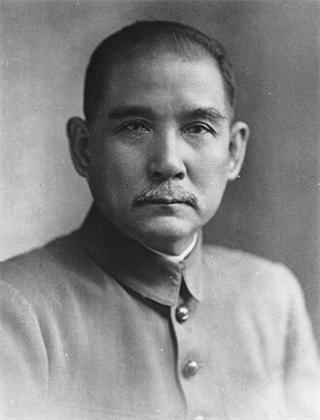
Napoleon’s conquests of the German and Italian states around 1800–1806 played a major role in stimulating demands for national unity, and in the 19th century nationalism became one of the most significant political and social forces in history. Between 1830 and 1870, the historian J. P. T. Bury argued, it inspired great literature and nurtured heroes, unified Germany and Italy, and threatened the multinational Ottoman and Habsburg empires. In Hispanic America an upsurge of nationalism in the 1810s and 1820s, led by the criollos against the peninsulares, cost Spain nearly all its colonies. Greek and Serbian revolts won independence from the Ottoman Empire, while Polish revolts in 1830 and 1863–64 were harshly crushed by Russia, whose own official ideology was “Orthodoxy, Autocracy, and Nationality”.
In Germany Hegelian historians such as Johann Gustav Droysen and Heinrich von Treitschke saw Prussia as the true carrier of the German spirit, and Otto von Bismarck achieved unification through short wars against Denmark, Austria and France. Jewish nationalism, Zionism, answered antisemitism and pogroms with settlement in Palestine from 1882.
Japan’s defeat of Russia in 1905 awakened nationalism across Asia: in China Sun Yat-sen founded the Kuomintang, and the May Fourth Movement of 1919 followed. After the Second World War the forces of nationalism grew much stronger in Africa, and in the 1950s and 1960s the colonies became independent states. Adria Lawrence argues that colonial nationalism was spurred by the colonial powers’ refusal of equal rights to their subjects.
In Power
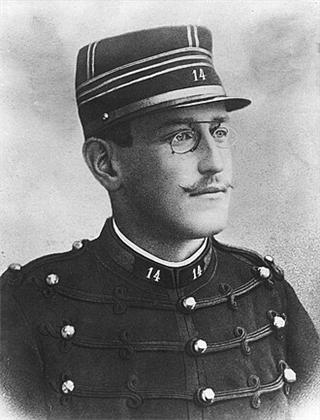
Revolutionary France declared the levée en masse in 1793, calling all the French to the service of the war. After defeat by Germany in 1871 the return of Alsace-Lorraine drove French revanchism for a quarter century, and in the Dreyfus Affair of 1894–1906 conservative Catholic nationalists treated a Jewish officer as no true Frenchman. Treitschke attacked parliamentarianism, socialism, the English, the French and the Jews, holding that “it is the highest duty of the State to increase its power”. In Italy Benito Mussolini’s 20-year dictatorship brought a highly aggressive nationalism, wars, an Italian Empire and alliance with Hitler.
Nazism, which Alter and Brown count with Fascist Italy as integral nationalism, was devoted to an Aryan race; its goals included lebensraum in Eastern Europe, eugenics and the eradication of human beings the Nazis deemed inferior, and it refused to count Jews and Romani as Aryan. In Spain the state imposed Castilian characteristics on other peoples from the political unification of 1714, and under Franco nationalism took the form of National-Catholicism. In South Africa white Afrikaner nationalists imposed apartheid from 1948 until the multiracial elections of 1994. After the killings, terror and population transfers of the war, Poland was declared 99 per cent ethnically Polish.
Elsewhere nationalism ended empires: Africa’s nationalist leaders took power as European rule ended, though in Algeria, Kenya and elsewhere there were long, bloody civil wars. After communism fell, extreme nationalism led to serious conflict in Yugoslavia in the 1990s.
Critiques & Debates
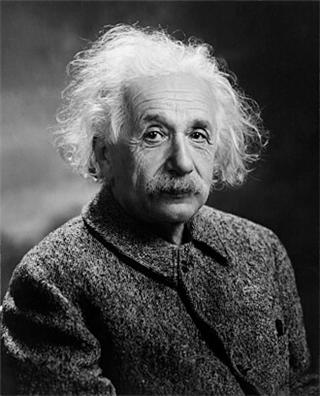
Critics argue that it is often unclear what a nation is, or whether it is a legitimate unit of rule. The philosopher A. C. Grayling calls nations artificial constructs, “their boundaries drawn in the blood of past wars”. Critics call nationalism divisive, since it highlights differences between people, and potentially oppressive, since it can submerge the individual in a national whole and give leaders the means to manipulate the masses. John Etherington argues that it is inherently exclusionary and potentially violent, and Barry Posen that it increases the intensity of war.
In the liberal tradition the historian Lord Acton put the case for “nationalism as insanity” in 1862: it suppresses minorities and places country above moral principle. Since the late 20th century liberals have been divided, with Michael Walzer, Isaiah Berlin, Charles Taylor and David Miller holding that a liberal society needs a stable nation-state. George Orwell distinguished nationalism from patriotism and called it “power-hunger tempered by self-deception”. Bertrand Russell argued that it weakens the individual’s capacity to judge his country’s foreign policy; Albert Einstein called it “an infantile disease … the measles of mankind”.
Karl Marx and Friedrich Engels declared in 1848 that “the working men have no country”, though Vladimir Lenin supported self-determination. Feminist critics argue that nationalism justifies sexual control and repression, and Edward Said that nationalist narratives often go hand in hand with racism.
Legacy
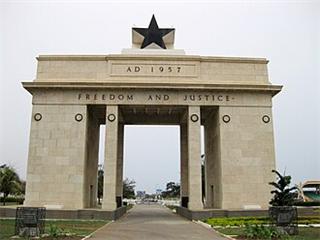
Most new nation-states since 1815 have emerged through decolonisation, and nationalism has been associated with cultural revivals and pride in national achievement as well as with war. Glenda Sluga notes that “the twentieth century, a time of profound disillusionment with nationalism, was also the great age of globalism.” Sport carries it too: Jeff Kingston finds that the capacity of sports to ignite nationalist passions is as extraordinary as their power to unify and generate goodwill.
The rise of globalism in the late 20th century was followed by a rise of nationalism and populism in Europe and North America, as groups such as Germany’s Pegida, France’s National Front and the UK Independence Party called for restrictions on immigration. In 2014 Scotland voted against independence by 55.3 per cent, and in 2016 British voters chose to leave the European Union. Donald Trump ran in 2016 on the slogans “Make America Great Again” and “America First”, and in 2018 declared himself a nationalist. Nationalist sentiment was used in Russia’s annexation of Crimea in 2014; Hindu nationalism has grown with the Bharatiya Janata Party, ruling India since 2014; and Catalan nationalists have led a renewed independence movement since 2010.
Scholars continue to debate its moral value, its relation to patriotism and its compatibility with cosmopolitanism, and the study of nationalism, from Carlton Hayes’s survey of 1928 to Anderson’s Imagined Communities, has become a field of its own.
Nationalism holds that the nation and the state should be congruent and that a nation should govern itself. Arising in late 18th-century Europe, it united Germany and Italy, broke up empires and drove decolonisation, and it was also used to suppress minorities and start wars, from the levée en masse to Nazism and apartheid; it has risen again in the 21st century.
Test yourself
5 questions on this page, from its key events and facts.
The questions open here once the page has loaded.
References
- Benedict Anderson, Imagined Communities: Reflections on the Origin and Spread of Nationalism (Verso, 1983)
- Eric J. Hobsbawm, Nations and Nationalism Since 1780: Programme, Myth, Reality (Cambridge University Press, 1992)
- Eric Hobsbawm and Terence Ranger, eds., The Invention of Tradition (Cambridge University Press, 1983)
- Hans Kohn, The Idea of Nationalism: A Study in Its Origins and Background (1944)
- Michael Billig, Banal Nationalism (Sage, 1995)
- Carlton J. Hayes, The Historical Evolution of Modern Nationalism (1928)