
Ideology · Europe
Liberalism
At a glance
- John Locke, generally regarded as the father of modern liberalism, argued in his Two Treatises (1690) that lawful government rests on the consent of the governed, and that the people may overthrow a tyrant who violates life, liberty and property.
- Leaders of the Glorious Revolution of 1688, the American Revolution of 1776 and the French Revolution of 1789 used liberal philosophy to justify the armed overthrow of royal sovereignty.
- About 1900 the New Liberals argued that freedom needed a welfare-oriented state: in the United States liberalism has since the 1930s usually meant this social liberalism, while in Europe it often means classical liberalism of limited government.
Timeline
- 1688The Glorious Revolution enshrines parliamentary sovereignty and the right of revolution in Britain, later called the first modern liberal revolution
- 1690John Locke’s Two Treatises, the foundational text of liberal ideology, ground lawful government in the consent of the governed
- 1776Adam Smith publishes The Wealth of Nations, and the American Declaration of Independence is proclaimed
- 1789France abolishes feudalism on the night of 4 August and adopts the Declaration of the Rights of Man and of the Citizen
- 1820In the Trienio Liberal the Spanish liberales compel King Ferdinand VII to swear to uphold the Constitution of 1812
- 1859John Stuart Mill publishes On Liberty, a defence of free speech and of the individual against the tyranny of the majority
- 1864Pope Pius IX issues the Syllabus of Errors, condemning liberalism in all its forms
- 1964The Civil Rights Act passes in the United States, part of the rapid series of reforms some historians call the Liberal Hour
Origins

The words liberal and liberty go back to the Latin liber, “free”. One of the first recorded uses of liberal, in 1375, described the liberal arts, the education fit for a free-born man; with the Enlightenment the word came to mean “free from narrow prejudice” (1781). Liberalism first appeared in English in 1815. Scholars have found principles familiar to liberals in the Sophists and in the Funeral Oration of Pericles, but as a political current and an intellectual tradition liberalism is mostly a modern phenomenon that began in the 17th century.
Its ideas began to coalesce during the English Civil War. The Levellers, a minority movement mainly of Puritans, Presbyterians and Quakers, called for freedom of religion, frequent parliaments and equality under the law, and John Milton’s Areopagitica made one of the first arguments for freedom of speech. The Glorious Revolution of 1688 enshrined parliamentary sovereignty and the right of revolution.
John Locke, generally regarded as the father of modern liberalism, first drew these ideas together as a distinct ideology. He took from Thomas Hobbes the state of nature and the social contract but rejected Hobbes’s absolute sovereign: in his Two Treatises (1690) government rests on the consent of the governed and exists to protect life, liberty and property, and the people may overthrow a tyrant. The First Treatise answered Robert Filmer’s defence of the divine right of kings, Patriarcha (1680), and Locke’s Letters Concerning Toleration argued for religious toleration and the separation of church and state.
Core Ideas
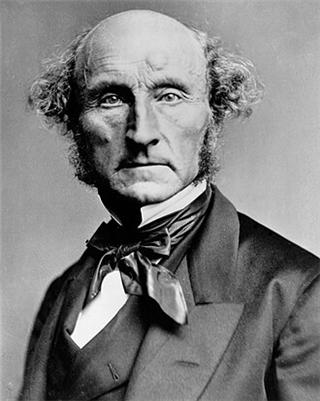
Liberals differ widely, and scholars speak of “separate and often contradictory streams of thought” under the one name. The political philosopher John Gray found four common strands: individualist, holding the moral primacy of the person against social collectivism; egalitarian, giving every individual the same moral worth; meliorist, holding that each generation can improve its institutions; and universalist, affirming the moral unity of humankind. Scholars also name belief in equality and individual liberty, private property and individual rights, limited constitutional government, and pluralism, toleration and consent.
To limit government, James Madison and Montesquieu conceived the separation of powers among the executive, legislative and judicial branches. From Adam Smith to John Stuart Mill liberals understood liberty as the absence of interference, and Mill held that the individual ought to be free to do as he wishes unless he harms others. Late in the 19th century T. H. Green developed positive liberty, the power to act, and gave society and the state the task of creating the conditions for genuine choice.
In economics, Smith’s The Wealth of Nations (1776) argued that when prices and competition are left free of government regulation, the pursuit of self-interest maximises a society’s wealth, as if led by an “invisible hand”; government should be limited to defence, public works and justice. Smith and Richard Cobden held that free trade between nations would lead to peace.
Spread & Variants
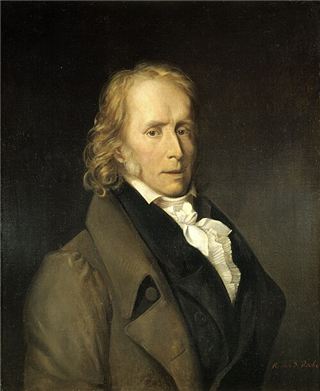
Between 1804 and 1815 the Coppet group around Madame de Staël near Geneva shaped nineteenth-century liberalism. Among them Benjamin Constant, one of the first thinkers to go by the name of liberal, set the participatory “Liberty of the Ancients” against the “Liberty of the Moderns”, founded on civil liberties, the rule of law and elected representatives. In 19th-century Britain liberalism meant classical economics, free trade, minimal government and a balanced budget. In Latin America liberal agitation led to independence from Spain and Portugal, and the new regimes drew on positivism. In the Ottoman Empire and the Middle East liberalism influenced the Tanzimat and Al-Nahda reforms, the Young Ottomans and Islamic Modernism, though its books and papers reached mainly intellectuals and the emerging middle class. A mixture of liberal and nationalist feeling brought about the unification of Italy and Germany.
The tradition then divided. Mary Wollstonecraft’s A Vindication of the Rights of Woman (1792) founded liberal feminism. The New Liberalism of L. T. Hobhouse and John A. Hobson, which emerged in Britain in about 1900 and held that poverty made freedom impossible without a welfare-oriented state, became the programme of the Liberal Party. Against it stood an anti-state tradition, from Gustave de Molinari in the 1840s to Murray Rothbard’s anarcho-capitalism in the mid-20th century.
In Power
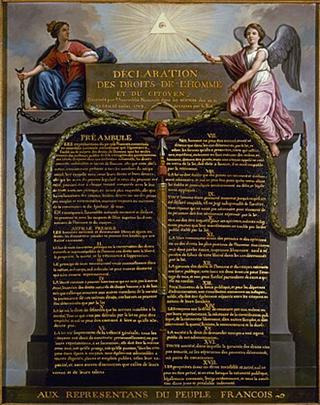
The United States Constitution, written after the Constitutional Convention of 1787, was in its time a republican and liberal document, and it remains one of the oldest liberal governing documents in effect. In France the abolition of feudalism on the night of 4 August 1789 and the Declaration of the Rights of Man and of the Citizen marked the triumph of liberalism. In the Napoleonic Wars the French brought Western Europe the end of seigneurial dues and guilds, the legalisation of divorce and equality under the law for all men, while Napoleon’s Civil Code perpetuated discrimination against women.
In Britain Smith’s economics was put into practice with lower tariffs in the 1820s, and utilitarian reasoning, which classical liberals often used to justify inaction against poverty, also produced Robert Peel’s Metropolitan Police, the workhouses and asylums. Allied victory in the First World War seemed to mark liberalism’s triumph across Europe, but the Great Depression from 1929 hastened the discrediting of liberal economics, and the unrest that followed led to the rise of fascism. In the United States Franklin D. Roosevelt’s New Deal and Lyndon B. Johnson’s Great Society, with Medicare, Medicaid and the Civil Rights Act of 1964, expanded the welfare state. In Iran the liberal nationalist Mohammad Mosaddegh became prime minister in 1951 and was removed by a coup in 1953. After the economic crisis of the 1970s, Margaret Thatcher and Ronald Reagan turned from Keynesian economics to what became known as neoliberalism.
Critiques & Debates

The Roman Catholic Church was one of liberalism’s most outspoken early critics. After a liberal regime in Italy ended the secular power of the popes, Pope Pius IX condemned liberalism in all its forms in the Syllabus of Errors of 1864, and in many countries liberals answered by expelling the Jesuits. Edmund Burke, the first major proponent of modern conservative thought, assailed the French Revolution’s claims for reason and the natural equality of all humans. In Why Liberalism Failed (2018) Patrick Deneen argued that liberalism has brought inequality, atomisation and centralised bureaucracies, and replaced community, religion and tradition with self-interest.
Karl Marx rejected the foundations of liberal theory, and Vladimir Lenin held that liberal science defends wage slavery, although liberals such as Thomas Paine also criticised wage slavery. Deng Xiaoping condemned “bourgeois liberalization” as a threat to the stability of the People’s Republic of China. Fascists accused liberalism of materialism, rationalism and individualism, though they generally shared its support for private property and a market economy. Some feminists argue that its line between public and private spheres lets bigotry flourish in private.
Liberals argued among themselves too. Jean de Sismondi’s New Principles of Political Economy (1819) was the first comprehensive liberal critique of early capitalism, and John Maynard Keynes rejected the classical belief that an unfettered market reaches full employment on its own.
Legacy
Liberalism is frequently cited as the dominant ideology of the modern era, and the fundamental elements of contemporary society have liberal roots. Liberal democracies were among the victors of both world wars and the Cold War, and the collapse of the communist states of Eastern Europe late in the 20th century left liberal democracy the only major form of government in the West. Larry Diamond wrote that by 1974 “dictatorship, not democracy, was the way of the world”, but that by 1995 the world was “predominantly democratic”. The growth of China as a combination of authoritarian government and economic liberalism challenges it, and Russian President Vladimir Putin has said that “liberalism has become obsolete”.
The word means different things in different places. In Europe and Latin America it covers both the conservative liberalism of the centre-right and the social liberalism of the centre-left; in North America it almost always means social liberalism, and in the United States the ideas of classical liberalism passed into modern conservatism and libertarianism. Commentators have noted the closeness of social liberalism to social democracy. In the Middle East liberal reform helped create a sense of crisis within Islam that led to Islamic revivalism, yet writers such as Taha Hussein went on advocating liberal values. Yellow is the colour most commonly associated with liberalism.
Liberalism is a political and moral philosophy of individual rights, liberty, consent of the governed and equality before the law, first systematised by John Locke and carried by the revolutions of 1688, 1776 and 1789. It later divided into classical and social liberalism, and it is frequently cited as the dominant ideology of the modern era.
Test yourself
5 questions on this page, from its key events and facts.
The questions open here once the page has loaded.
References
- Terence Ball and Richard Dagger, “Liberalism”, Encyclopædia Britannica
- Larry Diamond, The Spirit of Democracy
- Patrick Deneen, Why Liberalism Failed (2018)
- Francis Fukuyama, Liberalism and Its Discontents