
Ideology · Europe
Mercantilism
At a glance
- Mercantilism held that a nation grows rich and strong by exporting more than it imports and amassing gold and silver, and it was the dominant school of economic thought in Europe through the early modern period.
- Treating trade as a zero-sum game, it was bound up with war and empire: the Anglo-Dutch Wars can be linked directly to its theories, and it fuelled the conquest of colonies, settler colonialism and slavery.
- Undermined by Locke and Hume and rebutted by Adam Smith’s The Wealth of Nations in 1776, it gave way to free trade in the 19th century, though protectionist policies are still called neo-mercantilist.
Timeline
- 1539A French decree bans imports of woollen goods from Spain and parts of Flanders
- 1613Antonio Serra writes A Short Treatise on the Wealth and Poverty of Nations, one of the first treatises on political economy
- 1651The English Commonwealth passes the first Navigation Acts regulating trade
- 1664Thomas Mun’s England’s Treasure by Foreign Trade is published, after his death
- 1665Jean-Baptiste Colbert becomes Louis XIV’s Controller-General of Finances, the height of French mercantilism
- 1776Adam Smith’s The Wealth of Nations rebuts the mercantile system
- 1846Parliament’s repeal of the Corn Laws under Robert Peel symbolizes the emergence of free trade
Origins
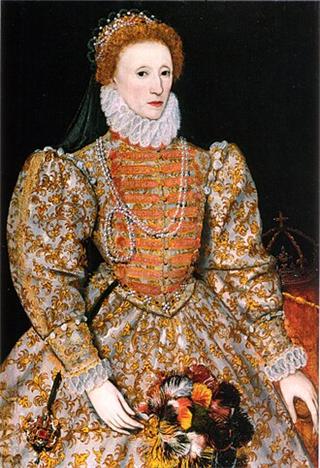
Mercantilism developed as the European economy changed. Isolated feudal estates were giving way to centralized nation-states, advances in shipping and the growth of cities rapidly increased international trade, and new markets and mines brought “the great upward movement in prices”. Double-entry bookkeeping made the inflow and outflow of trade plain and so drew attention to the balance of trade. Before it, the leading economic thought was that of the medieval scholastics, who sought an economy compatible with Christian piety and justice; mercantilism belonged instead with Machiavellian realpolitik and raison d’état, and its picture of trade as ruthless competition ran through the works of Thomas Hobbes.
Mercantilist practices appeared in early modern Venice, Genoa and Pisa in the control of the Mediterranean bullion trade, and the Guyanese historian Walter Rodney dated the period from the 15th-century Portuguese and Spanish voyages. Mercantilism arose in France in the early 16th century, where a decree of 1539 banned imports of woollen goods from Spain and parts of Flanders. An English text of 1549 warned: “We must always take heed that we buy no more from strangers than we sell them.” England began its first large-scale approach under Elizabeth I, and Antonio Serra’s A Short Treatise on the Wealth and Poverty of Nations (1613) is counted among the first treatises on political economy.
Core Ideas
In its simplest form mercantilism is bullionism, the theory that a nation’s wealth is measured by the gold and silver it holds, though its writers cared more about money moving through the economy than about hoarding it. They saw trade as a zero-sum game, in which any gain by one party required a loss by another, and so sought a positive balance of trade: more exports, especially of finished goods, fewer imports, and a stronger state at the expense of its rivals. In 1684 Philipp Wilhelm von Hornick summed up the doctrine in nine points, among them that every bit of soil be used, raw materials be worked at home, a large working population be encouraged, the export of gold and silver be forbidden and foreign imports discouraged.
The policies followed: high tariffs on manufactured goods, colonies forbidden to trade with other nations, trade barred from foreign ships, subsidies for exports and industry, and limits on wages. Mercantilists widely agreed that labourers and farmers should live at the “margins of subsistence”, since extra money, free time and education were thought to lead to vice and laziness, while a large population meant bigger markets and armies. Most wrote about a single area of the economy; only later did critics join their ideas into a system they called mercantilism.
Spread & Variants

Mercantilism was the dominant economic ideology of early modern Europe, centred on England and France. The bulk of English mercantilist literature appeared in the 1620s; Thomas Mun’s England’s Treasure by Foreign Trade, published after his death in 1664, was taken by Adam Smith as its manifesto, and James Steuart’s Principles of Political Economy of 1767 was perhaps its last major work. Giovanni Botero and Antonio Serra wrote in Italy, Jean Bodin in France. In England it reached its peak under the Long Parliament (1640–60), and the Navigation Ordinance of 1651 was enacted by Oliver Cromwell’s government.
In France its height came under Jean-Baptiste Colbert, Louis XIV’s Controller-General of Finances from 1665 to 1683, so that French mercantilism is sometimes called Colbertism. After the Thirty Years’ War (1618–48) it became prominent in Central Europe and Scandinavia, with Christina of Sweden and Christian IV of Denmark among its proponents, and Prussia under Frederick the Great had perhaps the most rigidly controlled economy in Europe. The Netherlands, Europe’s financial centre, adopted few mercantilist policies. Philip V brought French methods to Spain, Peter the Great’s Russia pursued mercantilism, and the Ottoman Grand Vizier Kemankeş Kara Mustafa Pasha followed some of its financial policies. The American School that guided the United States from the Civil War to the mid-20th century is closely related to it.
In Power

Under Colbert the French state organized industries into guilds and monopolies, regulated production through more than a thousand directives, brought in foreign craftsmen, cut internal tariffs and built roads and canals; France’s industrial output grew considerably as it became the dominant European power, though Britain and the Dutch Republic remained supreme in trade. In Britain mercantilism mainly took the form of control of trade: tariffs on imports, bounties for exports, bans on exporting some raw materials, and Navigation Acts that kept foreign merchants out. Land was put to its highest use, as in the draining of the Fens. In Spain the influx of American bullion brought inflation the economy could not absorb, protection ruined the Castilian textile industry, and the crown defaulted in 1557, 1575 and 1596.
Mercantilism has been called the economic version of warfare: if world trade was fixed, a state could gain only by taking from another, and the four Anglo-Dutch Wars (1652 to 1784) and the Franco-Dutch Wars can be linked directly to its theories. It fuelled the conquest of colonies as sources of gold and sugar and as exclusive markets, often by companies with state monopolies such as the Dutch East India Company. Giovanni Arrighi saw in it “settler colonialism, capitalist slavery, and economic nationalism”, and France’s triangular trade brought enslaved Africans to labour in the New World. British trade bans were a major irritant leading to the American Revolution.
Critiques & Debates
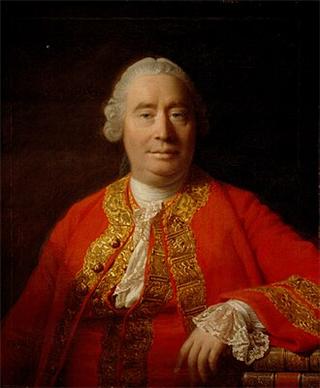
Adam Smith, David Hume, Edward Gibbon, Voltaire and Jean-Jacques Rousseau are counted the founding fathers of anti-mercantilist thought. In 1690 John Locke argued that prices vary in proportion to the quantity of money, and his Second Treatise held that wealth is created by labour, not fixed. Hume showed that a constant positive balance of trade was impossible, since inflowing bullion raises prices until the balance reverses. The physiocrats of France were the first school to reject mercantilism completely, and Smith’s The Wealth of Nations (1776) rebutted it at length, often in simplified or exaggerated form: he saw it as a conspiracy of manufacturers and merchants against consumers, resting on “the popular folly of confusing wealth with money”. David Ricardo set out comparative advantage in 1817.
Scholars still debate why it dominated for 250 years. Jacob Viner saw it as a common-sense system whose fallacies people then lacked the tools to see; Robert B. Ekelund and Robert D. Tollison called it “a rent-seeking society” serving merchants and governments; others point to the drain of bullion to Asia or the rising cost of war. Some reject the idea of mercantilism altogether as giving “a false unity to disparate events”, and recent scholars argue that Mun and Misselden did not in fact confuse money with wealth. Murray Rothbard called it a system of statism that “employed economic fallacy to build up a structure of imperial state power”.
Legacy
Academic belief in mercantilism began to fade in the late 18th century, and its regulations were steadily removed in Britain over that century. Napoleon liberalized French economic policy, and the repeal of the Corn Laws under Robert Peel in 1846 symbolized the emergence of free trade; by the mid-19th century Britain and France had rejected mercantilism, and the British Empire used its power as the world’s financial centre to promote free trade. In Germany mercantilism remained an important ideology in the 19th and early 20th centuries, when the historical school of economics was paramount.
Its reputation has partly recovered. Smith himself praised England’s Navigation Acts for building the merchant fleet that helped make Britain the world’s naval and economic superpower, and some economists hold that protecting infant industries can pay in the long term. John Maynard Keynes judged its attention to production and to bullion rational for its time, and Paul Samuelson wrote that with employment less than full “all the debunked mercantilist arguments turn out to be valid”. As of 2010 the word remained a pejorative for protectionism. Japan’s economic system is sometimes called neo-mercantilist; in 2007 Robert J. Samuelson wrote that China was pursuing an essentially neo-mercantilist trade policy, and after 2024 Branko Milanović described Donald Trump’s tariffs as “neo-mercantilism”.
Mercantilism was the economic doctrine of early modern Europe, holding that a state grows rich by exporting more than it imports and amassing gold and silver. Applied above all in England and France, it shaped tariffs, navigation laws and colonial empires and fed trade wars, until critics from Hume to Adam Smith and the spread of free trade ended it in the 19th century.
Test yourself
5 questions on this page, from its key events and facts.
The questions open here once the page has loaded.
References
- Eli F. Heckscher, Mercantilism (Allen & Unwin, 1935)
- Charles Wilson, Mercantilism (Routledge and Kegan Paul, 1963)
- Robert B. Ekelund and Robert D. Tollison, Mercantilism as a Rent-Seeking Society: Economic Regulation in Historical Perspective (Texas A&M University Press, 1981)
- Glenn J. Ames, Colbert, Mercantilism and the French Quest for the Asian Trade (1996)
- Murray Rothbard, Mercantilism: A Lesson for Our Times? (Edward Elgar, 1997)
- Lars G. Magnusson, “Mercantilism”, in A Companion to the History of Economic Thought (Blackwell Publishing, 2003)