
Ideology · Europe
Capitalism
At a glance
- Capitalism is an economic system based on private ownership of the means of production and its use for profit, with capital accumulation, competitive markets, commodification and wage labour.
- It emerged in its modern form from agrarian change in England and the mercantilism of the 16th to 18th centuries, and the Industrial Revolution of the 18th century made it the dominant mode of production.
- Largely unregulated in the 19th century, it was regulated through Keynesianism after the Second World War and freed again under neoliberalism from the 1980s; after the Cold War it became a truly global system.
Timeline
- 1558England begins a large-scale and integrative mercantilism in the Elizabethan era
- 1776Adam Smith’s The Wealth of Nations describes competition as allocating resources to their most valued uses
- 1846Britain repeals the Corn Laws, abandoning the protectionism of mercantilism for free trade
- 1850Louis Blanc makes the first use of the word capitalism in its modern sense
- 1867Karl Marx analyses the capitalist mode of production in Das Kapital
- 1890The Sherman Antitrust Act becomes the first law passed by the United States Congress to limit monopolies
- 1944Friedrich Hayek argues in The Road to Serfdom that economic freedom is a requisite of political freedom
- 1979Margaret Thatcher takes office in Britain, and with Ronald Reagan’s presidency from 1981 monetarism gains prominence across the capitalist world
Origins
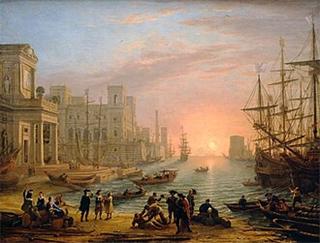
Capital comes from the late Latin capitale, from caput, “head”, which from the 12th and 13th centuries meant funds, stock or money carrying interest; by 1283 it meant the capital assets of a trading firm. Capitalist, an owner of capital, dates from the mid-17th century. Capitalism in its modern sense is attributed to Louis Blanc in 1850 and Pierre-Joseph Proudhon in 1861, and because socialist critics coined it, the historian Robert Hessen called the word a term of disparagement.
Money-making through merchants, lending and small-scale industry with some wage labour existed for centuries. During the Islamic Golden Age Arabs promoted free trade and banking, and their Indo-Arabic numerals, which eased bookkeeping, reached Europe through cities such as Venice and Pisa. Capitalism in its modern form is traced to agrarian capitalism and mercantilism in the early Renaissance, in city-states like Florence. In 16th-century England the manorial system broke down, land was concentrated in larger estates, and serf labour gave way to a money economy in which rents followed market forces and landlords and tenants alike sought higher productivity.
Mercantilism, the doctrine prevailing from the 16th to the 18th centuries, was a system of trade for profit, though goods were still largely made by non-capitalist methods; most scholars consider this era of merchant capitalism the origin of modern capitalism. Karl Polanyi disagreed, arguing that until a competitive labour market was established in England in 1834, industrial capitalism as a social system did not exist.
Core Ideas
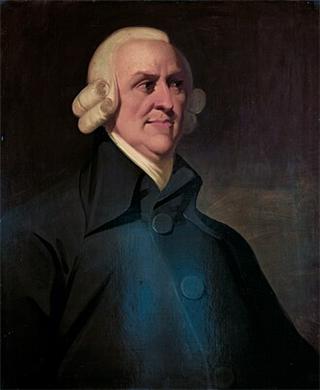
There is no universally agreed definition of capitalism, but it is commonly described by private ownership of the means of production, production for profit and the accumulation of capital, the production of commodities for exchange on a market, wage labour, the use of the price mechanism to allocate resources, and the freedom of owners to act in their self-interest. Capital accumulation means investing money to make a profit and reinvesting it in further production in a continuous process.
Its theorists hold that the profit motive allocates resources efficiently; the Austrian economist Henry Hazlitt wrote that an article making no profit shows that the labour and capital spent on it are misdirected. Adherents believe competition leads to innovation and lower prices. Adam Smith held that a prosperous society is one where “everyone should be free to enter and leave the market and change trades as often as he pleases”, and that people pursuing their own progress produce growth for the whole. Hernando de Soto argues that state protection of property rights, with ownership clearly recorded, turns physical assets into capital.
Its defenders also link it to political freedom. Friedrich Hayek argued in The Road to Serfdom (1944) that the market is the only way to decide what to produce and how to distribute it without coercion, and Milton Friedman that centralised economies are always accompanied by political repression. Robert Dahl held that the growth and middle class it brings are good for democracy.
Spread & Variants

In the mid-18th century David Hume and Adam Smith challenged the mercantilist belief that the world’s wealth was fixed and one state could grow rich only at another’s expense. In the Industrial Revolution industrialists replaced merchants as the dominant force, the craft skills of artisans and guilds declined, and the factory system, with its complex division of labour, established the domination of the capitalist mode of production. Industrial Britain abandoned protectionism: Richard Cobden and John Bright of the Manchester School campaigned for lower tariffs, and Britain repealed the Corn Laws in 1846 and the Navigation Acts in 1849, in line with David Ricardo’s case for free trade.
By the early 19th century loosely connected markets had come together into a relatively integrated global system. After the Opium Wars (1839–1860), the British conquest of India by 1858 and the French conquests in Africa, Polynesia and Indochina by 1887, vast populations of Asia became consumers of European exports, and colonies in Africa yielded rubber, diamonds and coal. From the 1870s to the early 1920s the world’s finance was tied mainly to the gold standard, which the United Kingdom first adopted formally in 1821, while the telegraph, steamships and railways moved goods and news as never before. That age came to an end in August 1914.
In Power

States have long shaped capitalism. Mercantilism intertwined national business with state interest and imperialism: European merchants profited behind state controls, subsidies and monopolies, and the British and Dutch East India Companies wielded colonial powers granted by states. Governments also checked it: the Sherman Antitrust Act of 1890 was the first United States law to limit monopolies.
After the Second World War capitalism entered what Dani Rodrik calls its second variant, with Keynesianism, a substantial role for the state in regulating markets and strong welfare states. The post-war boom ended in the late 1960s and early 1970s with stagflation, and monetarism gained prominence under Margaret Thatcher (1979–1990) and Ronald Reagan (1981–1989), shifting attention from Keynes’s collectivist concerns to individual choice. The end of the Cold War and the dissolution of the Soviet Union then made capitalism a truly global system, and the neoliberal global economy would have been impossible without the fall of communism.
Capitalist economies have flourished under authoritarian governments too. Singapore’s open market economy operates largely under one-party rule with a government-regulated press, and the private sector of the People’s Republic of China has grown exponentially under an authoritarian government. Augusto Pinochet’s rule in Chile used authoritarian means to secure investment, bringing growth and high inequality, and Suharto’s extirpation of the Communist Party of Indonesia allowed capitalism to expand there.
Critiques & Debates
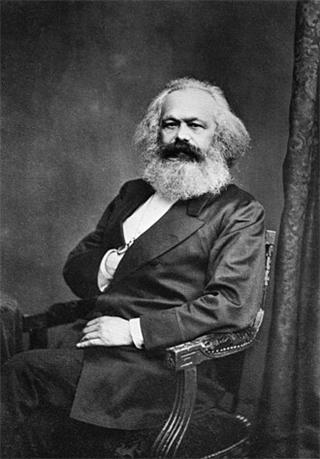
Criticism of capitalism comes from anarchist, socialist, religious and nationalist viewpoints, and its critics differ over whether it should be overthrown by revolution or changed slowly by reform. They allege that it exploits labour, alienates, is unsustainable and inefficient, creates massive inequality, commodifies people, degrades the environment, is undemocratic, cannot provide full employment, deepens uneven development between nations, and erodes human rights by encouraging imperialist expansion and war.
Karl Marx analysed the capitalist mode of production in Das Kapital (1867), and Friedrich Engels popularised the term. Vladimir Lenin, drawing on Rudolf Hilferding’s Finance Capital (1910), called the banks “the chief nerve centres” of the capitalist system in Imperialism, the Highest Stage of Capitalism (1917). Antonio Gramsci explained capitalism’s survival by its use of civil society institutions to shape public ideology. Fernand Braudel argued that capitalism, in which a few use capital to control markets, is to some degree opposed to free market exchange.
Thomas Piketty argued in Capital in the Twenty-First Century (2013) that inequality is the inevitable consequence of growth under capitalism and that concentrated wealth can destabilise democracy, and Clara Mattei calls capitalism and democracy “fundamentally incompatible”. Others blame not the system but the ethics of those who run it, setting Milton Friedman’s ethic of maximising shareholder value against John Bogle’s ethic of “enough”.
Legacy
Late in the 20th century capitalism overcame the challenge of centrally planned economies, and it is now the encompassing system worldwide, with the mixed economy its dominant form in the industrialised West. Mature capitalist markets have developed markets for equity and debt, large institutional investors and a well-funded banking system, and a significant managerial class makes many investment decisions. Anthony Crosland in The Future of Socialism (1956) and John Kenneth Galbraith in The Affluent Society (1958) described a future different from the one Marx had envisioned.
Its forms differ by country: social market economies and Rhine capitalism in continental Western Europe, the Nordic model, the East Asian model of state capitalism and Norway’s, and France’s dirigisme. Newer proposals include eco-capitalism, which treats ecosystems as natural capital and favours market instruments such as a carbon tax, and the sustainable capitalism of Al Gore and David Blood, which builds environmental, social and governance aspects into risk assessment.
Scholars still debate the concept itself. Nancy Fraser finds the word often used as “a gesture toward the need for a concept”, and Daron Acemoglu suggests abandoning it altogether; its supporters long preferred “free enterprise”. Torben Iversen and David Soskice see democracy and capitalism as mutually supportive, while critics warn that authoritarian regimes have learned to manage growth with capitalism’s competitive principles without granting political freedom.
Capitalism is an economic system based on private ownership of the means of production, production for profit and the accumulation of capital through competitive markets and wage labour. Emerging in early modern England and the mercantilist age, it became dominant with the Industrial Revolution, was regulated after the Second World War and freed again from the 1980s, and is now the encompassing system worldwide.
Test yourself
5 questions on this page, from its key events and facts.
The questions open here once the page has loaded.
References
- Adam Smith, The Wealth of Nations (1776)
- Karl Marx, Das Kapital (1867)
- Rudolf Hilferding, Finance Capital (1910)
- Friedrich Hayek, The Road to Serfdom (1944)
- Thomas Piketty, Capital in the Twenty-First Century (2013)